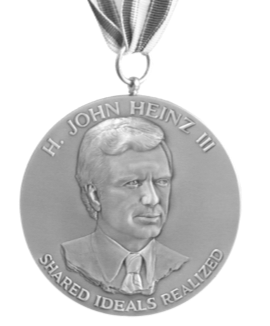

Senator John Heinz

RELATED NEWS

  • Paul Farmer interviewed on PBS NewsHour regarding delivery of aid in Haiti go >>
  • Paul Farmer interviewed on 60 Minutes regarding the crisis in Haiti go >>
  • Paul Farmer pens Op-Ed on Haiti in Miami Herald go >>
  • Dave Eggers among Poets and Writers magazine's "Fifty of the Most Inspiring Authors in the World" go >>
  • Jerry Franklin co-authors editorial in The Oregonian supporting Oregon forests bill go >>
  • Christopher Field co-authors study that links global warming to shifting ecosystems go >>
  • Peggy Shepard co-authors editorial in issue of Environmental Justice journal go >>
  • Hugh Herr and his prosthetics research are profiled in Forbes magazine go >>
  • Rick Lowe receives 2009 United States Artists Fellowship go >>
  • U.S. Senator Dick Lugar named one of the 25 greatest public servants over the past 25 years go >>
  • The new book, "Storms of My Grandchildren" by James Hansen, released today go >>
  • Geoffrey Canada and the Harlem Children's Zone profiled on 60 Minutes go >>
  • Brenda Krause Eheart receives a 2010 AARP Magazine Inspire Award go >>
  • John Holdren makes Foreign Policy's first annual list of 100 top global thinkers go >>
  • James Hansen makes Foreign Policy's first annual list of 100 top global thinkers go >>
  • Amory Lovins makes Foreign Policy's first annual list of 100 top global thinkers go >>
  • Paul Farmer makes Foreign Policy's first annual list of 100 top global thinkers go >>
  • Bernard Amadei is recipient of 2009 Honorary Member Award from the National Groundwater Association go >>
  • Chip Giller and grist.org profiled on Voice of America go >>
  • Kirk Smith co-authors a six paper series in The Lancet on the direct health benefits of reducing carbon dioxide and other greenhouse emissions go >>
  • Dee Boersma highlighted in Washington Post article on penguins' role as environmental indicators go >>
  • Joel Salatin is profiled in the Christian Science Monitor go >>
  • Aaron Beck presented with the Anna-Monika Prize for lifetime achievement go >>
  • Paul Farmer writes an Op-Ed on juvenile offenders for the Boston Globe go >>
  • Joel Salatin is a speaker at TEDx MidAtlantic go >>
  • The London Times writes about a new nanotechnology cancer therapy co-developed by Robert Langer go >>
  • Dave Eggers wins 2009 Prix Medicis for best foreign work go >>
  • Geoffrey Canada named 2010 winner of the Brock International Prize in Education go >>
  • Hugh Herr profiled in The Jerusalem Post go >>
  • Geoffrey Canada receives Robert Coles Award from Harvard group go >>
  • Dean Kamen receives the Stevens Honor Award go >>
  • Mario Molina co-authors a paper that targets non-CO2 climate change agents to help curb global warming go >>
  • James Hansen co-authors a report on the retreat of the Himalayn glaciers go >>
  • Dave Eggers to be presented with The Literarian Award from the National Book Council go >>
  • President Obama proposal hopes to export success of Harlem Children's Zone go >>
  • Thomas Smith profiled on Voice of America go >>
  • Joel Salatin profiled on culinate.com go >>
  • Ashok Gadgil Appointed to the Rudd Family Foundation Chair at University of California, Berkeley go >>
  • Ashok Gadgil interviewed on EarthSky go >>
  • Mark di Duvero's "Motu Viget" in Grand Rapids is revisited 32 years later go >>
  • Geoffrey Canada profiled in the Seattle Times go >>
  • Rick Lowe's Project Row Houses is revisited by the Houston Chronicle go >>
  • August Wilson Center for African American Culture opens in Pittsburgh go >>
  • Andrew Grove profiled in The Economist go >>
  • Bruce Katz and Metropolitan Policy Program at Brookings launch blog on TNR go >>
  • Token Creek Chamber Music Festival, co-founded by John Harbinson, celebrates 20 year anniversary go >>
  • Paul Farmer appointed as Deputy Special Envoy to Haiti by former President Bill Clinton go >>
  • Paul Anastas nominated by President Obama to head research at the EPA go >>
  • Geoffrey Canada and the Harlem Children's Zone profiled in The Washington Post go >>
  • George Woodwell authors a book, "The Nature of a House, Building a World that Works" go >>
  • Hurricane Katrina and its aftermath is the setting of Dave Eggers' new non-fiction book, "Zeitoun" go >>
  • Jane Lubchenco interviewed by Yale Environment 360 go >>
  • George Woodwell pens a column on the Amazon basin for Washington Monthly go >>
  • James Hansen is profiled in The New Yorker go >>
  • Leroy Hood pens "A Doctor's Vision of the Future of Medicine" for Newsweek magazine go >>
  • James Hansen opinion piece is published in Yale Environment 360 go >>
  • Jerry Franklin and co-authors release a new study on the decline of old growth trees in Yosemite go >>
  • Rita Dove publishes a new book of poetry go >>
  • Geoffrey Canada and the Harlem Children's Zone profiled by David Brooks in The New York Times go >>
  • James Hansen shares the inaugural Peter A. A. Berle Environmental Integrity Award from the Audubon Society go >>
  • Amory Lovins wins 10th National Design Awards from the Cooper-Hewitt in the Design Mind category go >>
  • Andrew Grove honored with lifetime achievement award at National Inventors Hall of Fame go >>
  • Mario Molina appointed to President's Council of Advisors on Science and Technology (PCAST) go >>
  • Dorothy Height honored with the Louis E. Martin Great American Award go >>
  • James Hansen interviewed on EarthSky go >>
  • 60 Minutes profiles DEKA prosthetic arm developed by Dean Kamen go >>
  • Millie Dresselhaus to Receive 2009 Vannevar Bush Award go >>
  • A new book highlights Herbert Needleman's groundbreaking work on lead poisoning go >>
  • Hugh Herr profiled in Boston Magazine go >>
  • Dean Kamen interviewed about his FIRST competitions in The National Journal go >>
  • Paul Farmer honored with Lois Pope LIFE International Achievement Award at the University of Miami go >>
  • Video of Joseph DeRisi's TED presentation of the ViroChip made available on TED.com go >>
  • Steve Wozniak to join start-up company Fusion-io as chief scientist go >>
  • Aaron Beck and his research into depression are profiled in The Boston Globe go >>
  • Bernard Amadei writes guest commentary in the Boulder Daily Camera go >>
  • James Hansen selected as EarthSky Scientist Communicator of the Year go >>
  • Jane Lubchenco named to head NOAA by President-elect Barack Obama go >>
  • John Holdren named as President-elect Barack Obama's chief science advisor go >>
  • Herb Needleman featured on NPR's Tech Nation with Moira Gunn go >>
  • Lois Gibbs is profiled in Audubon Magazine on the 30th anniversary of Love Canal go >>
  • Paul Ehrlich interviewed on EarthSky on his new book go >>
  • James Hansen named one of Discover Magazine's 10 Most Influential People in Science in 2008 go >>
  • Jane Lubchenco contributes to National Public Radio Morning Edition go >>
  • Peter Matthiessen is the 2008 National Book Award winner for fiction go >>
  • Amory Lovins featured among America's Best Leaders of 2008 by U.S News and World Report go >>
  • Marian Wright Edelman featured among America's Best Leaders of 2008 by U.S News and World Report go >>
  • Jane Lubchenco writes op-ed for The Oregonian on protecting ocean treasures go >>
  • Paul Farmer pens editorial on health care in The Daily Beast go >>
  • Dorothy Height is interviewed on 'Tell Me More' on NPR go >>
  • Joseph DeRisi interviewed on Tech Nation go >>

The Heinz Awards

2001

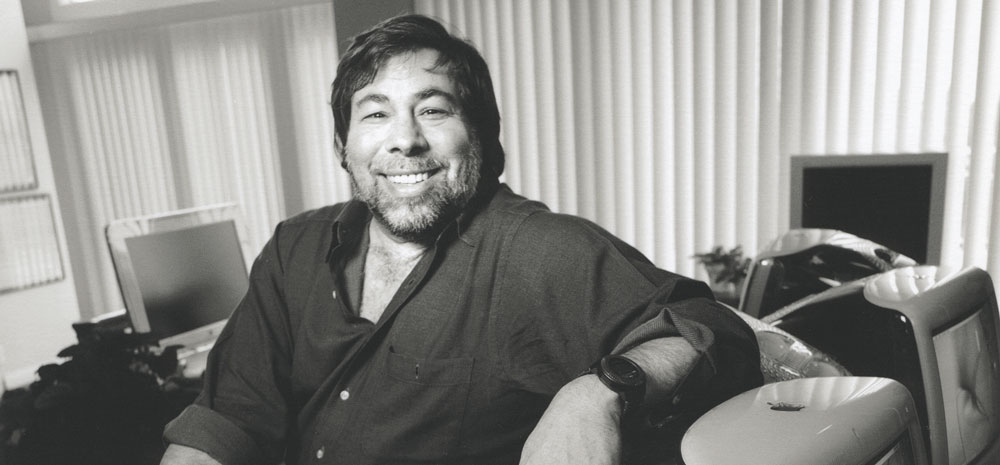
Steve Wozniak

Steve Wozniak receives the Heinz Award in Technology, the Economy and Employment for single-handedly designing the first personal computer and for then redirecting his lifelong passion for mathematics and electronics toward lighting the fires of excitement for education in grade school students and their teachers. Known simply and affectionately as "Woz," he invented the Apple I computer, its successor, the Apple II, and then left the corporate fast track for a life devoted to his family, philanthropy and teaching.

It has been 25 years since Mr. Wozniak and "the other Steve," Steve Jobs, who had once been a classmate in high school, revolutionized the computer industry when they built and marketed the first computer designed for general public use. What was begun as a two-person operation in the Jobs garage grew to a $500 million a year company in just six years. But Mr. Wozniak, who never did join the business side of the company, just continued inventing. "I just wanted to design neat things," he says.

Woz' second great ambition was teaching, which has consumed much of his time for the past decade. He made a significant investment in the future in the late 1980s by "adopting" the 5th through the 8th grades in the local Los Gatos School District in California. His hands-on teaching of the youngsters exemplifies the technologist turned educator. He not only provided the students with portable computers, he teaches computer skills to them and their teachers, wired the school for Internet access, and lives by truly believing that "being able to teach somebody to do something means more than doing it yourself."

The Silicon Valley legend fell in love with math and electronics at an early age. He enrolled in undergraduate studies at the University of California, Berkeley but dropped out in his senior year in 1971 to join Hewlett-Packard. He created his own designs, including Apple I, in his free time while at H-P and frequented the Homebrew Computer Club, which had also attracted Mr. Jobs. Woz eventually returned to Berkeley to earn his undergraduate degree in engineering after he achieved fame and fortune at Apple. But Woz is more than an engineer. He is generally considered to have accomplished a feat unlikely to be repeated, he is the only person to ever design both the hardware and the software for a computer platform that became a huge commercial success.

Woz developed a way to connect the Apple computer to a printer and went further to develop the first floppy disc (drive), a removable floppy disc with information on it that can be put into the computer memory for storage or accessed without being stored, greatly increasing the ability of people to use the Apple computer.

The Apple II is certainly one of if not the most significant developments of the 20th Century in that it was the first time the power of a computer was made available to the individual. Mr. Wozniak's design was brilliant because of its simplicity.

Steve Wozniak is considered the single most important person in the microcomputer revolution and is also one of the most interesting humanitarians. What he did he did because it was fun and he is more surprised than anyone that it amounted to anything. What it has amounted to has been seminal contributions to an industry, the impact of which is felt throughout homes and businesses worldwide.

Note: This profile is excerpted from the commemorative brochure published at the time of the awards' presentation.


UPDATES SINCE RECEIVING THE HEINZ AWARD  

December 2007 - Steve Wozniak was named one of the "Founding Fathers of Computing" by the Computer History Museum and is on the first ever panel to celebrate the era of microcomputer innovation since 1982. This first event is titled The Impact of the Commodore 64: 25th Anniversary Celebration. - Businesswire.com

November 2006 - Release scheduled for Wozniak's new book iWoz: Computer Geek to Cult Icon: How I Invented the Personal Computer, Co-Founded Apple, and Had Fun Doing It.  

December 2004 - Wozniak previews his latest vision to the public at the Ziff Davis Media's Security Virtual Tradeshow. "wOz Location-Based Encryption" as it's called, is "an application that uses GPS tracking within a wireless hub to encrypt and decrypt sensitive data for large businesses." Wozniak expects the program to do well, as data protection is becoming an increasingly serious issue to most big businesses. - eWeek  

January 2004 - Wozniak is one of eleven public figures to be inducted into the Consumer Electronics Hall of Fame. He is honored with the induction for his "leadership and innovation in the consumer electronics industry." - The Hollywood Reporter  

June 2001
- Wozniak wins the Visionary Award from the Software Development Forum. A Visionary Award is given to "experts in their field who have enriched the lives of others through their work, while creating the technologies of tomorrow." Wozniak receives this award for the pioneering visions that inevitably created the first computers and launched the PC revolution. - Business Wire

Speech

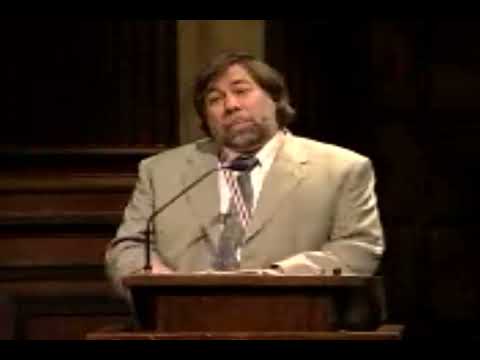
3/5/2001 - Acceptance Speech

Well, it's quite an amazing company I'm in. I thought I'd stay in technology work because I'd figured out how to get the ketchup out of the bottle and my own ballet experiences are with a bit-parts - one time the director of our ballet hurled me back onto the stage as I was supposed to be walking off, and stuck me in a scene that I wasn't prepared for or rehearsed for - what a dirty joke. So, sometimes a sense of humor there. When it comes to environment, I just sort of think, when are we going to leave the world in a better shape for the next generation than worse shape?

Well, why do we care about people? You know when we're young, we're taught those values. Almost every youngster reads stories and watches TV shows and reads books, where the good guy wins something and helps the poor and needy. And so, we always have these good values when we're young and you know they're different kinds of people once we get older, how much, how directly that effects us in how we run our lives.

You know, myself I was really lucky to have a Dad that taught me that teachers were so important, that they were teaching our younger generation to grow up and make this world a better world than the prior generations had made it. And I thought, our teachers are the most important people in the world. They make more than engineers, right? And he says, 'No, they don't.' But, I told him I was going to be an engineer first, and be a teacher second, and that was in sixth grade so, pretty much my whole life I have wanted to teach and I was lucky. I found in later life that I had skills. First of all, I got influenced in college that children's minds develop along cognitive psychology lines. They develop in steps and stages that grow on each other. It's like mathematics. It's like computers. It's like programs, like the things I love.

And a child's mind became very important to me, so I tried to always direct my interest towards young children and sometimes leave the adults at the table. But, as I had my own children, I discovered I had other good teaching skills, which you can never count on. Some people are made to be teachers. And I had patience, and I could explain things in understandable ways. And I also later on, found I could put myself in the body of the person hearing me. What are they hearing, and what does it sound like to them, and are they really learning? Are their minds really taking a step forward, or are they just impressed that you know how to tell them something, and that's important?

When we started Apple, the goal was to just empower common people and give them this incredible tool - a computer - that before that, only their company had and owned, and they were sort of subsidiary to it. They were a slave to the computer the company owned, and now we were going to make them the masters, and put them in control if it, and they could write programs that were better than the company programs, and figure out more things, and we didn't really think about 'oh this is a big business and we'll make money'. No. It's ... 'we're going to better the world.'

As companies evolve though, pretty much eventually, it's sort of like, the decisions in a company weren't for me. I wasn't the political type or the company type. And pretty much the company has to decide, 'Well, we have to make decisions. What's best for us as a company money wise?' And not what's best for people, and what do they want in the product, and how do we make it better?

How do we not take steps backwards? For the future I have two big hopes inspired by my past, and one is that software in the world becomes more human and understandable, and really explains things well and helps you through things and does things for you, and doesn't make it a task and something you have to fight to get computers to always work and be understood, and we'll get back to that. We had that stage for about a five-year period or a little more, but now we're kind of fighting it.

And my other goal kind of relates to teaching. I found that a class of 30 is a lot harder to teach than a class of 20. Class size is so important. In California, we're 50th in the states in that regard. And it all boils down to money and I'm hopeful that some day like, a family of five gets five votes.

Thank you very much.
Steve Wozniak
Steve Wozniak