
Senator John Heinz

RELATED NEWS

  • Janine Benyus to share the 2013 Gothenburg Award for Sustainable Development go >>
  • Mary Good and her career in chemistry is profiled in a short film by the Chemical Heritage Foundation go >>
  • Jay Keasling to receive 2013 George Washington Carver Award for innovation in industrial biotechnology go >>
  • Jay Keasling and his current work on artemisinin profiled in San Francisco Business Times go >>
  • Joint BioEnergy Institute, headed by Jay Keasling, to be renewed until 2018 go >>
  • The Nuclear Threat Initiative, with Sam Nunn and Richard Lugar, proposes new strategy to reduce conflict and to encourage security go >>
  • Robert Langer pens a piece for Project Syndicate on Going Against Conventional Wisdom go >>
  • Robert Langer is interviewed on NPR’s Science Friday go >>
  • C. Everett Koop, former surgeon general, has died at age 96 go >>
  • Marian Wright Edelman to receive Harvard Graduate School of Education's Medal for Education Impact go >>
  • Susan Seacrest is profiled by the Lincoln Star Journal go >>
  • Jay Keasling's semi-synthetic anti-malarial artemisinin now being produced in bulk and ready for introduction go >>
  • Hugh Herr speaks on cutting edge bionics at the Digital-Life-Design Conference go >>
  • Jay Keasling is profiled on CNN's The Next List go >>
  • Sidney Drell receives the National Medal of Science go >>
  • Philosopher Anthony Grayling interviews Robert Langer on the BBC's "Exchanges on the Frontier" go >>
  • Robert Langer to receive Israel's 2013 Wolf Prize for innovations that "have had a profound impact on medicine" go >>
  • Mildred Dresselhaus interviewed on The Age of Reason on the BBC World Service go >>
  • Leroy Hood to receive the National Medal of Science go >>
  • Robert Langer to receive the National Medal of Technology and Innovation go >>
  • Leroy Hood and his vision of P4 medicine is profiled by The National go >>
  • The New York Times reviews Ann Hamilton’s installation, “the event of a thread,” at the Park Avenue Armory go >>
  • Robert Langer's MIT lab's success in technology transfer is profiled in the New York Times go >>
  • James Balog is profiled on NPR's Weekend Edition go >>
  • Bernard Amadei appointed as Science Envoy for the U.S. State Department go >>
  • The Harvard Crimson writes about Robert Langer and a 'cyborg tissue' breakthrough at MIT and Harvard go >>
  • PandoDaily writes about "The Return of Dean Kamen" and the buzz surrounding his Stirling Engine go >>
  • Dean Kamen and his work is profiled by A Total Disruption, a project by Ondi Timoner go >>
  • James Balog interviewed in Fast Company on tracing the global decay of glaciers go >>
  • Janine Benyus is interviewed for TrimTab online magazine go >>
  • Robert Berkebile is interviewed by the Omega Institute for their Design by Nature Conference go >>
  • The Washington Post cites the work of Richard Feely and Joan Kleypas on the impact of ocean acidification on fisheries go >>
  • Dudley Cocke makes the case for rural theater in Howlround go >>
  • Dean Kamen interviewed on Charlie Rose on working with Coca-Cola on water issues go >>
  • Paul Farmer co-authors article "Cholera and the Road to Modernity" in America's Quarterly go >>
  • Tom "Smitty" Smith pens OpEd requesting Texas PUC to embrace energy alternatives go >>
  • Richard Jackson is interviewed on Living On Earth go >>
  • Russell Train, renowned conservationist and recipient of the 7th Heinz Award Chairman's Medal, dies at 92 go >>
  • Lou Bellamy to direct August Wilson's play, "Fences," at the Denver Center Theatre Company go >>
  • Hugh Herr believes that bionics can put people with disabiities back to work go >>
  • Elizabeth Kolbert reports from the Andes in Yale's Environment 360 go >>
  • di Suvero sculpture settles into new home at Stanford University go >>
  • NPR reports on Joseph DeRisi's work on a link between deadly Ebola virus and disease that's been killing boa constrictors go >>
  • New study by James Hansen ties recent heat waves to global warming go >>
  • James Hansen pens an Op-Ed piece on climate change for The Washington Post go >>
  • Mildred Dresselhaus profiled in U.S. News and World Report go >>
  • Prized Science's first episode of 2012 highlights the work of Robert Langer go >>
  • Mildred Dresselhaus is interviewed in The New York Times go >>
  • Hugh Herr is profiled on Jothy Rosenberg's "Who Says I Can't" go >>
  • Dave Egger's latest novel, A Hologram for the King, is reviewed in The New York Times go >>
  • Mildred Dresselhaus is the 2012 recipient of the Kavli Prize for Nanoscience go >>
  • Robert Langer to receive the 2012 Society of Chemical Industry's Perkin Medal go >>
  • Paul Anastas to receive the German Chemical Society’s Wohler Prize go >>
  • Pittsburgh Symphony Orchestra offers videos of Mason Bates discussing his go >>
  • Janine Benyus is named the 2012 Design Mind Award recipient by the Cooper-Hewitt Design Museum go >>
  • Andrew Grove is interviewed with Gordon Moore for NPR's Mornng Edition on their place in Silicon Valley history go >>
  • CNN's "The Next List" profiles Dr. Hugh Herr and his Biomechatronics Group at the MIT Media Lab go >>
  • Robert Langer's entrepreneurial drive is profiled in Chemical and Engineering News go >>
  • Hugh Herr and his bionics are profiled for TechWeekEurope go >>
  • Dean Kamen joins Elon Musk and Craig Venter to discuss energy innovation at ECOnomics Conference go >>
  • Kirk Smith shares the 2012 Tyler Prize for Environmental Achievement from USC go >>
  • Ruth Patrick, "Den Mother of Ecology", is profiled by the Intelligencer Journal go >>
  • Ralph Gomory co-authors op-ed in Bloomberg News on transparency for corporate money in political campaigns go >>
  • Carol Gilligan looks back on her 1982 book, In a Different Voice, in the current issue of Harvard's online journal Classics@ go >>
  • Jane Lubchenco is named Woman of the Year by the Women's Council on Energy and the Environment go >>
  • Bruce Katz is interviewed in Wired magazine on optimizing economic structures for revitalization go >>
  • Cary Fowler interviewed in The Atlantic on the importance of crop diversity and the vital role of the Svalbard Global Seed Vault go >>
  • New paper from Brookings’ Bruce Katz on "Remaking Federalism to Remake the American Economy" go >>
  • Mario Molina co-authors editorial piece on "How to cut climate change in half" go >>
  • Rita Dove is awarded the 2011 National Medal of Arts go >>
  • James Nachtwey honored with 3rd Dresden International Peace Prize go >>
  • Paul Anastas is profiled in Forbes go >>
  • Paul Farmer writes editorial in the New York Times on why the global fund matters go >>
  • Marian Wright Edelman on the need for dedicated support and education opportunities to allow access to the American Dream go >>
  • The Scripps Center for Marine Biodiversity and Conservation, founded by Nancy Knowlton, celebrates its first decade go >>
  • Geoffrey Canada to receive the second Harvard Graduate School of Education Medal for Education Impact go >>
  • Chasing Ice, on James Balog's Extreme Ice Survey, is one of the most-sought tickets at Sundance Film Festival go >>
  • Paul Farmer talks to CBS about new state-of-the-art hospital in Haiti go >>
  • Marian Wright Edelman is interviewed on public television's One On One. go >>
  • Environmental reporter Jane Kay interviews Paul Anastas on his move from EPA back to academia go >>
  • Ashok Gadgil is awarded the Zayed Future Energy Prize’s Lifetime Achievement Award go >>
  • Ian Cheney's new film, "The City Dark," reviewed on the Huffington Post go >>
  • Marian Wright Edelman reflects on Martin Luther King, Jr.’s words in Huffington Post column go >>
  • Mildred Dresselhaus is awarded the Enrico Fermi Award by President Obama go >>
  • Daniel Sperling interviewed about CAFE, the new federal fuel-efficiency standards go >>
  • Paul Anastas to depart postion heading EPA's research to return to Yale University in February go >>
  • Curt Ellis and FoodCorps profiled in Associated Press video go >>
  • Dean Kamen writes about 20 years of FIRST at the Huffington Post go >>
  • Elizabeth Kolbert is interviewed on Treehugger Radio go >>
  • The Boston Globe writes about the genesis of John Harbison's new Sixth Symphony, commissioned by the Boston Symphony Orchestra go >>

The Heinz Awards

2002

Ruth Patrick

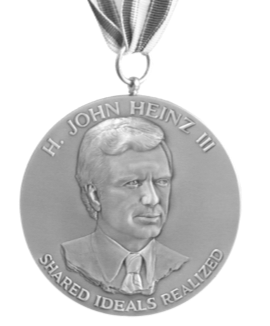
Occasionally, the Heinz Awards program receives nominations of individuals whose life's work has been so exceptional that a special, honorary recognition - the Chairman's Medal - is considered. This year, Ruth Patrick is being so recognized for her lifetime commitment to the understanding, improvement and protection of the environment.

Dr. Patrick developed far-reaching new theories about the critical relationship between biodiversity and a healthy environment. Assembling and leading teams of ecosystem scientists, she created an entirely new field-based method for quantifying environmental health. Much of what is done today in environmental science and management rests on the principle of pollution and biodiversity that she presented more than half a century ago.

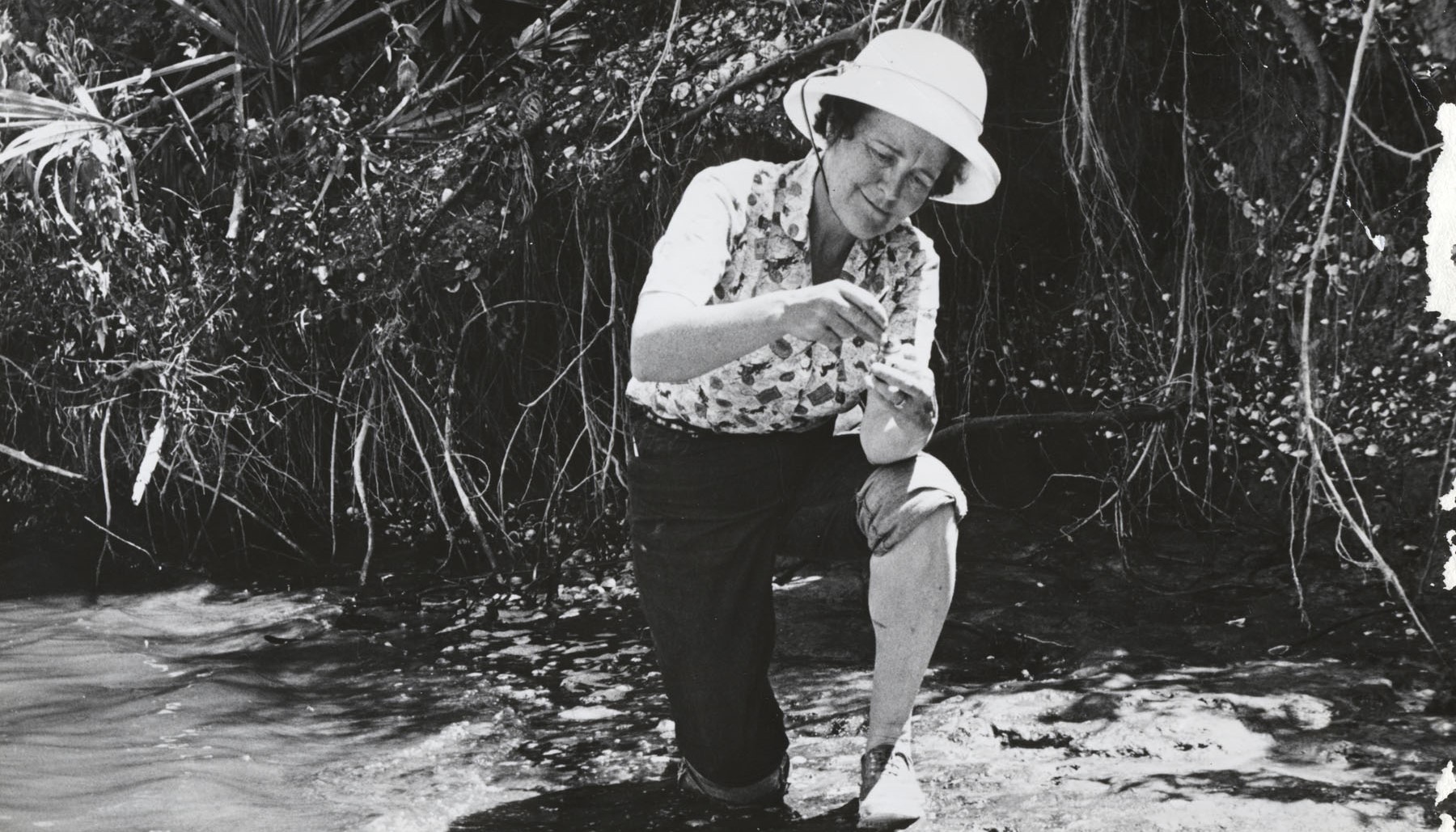
One of the true pioneers in the field of ecosystem science, Dr. Patrick dominates (and in many ways has defined) her chosen field of limnology - the scientific study of freshwater rivers and lakes. Probably the world's leading authority on the ecology of rivers, she is an internationally recognized expert on river pollution.

As early as the 1940s, she began forming unique partnerships with industry, government agencies and community groups to foster a more effective environmental stewardship. During the 1950s and '60s, long before others were aware of the concept of "ecosystem services," Dr. Patrick conducted pioneering studies that quantified the ability of tidal wetlands to serve as natural wastewater treatment plants. Her visionary studies demonstrated that such wetlands have a tremendous capacity to cleanse water by absorbing and assimilating a variety of pollutants. This ecosystem approach, a radical advance in its day, has led directly to the use of constructed wetlands in watershed management programs around the world. It is apt and fitting that this pioneering wetland research was conducted in Tinicum Marsh, which today is part of the John Heinz National Wildlife Refuge in Pennsylvania.

Note: This profile is excerpted from the commemorative brochure published at the time of the awards' presentation.


UPDATES SINCE RECEIVING THE HEINZ AWARD

November 2007 - Patrick is honored at a celebration commemorating her 100th birthday. "Dr. Patrick is a living legend whose work has had a national impact on the clean water movement, having pioneered research advancements in the field of freshwater ecology for more than 70 years." She continues to work five days a week at The Academy of Natural Sciences. - The Academy of Natural Sciences

January 2004 - Patrick receives a Lifetime Achievement Award from the National Council for Science and the Environment. She is recognized for a lifetime "of distinguished and innovative leadership in science and service to society." - National Council for Science and the Environment

September 2003 - Patrick is a speaker at the first annual Urban Environmental Summit in Philadelphia. The summit will bring together "more than 100 policymakers, environmental professionals and activists" to "explore the latest thinking about issues related to the environment." As a member of the Academy of Natural Sciences, Patrick was a clear choice to discuss the current state of the environment and potential threats to its future. - Market Wire

January 2002 - Patrick receives the Mendel Medal for her "extraordinary contributions to water research." The medal, given by Villanova University, "has been awarded in the past to Nobel laureates, medical researchers, scientist-theologians, and pioneers in physics, astrophysics and chemistry." - Villanova Magazine

Speech

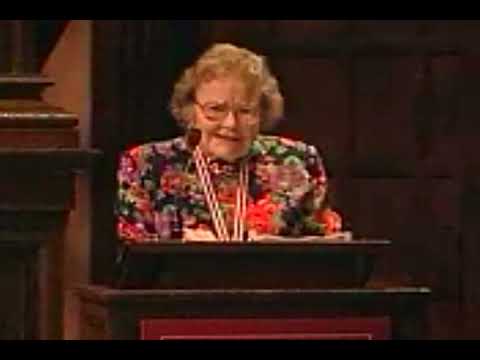
3/12/2002 - Acceptance Speech

I have had the opportunity to study a great many rivers most of which are in the United States. Whereas most of my studies have been on freshwater portions of rivers, I have also made some studies on the saltwater portions or the estuaries of rivers. My studies started when I was a small child taking walks with my father on Sunday afternoon. At the end of the walk, he would gather water from the nearby stream, put it in a bottle, and we would return home. Following a brief period of refreshment of milk and cookies, we would go into the library where he had a large roll-top desk and in this roll-top desk were microscopes. He selected the one that was suitable for what he wanted to show me, and thus I learned a great deal about the diversity of life in rivers.

In 1945, I gave a talk at the American Association for the Advancement of Science, and I pointed out that in a natural river there are a great many species of plants and animals and that these species formed ecosystems, and that it was the functioning of these ecosystems that made possible the removal of pollution from a river.

After the talk, a Mr. Hart, a lesser official in the old Atlantic Refining Company came up to me and said, "You have discovered facts that will help us in this burgeoning problem of water pollution". He went away and raised the money that made it possible for me to prove the importance of species diversity in maintaining water quality in rivers.

More recently I have come to realize that in the various habitats in a stream, such as the riffles, the pools, or among the vegetation, there are functioning ecosystems of aquatic life, which by their functioning are able to remove the pollutants from the stream. For example, among the plants growing in a stream, one will find detritivores, algae, herbivores, omnivores, and carnivores. These ecosystems also exist in polls and riffles.

It is this high diversity and redundancy that gives stability to the natural biological systems in rivers. Without such redundancy, cleansing or the restoring of the stream to its natural conditions would probably be difficult or impossible. Thus a great number of species organized into ecosystems is the basis for rejuvenation of water quality and shifts in kinds and numbers of species enable one to measure the imprint of man's activity on the ecosystem. This is the basis of the theory which Dr. Lovejoy has called "the Patrick principle".

The amount of water on our planet is limited. It is recycled through evaporation, precipitation, and runoff. Through this recycling it is cleansed.

In the 1970s I was able to show the importance of wetlands, particularly Tinicum Marsh, which is now part of the Heinz Preserve on the Delaware River. These studies showed that in the 512 acres of Tinicum Marsh the reduction of pollution in the river per day would be about 7.7 tons of BOD, 4.9 tons of phosphorus as PO4, 4.3 tones of nitrogen as ammonia, 138 lbs. of nitrogen as nitrates, and there would be an increase of 20 tons of oxygen. This ability of marshlands to remove pollutants from the river is the reason why these marshlands are so important to maintain their natural functioning condition.

The oceans are large but they must not become polluted. Thus it is very important that we maintain our natural wetlands in our estuaries and the natural functioning of the riverine systems.
Ruth Patrick