
Robert Langer
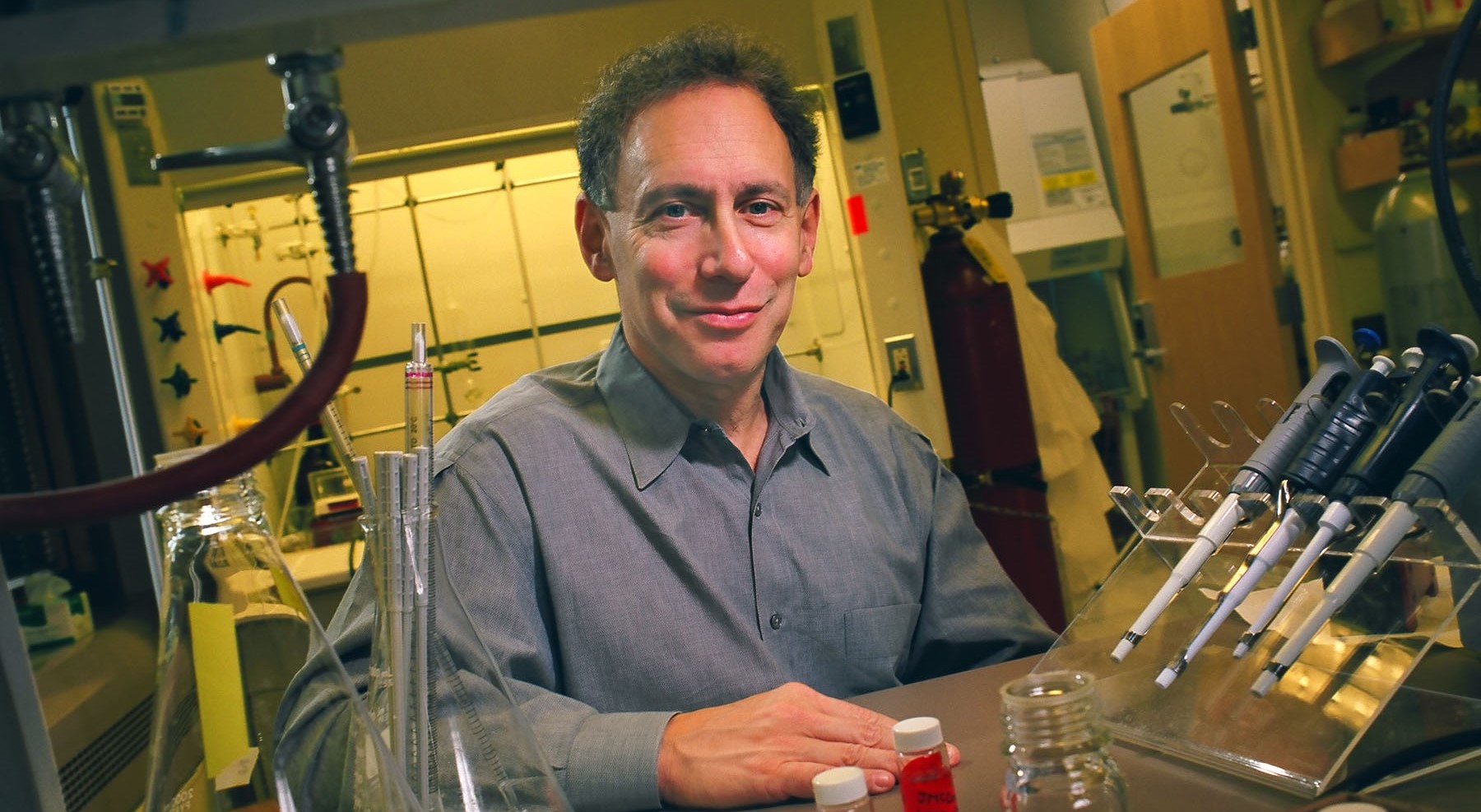
Robert S. Langer receives the Heinz Award for Technology, the Economy and Employment for a pioneering career that has spawned new realms of scientific exploration and human healing.
A chemical engineer turned medical pioneer, Dr. Langer is a Massachusetts Institute of Technology researcher whose breakthrough discoveries have revolutionized the delivery of drugs and the engineering of human tissue. He holds 500 issued and pending patents for scores of ground-breaking inventions.
He began his career in the mid-1970s as an MIT graduate student at Children's Hospital in Boston. Recruited by the noted cancer researcher and surgeon Dr. Judah Folkman, Dr. Langer focused his research on finding a plastic material that would allow large molecules of protein to seep through at a slow and steady pace, thus isolating them to determine how they interact with tumors. He failed again and again until he began experimenting with the plastics in powder form. It was an epiphany that led to the launch of a new field - controlled drug release. A steady wave of discoveries would follow: magnetically controlled drug-release implants, transdermal ultrasound drug delivery, and 3D polymer scaffolds for growing human tissue, among others.
Over 100 different companies have licensed Dr. Langer's patents and are creating products based on his innovations. He admits to being partial to the big ideas, the ones that other companies won't pursue because they are too early or risky. But the risks often pay large dividends. Among the products based on his research: a long acting growth hormone that spares children from dwarfism; a dime-size wafer that delivers chemotherapy directly to a site where a tumor has been removed; and the Gliadel Wafer, the first therapy to extend the lives of patients with glioblastoma multiforme brain cancer. In addition to improving the lives of countless patients, his discoveries have spawned an entire industry. The annual market for controlled-release drugs exceeds $20 billion today.
Dr. Langer, whose MIT laboratory is the largest biomedical engineering lab in the world, and Jay Vacanti are conducting seminal research into the field of tissue engineering. They have been working since 1986 to grow livers and other tissue for use in organ transplantation. Artificial skin, cartilage and bones now are being made to treat burn and orthopedic patients.
The only active member of all three U.S. national academies - Engineering, Science and Medicine - Dr. Langer has a worldwide reputation not only for his trail-blazing innovations, but also for helping his students take their ideas to the marketplace. More than 200 of his students are working throughout the United States, Europe and Asia at pharmaceutical and medical-device companies, biotech firms and universities.
A bold, gifted and creative medical pioneer, Dr. Langer has helped bring healing and hope to so many people. He has been called one of history's most prolific inventors in medicine and his work has been pivotal in prolonging life and easing the suffering of millions of people around the world. And yet, his colossal achievements over the past three decades are but the earliest steps toward a more profound understanding of these new fields of scientific endeavor.
Note: This profile is excerpted from the commemorative brochure published at the time of the awards' presentation.
UPDATES SINCE RECEIVING THE HEINZ AWARD
January 2013 - Robert Langer to receive Israel's 2013 Wolf Prize for innovations that "have had a profound impact on medicine." - Washington Post
December 2012 - Robert Langer to receive the National Medal for Technology and Innovation, becoming one of only a handful of Americans to have won both it and the National Medal of Science. He is honored for his revolutionary work on novel drug-delivery systems based on polymers, and his research on biomaterials, tissue engineering and nanotechnology. - MIT News
October 2011
- Robert Langer is to receive the 2011 Economist Innovation Award for Bioscience. The judges noted that he is "one of the most innovative and influential biomedical
engineers of our time" and that his "proven successes in drug-delivery and tissue
engineering have made possible new forms of medication and treatment." - The Economist Conferences and Summit
September 2011 - Robert Langer is named co-recipient of this year's Warren Alpert Foundation Award, a $250,000 unrestricted award. The Alpert Prize was created to reward scientists whose discoveries have made great progress in new therapies for a wide range of diseases. - MITNews
June 2011 - Robert S. Langer, the David H. Koch Institute Professor at Massachusetts Institute of Technology, has been selected to receive the 2012 Priestley Medal. Langer, 62, is being honored with the American Chemical Society�s most prestigious award in recognition of cutting-edge research. - Chemical and Engineering News
October 2010 - During its 2010 annual meeting, the National Academy of Engineering (NAE) presented two awards for extraordinary impact on the engineering profession. The first of these awards was the Academy�s Founders Award, given to Robert Langer, who has made contributions in the areas of drug delivery and tissue engineering. - National Academy of Engineering
April 2009 - Robert Langer is one of four civic and scientific leaders to receive the University of California, San Francisco, highest honor, the UCSF Medal. The medal is the university's most prestigious award, given annually to individuals who have made outstanding personal contributions in areas associated with UCSF's mission, goal and values. - UCSF press release
June 2008 - Dr. Robert Langer has received the world's largest prize for technology innovation, the $1.2 million Millennium Technology Prize, the third time the award has been given. Robert Langer, who has pioneered new ways to administer drugs to cancer patients, received the award from Tarja Halonen, president of Finland, at a ceremony in Helsinki. The award is given every other year by Technology Academy Finland. - The Boston Globe
June 2008 - Institute Professor Robert Langer has been chosen as one of two winners of the 2008 Max Planck Research Award, a 1.5 million-euro science prize funded by the German government. Langer was recognized for his research on the development of biomimetic materials (materials fabricated based on natural processes found in biological systems). Langer shares the award with Peter Fratzl of the Max Planck Institute for Colloids and Interfaces, a pioneer in the field of biological and biomimetic materials. - MIT News
June 2008 - Robert Langer is one of five scientists to receive a top Spanish honor, the 2008 Prince of Asturias Award for Technical and Scientific Research. The five were recognized as "worldwide leaders in the creation of new materials for the benefit of mankind." Langer was cited for developing "novel biomimetic materials in the form of polymers, nanoparticles or chips which permit the controlled delivery of drugs throughout the human body." The Prince of Asturias Awards
have been awarded annually since 1981 in eight different categories: Technical and Scientific Research, Arts, International Cooperation,
Communication and Humanities, Social Sciences and Letters and Sports and Concord. - MIT News
October 2007 - Dr. Robert Langer was the first recipient of the Jeffrey Wenig Memorial Award for Outstanding Achievement in Drug Delivery. The award, established by the Nastech Pharmaceutical Company, seeks to create greater awareness and appreciation for the critical role drug delivery plays in the development of improved therapeutics. - Obesity, Fitness & Wellness Week&
July 2007 - Dr. Robert Langer was awarded the National Medal for Science at the White House for work exploring the intersection of bioengineering and material science. He synthesized a plastic that allows large molecules of drugs to pass through and fight cancer at the site of a tumor as well as developed structures that promote tissue growth, allowing doctors to grow artificial skin for burn victims. - Albany Times Union
July 2006 - Langer joins Accelrys NanoBiology Initiative's Scientific Advisory Committee along with Leroy Hood of the Institute of Systems Biology. Accelrys is a leading provider of scientific modeling and workflow software solutions and the advisory committee will help assess and develop information technology solutions that address nanotechnology-enabled pharmaceutical and diagnostic design. - Associated Press Financial Wire
February 2006 - Langer is inducted into the National Inventors Hall of Fame, an institution that recognizes the world's greatest inventors. Langer is included among the 2006 inductees for revolutionizing the world of biotechnology. - National Inventors
Hall of Fame
November 2005 - Langer is honored with the 2005 Von Hippel Award from the Materials Research Society. The award is given every year to individuals who have been involved in significant research projects in their discipline. This year's award goes to
Langer for "inventing the use of materials for protein and DNA delivery." - Materials Research Society
November 2005 - Langer receives the Health and Medicine World Technology Award from the World Technology Network. The award honors those selected by the global science and technology community as being the most inventive and long lasting in their contributions. - Massachusetts Institute of Technology
July 2005 - Langer and the team of researchers that make up his lab have successfully implanted "viable, vascularized 3-D muscles derived from human embryonic stem cells" in living mice. Once in the mice, the tissues integrated with the body's own tissue, giving hope to the idea of "creating replacement parts for the human body" in the future. - Health Insurance Week
April 2005 - Langer wins the Albany Medical Center Prize in Medicine and Biomedical Research. The prize, $500,000, is "the largest medical prize in the United States", and goes to Langer for his extensive research in plastics which has inevitably "led to new ways to deliver medications." - Albany Times Union
March 2005 - Langer is named Institute Professor, "the highest honor awarded by the MIT faculty and administration." He receives the honor for his extraordinary work concerning drug delivery strategies and tissue revitalization, most of which he has completed at MIT. - Massachusetts Institute of Technology
August 2004 - Langer's latest invention, the "SonoPrep", is approved by the U.S. Food and Drug Administration. The device, which is used to deliver topical anesthetics to numb the area before a procedure, "zaps people and creates temporary pores, super-little-tunnels, in the skin so stuff can go through." Langer and his team will continue researching in hopes of finding a similar method of general medicine delivery that doesn't involve needles. - The Washington Post
June 2004 - Langer is honored by General Motors Cancer Research Foundation with a cash prize of $250,000 for his revolutionary research that has literally changed the face of modern medicine. - The Boston Globe
Speech
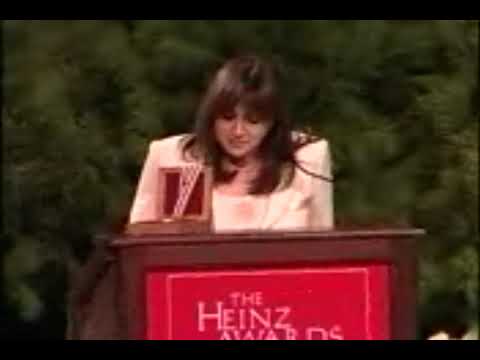
12/4/2003 - Acceptance SpeechDr. Laura Langer accepted the Heinz Award for her husband, Robert Langer.
It is an honor to be here tonight, to accept the Heinz Award for my husband, Dr. Robert Langer. He is, unfortunately, not able to be here due to a prior commitment - keeping him halfway around the world ... so he asked me to represent him.
In 1993, announcing the Heinz Award, Mrs. Heinz described John Heinz's many special qualities, such as:
"Joy, optimism, curiosity, a willingness to take risks, a love of people, a belief that he could make the world a better place and the gritty determination to make it happen ..."
I see a number of those same qualities in my husband as well. Bob is a beloved professor at MIT. He is very proud of having mentored hundreds of students - many have become professors at over a hundred universities, and a number of them have started their own companies with Bob's help. This has led to the creation of thousands of jobs and numerous life-saving products. His students will tell you that they experienced first hand his optimism, love of people and his gritty determination to create important, new technologies. They come to his Lab, eager to work in the forefront of biotechnology, but they leave in awe of the incredible gift Bob has given them - knowing they can believe in themselves and to dream big dreams.
This past May, there was a cover story about Bob in the Boston Globe Magazine entitled "The Crusader." The Globe's Headline read: "Robert Langer doesn't believe in science for science's sake. He sees it as a means to change the world - and he has."
What most people don't know, is that it was an incredible journey for Bob to arrive where he is today. Early in his career, the scientific community didn't believe Bob's ideas were achievable - when he first proposed new plastics to deliver drugs, and again, when he created materials to grow new tissues in the human body. But he persisted, and that perseverance has spawned an arsenal of new technologies that have improved and saved countless lives.
For these and other discoveries, Bob has been cited as one of the most prolific inventors in history. Those who know Bob, would also tell you he is a very caring and humble guy ...and if he were here tonight, he would tell you that he could not have accomplished all of these things ...without ME - no, actually, he would have thanked the many people who have worked with him - the students, the post-docs, his colleagues and his family - and he would tell you, that he is humbled and honored, to have been chosen to receive this extra-ordinary award.
Thank you.