
Rick Lowe
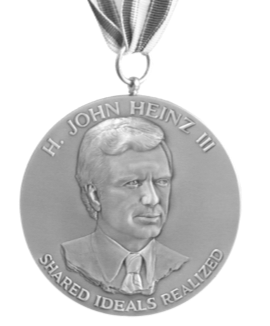
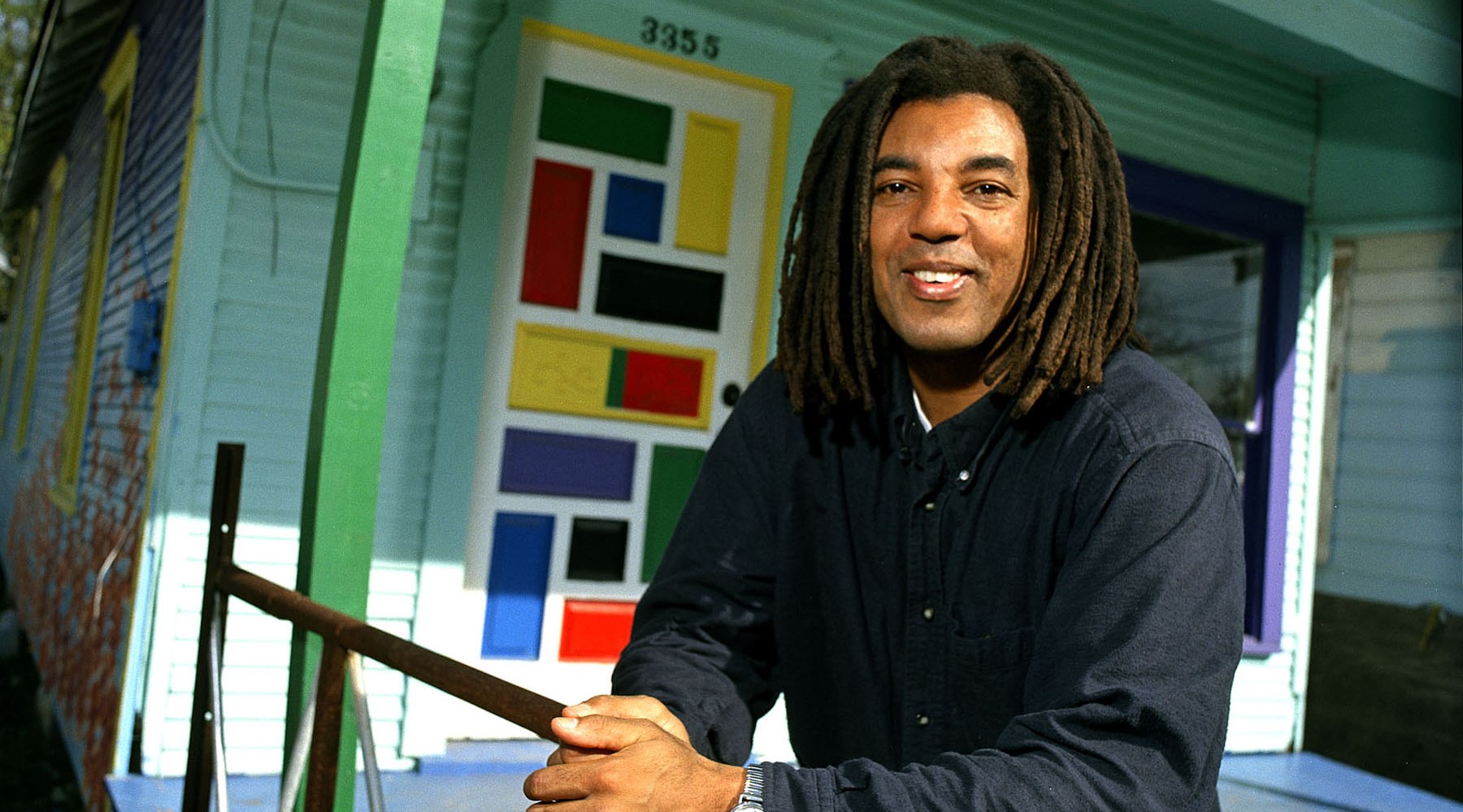
Dudley Cocke and Rick Lowe share the Heinz Award in the Arts and Humanities for providing a voice and a sense of pride and place for people who have not seen themselves reflected in the mainstream of American cultural institutions.From the beginning of his career, Rick Lowe has been committed to merging art with activism. That was why he founded Project Row Houses, a program that bought 22 "shotgun" houses in the middle of one of Houston's poorest neighborhoods, and renovated them into art galleries, workshop spaces, offices and housing for young single mothers where they can receive life skills training in child care, money management and home care.
The practical design of these houses was rooted in African architecture passed along through the slave trade; where others saw a slum in need of clearance and ready only for the wrecking ball, Mr. Lowe saw a challenge to preserve and celebrate a place that had a meaningful history. His goal was to create a world-class art project in a low-income neighborhood where such art is rarely seen and experienced. After much creative maneuvering, Mr. Lowe was able to purchase the houses in 1993. Today, Project Row Houses is a well-established public art program that the NEA considers to be a model for similar projects in other cities across the country.
Mr. Lowe's work has been included in national and international exhibitions and programs. This year he is a Loeb Fellow at the Harvard University School of Design, and he is currently working as the chief arts planner with Rem Koolhaas, architect of the new Seattle Public Library.
Note: This profile is excerpted from the commemorative brochure published at the time of the awards' presentation.
UPDATES SINCE RECEIVING THE HEINZ AWARD
December 2009 - Rick Lowe receives a 2009 United States Artists fellowship. Lowe’s early founding of Project Row House in Houston’s Third Ward in 1993 became the template for others to follow on how to bring local people together to engage their own creative energies and aesthetic values to produce a “collective expression” to reinstate a community. - USAFellows
July 2009 - Rick Lowe receives the 2009 Skandalaris Award for Excellence in Art and Architecture from the Skandalaris Center for Entrepreneurial Studies at Washington University in St. Louis. The award recognizes an artist, architect or designer whose individual or collaborative works, innovative projects and creative research have inspired new ideas and made a profound and lasting impact on society, culture, or the environment on a local, national or international level. - Washington University
January 2005 - Lowe's "Rick Lowe - Toward Social Sculpture" opens at the Glassell School of Art, and "spotlights recent photographs by the artist and documents several of his civic projects." The exhibit is Lowe's first in almost a decade - The Houston Chronicle
December 2002 - Lowe is hired to design the new Cultural Loop in Delray Beach, Florida. The loop is to be "a 30-minute, self-guided walking tour linking a dozen cultural zones, museums, art and entertainment areas. - Fort Lauderdale Sun-Sentinel
Speech
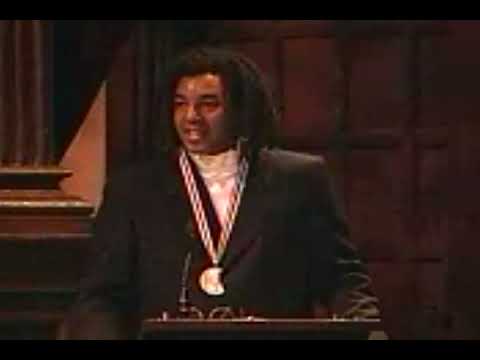
3/12/2002 - Acceptance SpeechLet me begin by thanking Teresa Heinz and the Heinz Family Foundation for this prestigious award. I also want to thank the nominators and jurors for selecting me.
It was in 1980 that I realize that I was going to pursue a career in art. At that time I didn't know what path a this career would take me but I always knew that I wanted to use whatever talents I developed as an artist to impact the quality of life of low-income families and communities.
Over the last 20 years I have found myself meandering in and out of the art world as I struggled to make work that reach the highest aesthetic goal and at the same time relevant to the people from backgrounds similar to mine. In 1992 I began to conceptualize Project Row Houses as a way of blurring the line between art and all aspects of life. It was much different than any of my previous work. There was the sense that I was moving away from the art world but in my mind I felt that I was contributing to the expansion of the art world into the rest of the world. Even so, I had difficulties reconciling the artistic merit of my work with its social value. This Heinz Award serves as a reminder to me that it does not matter if I my work or other artists work are considered inside or outside the art world. If it is worth doing, it should be done. And that I should leave it to the critics to decide if it's mainstream art or not.
Anyway, while I have been singled out to receive this award, I have to acknowledge that I would not be here if it was not for the many people who have shared in my dream of creating a new kind of art work that is both poetic and symbolic while at the same time practical in its application. And most of all thanks to the wonderful communities that have given me the privilege to work with them.
Thank you.