

Senator John Heinz

RELATED NEWS

  • Janine Benyus is named the 2012 Design Mind Award recipient by the Cooper-Hewitt Design Museum go >>
  • Andrew Grove is interviewed with Gordon Moore for NPR's Mornng Edition on their place in Silicon Valley history go >>
  • CNN's "The Next List" profiles Dr. Hugh Herr and his Biomechatronics Group at the MIT Media Lab go >>
  • Robert Langer's entrepreneurial drive is profiled in Chemical and Engineering News go >>
  • Hugh Herr and his bionics are profiled for TechWeekEurope go >>
  • Dean Kamen joins Elon Musk and Craig Venter to discuss energy innovation at ECOnomics Conference go >>
  • Kirk Smith shares the 2012 Tyler Prize for Environmental Achievement from USC go >>
  • Ruth Patrick, "Den Mother of Ecology", is profiled by the Intelligencer Journal go >>
  • Ralph Gomory co-authors op-ed in Bloomberg News on transparency for corporate money in political campaigns go >>
  • Carol Gilligan looks back on her 1982 book ‘In a Different Voice’ in the current issue of Harvard’s online journal Classics@ go >>
  • Jane Lubchenco is named Woman of the Year by the Women's Council on Energy and the Environment go >>
  • Bruce Katz is interviewed in Wired magazine on optimizing economic structures for revitalization go >>
  • Cary Fowler interviewed in The Atlantic on the importance of crop diversity and the vital role of the Svalbard Global Seed Vault go >>
  • New paper from Brookings’ Bruce Katz on "Remaking Federalism to Remake the American Economy" go >>
  • Mario Molina co-authors editorial piece on "How to cut climate change in half" go >>
  • Rita Dove is awarded the 2011 National Medal of Arts go >>
  • Paul Anastas is profiled in Forbes go >>
  • Paul Farmer writes editorial in the New York Times on why the global fund matters go >>
  • Marian Wright Edelman on the need for dedicated support and education opportunities to allow access to the American Dream go >>
  • The Scripps Center for Marine Biodiversity and Conservation, founded by Nancy Knowlton, celebrates its first decade go >>
  • Geoffrey Canada to receive the second Harvard Graduate School of Education Medal for Education Impact go >>
  • Chasing Ice, on James Balog's Extreme Ice Survey, is one of the most-sought tickets at Sundance Film Festival go >>
  • Paul Farmer talks to CBS about new state-of-the-art hospital in Haiti go >>
  • Marian Wright Edelman is interviewed on public television's One On One. go >>
  • Environmental reporter Jane Kay interviews Paul Anastas on his move from EPA back to academia go >>
  • Ashok Gadgil is awarded the Zayed Future Energy Prize’s Lifetime Achievement Award go >>
  • Ian Cheney's new film, "The City Dark," reviewed on the Huffington Post go >>
  • Marian Wright Edelman reflects on Martin Luther King, Jr.’s words in Huffington Post column go >>
  • Mildred Dresselhaus is awarded the Enrico Fermi Award by President Obama go >>
  • Daniel Sperling interviewed about CAFE, the new federal fuel-efficiency standards go >>
  • Paul Anastas to depart postion heading EPA's research to return to Yale University in February go >>
  • Curt Ellis and FoodCorps profiled in Associated Press video go >>
  • Dean Kamen writes about 20 years of FIRST at the Huffington Post go >>
  • Elizabeth Kolbert is interviewed on Treehugger Radio go >>
  • The Boston Globe writes about the genesis of John Harbison's new Sixth Symphony, commissioned by the Boston Symphony Orchestra go >>
  • Mercury News profiles Ashok Gadgil's Darfur Stoves Project go >>
  • Rita Dove interviewed on NPR about her work on the Norton Anthology of 20th Century Poetry go >>
  • Leroy Hood is interviewed by the Seattle Business Magazine on his background, education, work and his vision for medicine go >>
  • Documentary on James Balog and the Extreme Ice Survey has world premiere at Sundance Film Festival go >>
  • Watch Vartan Gregorian, president of the Carnegie Corporation, serve as host for the 17th Heinz Awards go >>
  • University of Massachusetts Boston adds another major sculpture by Mark di Suvero to its Arts on the Point go >>
  • Lynn Goldman interviewed on NPR regarding mercury emissions from power plants go >>
  • Robert Langer's 34 year career at MIT is profiled in The Tech newspaper go >>
  • Elizabeth Kolbert posts "Top Ten Signs We Are Living in a Warming World" for 2011 in The New Yorker go >>
  • Bill Thomas pens an Op-Ed piece on the elderly for BBC News Health go >>
  • On Paul Farmer's struggle to reassemble a health strategy for Haiti go >>
  • Andrew Grove and Ralph Gomory contribute to 'roundtable' on returning manufacturing to the U.S. for The American Prospect go >>
  • Richard Alley is presented with the inaugural Stephen H. Schneider Award go >>
  • Cary Fowler writes in the Huffington Post about the impact of "Feeding an Ever-growing Population" go >>
  • Marian Wright Edelman emphasized the role of young people in advocating for change in Stanford University lecture go >>
  • Ralph Gomory and Andrew Grove contribute to 'roundtable' on returning manufacturing to the U.S. for The American Prospect go >>
  • "songbirdsongs," composed by John Luther Adams, reviewed in The New York Times go >>
  • Richard Alley interviewed on EarthSky about his work on abrupt climate change go >>
  • Joseph DeRisi part of panel discussing how bacteria research can help explore disease and drug discovery go >>
  • Huffington Post explores the Green House Project developed by Dr. William Thomas go >>
  • Robert Langer's work on recreating vocal cords profiled in Bloomberg News go >>
  • Amory Lovins' new book, Reinventing Fire, is released go >>
  • Bruce Katz co-authors piece for Time magazine on the Pragmatic Caucus and creating jobs go >>
  • The Atlantic excerpts Sandra Steingraber's thoughts on gardening and climate change from her latest book, Raising Elijah go >>
  • SmartPlanet interviews Louis Guillette on impact of toxic chemicals on the reproductive systems of wildlife go >>
  • Joel Salatin is profiled in Time magazine go >>
  • Indiana University creates AIDS-HIV research grants in honor of Surgeon General C. Everett Koop go >>
  • Joan Kleypas is interviewed about her research on ocean acidification on EarthSky go >>
  • Cary Fowler's Svalbard Seed Vault in Norway featured in Dornith Doherty's photographs in Wired go >>
  • Jacques d'Amboise's National Dance Institute establishes itself in a permanent home in Harlem go >>
  • Joel Salatin is interviewed for NPR's On Point about his new book go >>
  • The Wisconsin State Journal writes about John Harbison's commission for Pro Arte Quartet's 100th anniversary go >>
  • Gretchen Daily wins 2011 Biodiversity Award from the Prince Albert II of Monaco Foundation go >>
  • Marian Wright Edelman writes in the Huffington Post about adults needing to "shape up and close the hypocrisy gap" go >>
  • "Clouds of Forgetting, Clouds of Unknowing" by John Luther Adams is performed by San Francisco Contemporary Music Players go >>
  • The Los Angeles Times profiles Donald Berwick and his work on Medicare and Medicaid go >>
  • Aaron Beck is co-author on new study showing cognitive behavioral therapy can work to treat severe schizophrenia go >>
  • Fast Company and EarthSky partner to produce, "Biomimicry, Nature of Innovation," starting with Janine Benyus interview go >>
  • Andrew Grove's push to accelerate medical research profiled in San Jose Mercury News go >>
  • Leroy Hood offers "A Personal View of Systems Biology and the Coming of Big Science" in Genetic Engineering News go >>
  • Curt Ellis talks about FoodCorps on the Nourish blog go >>
  • Dr. Mildred Dresselhaus is named as the 2012 Acta Materialia Materials and Society recipient go >>
  • The Medical University of South Carolina interviews Louis Guillette about his work and the 17th Heinz Award go >>
  • Geoffrey Canada debates questions about the nation's education system on NBC's Education Summit go >>
  • Geoffrey Canada participates in New York Times debate on the length of the school day go >>
  • Nancy Knowlton is interviewed on NPR's Living On Earth go >>
  • Marian Wright Edelman is interviewed by theGrio on education and poverty go >>
  • Elizabeth Kolbert to receive the David R. Brower Award from the Sierra Club, which recognizes outstanding environmental reporting go >>
  • Students from Dave Eggers' 826 writing centers collaborate on new book, "Be Honest" go >>
  • Robert Langer is to receive the 2011 Economist Innovation Award for Bioscience go >>
  • The Memphis Flyer profiles Cary Fowler and his brainchild, the Svalbard Global Seed Vault go >>
  • Brenda Eheart receives the Harmony with Hope award from the Elfenworks Foundation go >>
  • John Luther Adams interviewed by Fairbanks News-Miner on recieving the Heinz Award go >>
  • The 17th Heinz Awards and the ten recipients are highlighted in The Huffington Post go >>
  • Ian Cheney and Curt Ellis are interviewed on MSNBC about receiving the Heinz Award go >>

The Heinz Awards

2010

Richard Feely

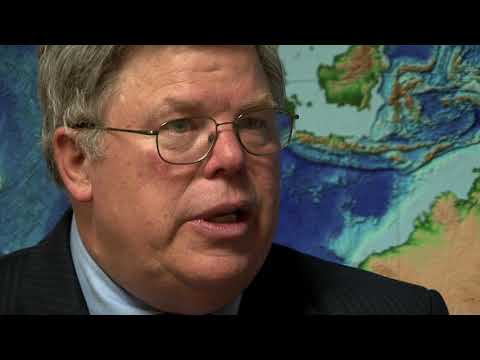
Logging more than 1,000 days at sea on over 50 scientific expeditions, Dr. Richard Feely of Seattle, a senior research scientist at the National Oceanic and Atmospheric Administration’s (NOAA) Pacific Marine Laboratory, has played a leading role in examining the acidification of oceans and shifting public policy to address this growing issue.

In fact, ocean acidity is now considered global warming's "evil twin," thanks in large measure to Dr. Feely's seminal research on the changing ocean chemistry and its impact on marine ecosystems. He argues that with the continuation of uncontrolled "greenhouse" gas emissions, the acidity of the world’s oceans will double by the end of the century.

Dr. Feely is sounding the alarm that our oceans are becoming more acidic earlier than expected, which has enormous impact on the environment. His groundbreaking research includes leading NOAA expeditions, such as one off North America's Pacific coast that discovered the startling fact that corrosive waters were at acidic levels not predicted by climate change models to occur for decades.

Richard Feely has spent his federal government career researching and understanding ocean chemistry and the effects of human-induced changes, particularly excess carbon dioxide, on the world’s seas. Early on, his findings were largely ignored. However, recognizing ocean acidity as an environmental problem with potentially catastrophic economic consequences, Dr. Feely persistently and methodically applied the highest levels of scientific inquiry as the problem grew in scope and intensity. He has also leveraged media platforms to explain the problem of ocean acidification and to increase its visibility more publicly. Dr. Feely maintains that "the decisions we make now, over the next 50 years, will be felt over hundreds of thousands of years."

Note: This profile is excerpted from the commemorative brochure published at the time of the awards' presentation.

Speech

11/15/2010 - Acceptance Speech

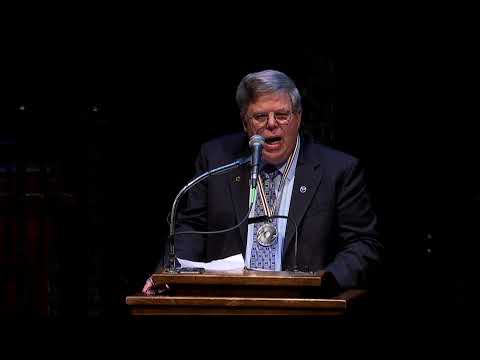
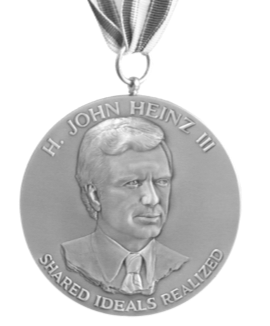
Well, Gretchen, you’re a very hard act to follow.  I really enjoyed being here this evening.  I think we’re all very happy to be here this evening.   I want to thank Teresa very much for this special award.   This award is especially significant to me because it honors John Heinz, who like you Teresa, clearly understood the importance of a healthy environment to the prosperity and livelihoods of our inhabitants of our planet Earth. It was John’s bipartisan efforts and courage to speak out on environmental issues that lead to the passage of the Clean Air Act of 1990. I am very grateful to the Heinz Foundation for focusing attention on the essential role of science in providing the information necessary to address environmental problems like global climate change and ocean acidification.  It is indeed through your work Teresa, that we scientists are challenged every single day to live up to John’s legacy and to speak out on environmental issues of concern to us all and to our nation.  

I am very pleased that this award has focused attention on the long-term role of the oceans in absorbing carbon dioxide from the atmosphere, from the burning of fossil fuels emissions for energy.  We now know that our marine ecosystems could very well pay a very stiff price for taking up the excess carbon dioxide and continue along the pathway of emission of CO2 as our primary source of energy.  We now understand very clearly, that the entire food chain from the tiniest plants that provide the oxygen we breathe, to the fish and shellfish that provide the food we need for human beings to live, are at stake.  These new research results have shown us just how much our marine ecosystems depend on the good will and the stewardship concerning the choices that we humans make about our energy needs while sustaining a clean environment.  

I am grateful to you, Teresa and to the Heinz Foundation for highlighting the importance of this environment to our humanity and to ourselves as a population.  I also want to thank our leaders at NOAA, particularly the Honorable Jane Lubchenco, Craig McLean,  Eddie Bernard, for supporting my research on the carbon cycle and ocean acidification in the oceans over the last 30 years of my career.  And in particular I would like to thank my family, Teresa, my wife; my children, Shawna, Kristofor, Matthew, Brenna, his new wife of two months.  And I want to really appreciate all that everyone has done for me and my career, for the love they have shown me and the support they have shown me over the years.

Thank you all very much.

Richard Feely
Richard Feely