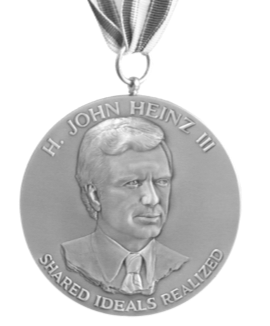

Senator John Heinz

RELATED NEWS

  • Paul Farmer interviewed on PBS NewsHour regarding delivery of aid in Haiti go >>
  • Paul Farmer interviewed on 60 Minutes regarding the crisis in Haiti go >>
  • Paul Farmer pens Op-Ed on Haiti in Miami Herald go >>
  • Dave Eggers among Poets and Writers magazine's "Fifty of the Most Inspiring Authors in the World" go >>
  • Jerry Franklin co-authors editorial in The Oregonian supporting Oregon forests bill go >>
  • Christopher Field co-authors study that links global warming to shifting ecosystems go >>
  • Peggy Shepard co-authors editorial in issue of Environmental Justice journal go >>
  • Hugh Herr and his prosthetics research are profiled in Forbes magazine go >>
  • Rick Lowe receives 2009 United States Artists Fellowship go >>
  • U.S. Senator Dick Lugar named one of the 25 greatest public servants over the past 25 years go >>
  • The new book, "Storms of My Grandchildren" by James Hansen, released today go >>
  • Geoffrey Canada and the Harlem Children's Zone profiled on 60 Minutes go >>
  • Brenda Krause Eheart receives a 2010 AARP Magazine Inspire Award go >>
  • John Holdren makes Foreign Policy's first annual list of 100 top global thinkers go >>
  • James Hansen makes Foreign Policy's first annual list of 100 top global thinkers go >>
  • Amory Lovins makes Foreign Policy's first annual list of 100 top global thinkers go >>
  • Paul Farmer makes Foreign Policy's first annual list of 100 top global thinkers go >>
  • Bernard Amadei is recipient of 2009 Honorary Member Award from the National Groundwater Association go >>
  • Chip Giller and grist.org profiled on Voice of America go >>
  • Kirk Smith co-authors a six paper series in The Lancet on the direct health benefits of reducing carbon dioxide and other greenhouse emissions go >>
  • Dee Boersma highlighted in Washington Post article on penguins' role as environmental indicators go >>
  • Joel Salatin is profiled in the Christian Science Monitor go >>
  • Aaron Beck presented with the Anna-Monika Prize for lifetime achievement go >>
  • Paul Farmer writes an Op-Ed on juvenile offenders for the Boston Globe go >>
  • Joel Salatin is a speaker at TEDx MidAtlantic go >>
  • The London Times writes about a new nanotechnology cancer therapy co-developed by Robert Langer go >>
  • Dave Eggers wins 2009 Prix Medicis for best foreign work go >>
  • Geoffrey Canada named 2010 winner of the Brock International Prize in Education go >>
  • Hugh Herr profiled in The Jerusalem Post go >>
  • Geoffrey Canada receives Robert Coles Award from Harvard group go >>
  • Dean Kamen receives the Stevens Honor Award go >>
  • Mario Molina co-authors a paper that targets non-CO2 climate change agents to help curb global warming go >>
  • James Hansen co-authors a report on the retreat of the Himalayn glaciers go >>
  • Dave Eggers to be presented with The Literarian Award from the National Book Council go >>
  • President Obama proposal hopes to export success of Harlem Children's Zone go >>
  • Thomas Smith profiled on Voice of America go >>
  • Joel Salatin profiled on culinate.com go >>
  • Ashok Gadgil Appointed to the Rudd Family Foundation Chair at University of California, Berkeley go >>
  • Ashok Gadgil interviewed on EarthSky go >>
  • Mark di Duvero's "Motu Viget" in Grand Rapids is revisited 32 years later go >>
  • Geoffrey Canada profiled in the Seattle Times go >>
  • Rick Lowe's Project Row Houses is revisited by the Houston Chronicle go >>
  • August Wilson Center for African American Culture opens in Pittsburgh go >>
  • Andrew Grove profiled in The Economist go >>
  • Bruce Katz and Metropolitan Policy Program at Brookings launch blog on TNR go >>
  • Token Creek Chamber Music Festival, co-founded by John Harbinson, celebrates 20 year anniversary go >>
  • Paul Farmer appointed as Deputy Special Envoy to Haiti by former President Bill Clinton go >>
  • Paul Anastas nominated by President Obama to head research at the EPA go >>
  • Geoffrey Canada and the Harlem Children's Zone profiled in The Washington Post go >>
  • George Woodwell authors a book, "The Nature of a House, Building a World that Works" go >>
  • Hurricane Katrina and its aftermath is the setting of Dave Eggers' new non-fiction book, "Zeitoun" go >>
  • Jane Lubchenco interviewed by Yale Environment 360 go >>
  • George Woodwell pens a column on the Amazon basin for Washington Monthly go >>
  • James Hansen is profiled in The New Yorker go >>
  • Leroy Hood pens "A Doctor's Vision of the Future of Medicine" for Newsweek magazine go >>
  • James Hansen opinion piece is published in Yale Environment 360 go >>
  • Jerry Franklin and co-authors release a new study on the decline of old growth trees in Yosemite go >>
  • Rita Dove publishes a new book of poetry go >>
  • Geoffrey Canada and the Harlem Children's Zone profiled by David Brooks in The New York Times go >>
  • James Hansen shares the inaugural Peter A. A. Berle Environmental Integrity Award from the Audubon Society go >>
  • Amory Lovins wins 10th National Design Awards from the Cooper-Hewitt in the Design Mind category go >>
  • Andrew Grove honored with lifetime achievement award at National Inventors Hall of Fame go >>
  • Mario Molina appointed to President's Council of Advisors on Science and Technology (PCAST) go >>
  • Dorothy Height honored with the Louis E. Martin Great American Award go >>
  • James Hansen interviewed on EarthSky go >>
  • 60 Minutes profiles DEKA prosthetic arm developed by Dean Kamen go >>
  • Millie Dresselhaus to Receive 2009 Vannevar Bush Award go >>
  • A new book highlights Herbert Needleman's groundbreaking work on lead poisoning go >>
  • Hugh Herr profiled in Boston Magazine go >>
  • Dean Kamen interviewed about his FIRST competitions in The National Journal go >>
  • Paul Farmer honored with Lois Pope LIFE International Achievement Award at the University of Miami go >>
  • Video of Joseph DeRisi's TED presentation of the ViroChip made available on TED.com go >>
  • Steve Wozniak to join start-up company Fusion-io as chief scientist go >>
  • Aaron Beck and his research into depression are profiled in The Boston Globe go >>
  • Bernard Amadei writes guest commentary in the Boulder Daily Camera go >>
  • James Hansen selected as EarthSky Scientist Communicator of the Year go >>
  • Jane Lubchenco named to head NOAA by President-elect Barack Obama go >>
  • John Holdren named as President-elect Barack Obama's chief science advisor go >>
  • Herb Needleman featured on NPR's Tech Nation with Moira Gunn go >>
  • Lois Gibbs is profiled in Audubon Magazine on the 30th anniversary of Love Canal go >>
  • Paul Ehrlich interviewed on EarthSky on his new book go >>
  • James Hansen named one of Discover Magazine's 10 Most Influential People in Science in 2008 go >>
  • Jane Lubchenco contributes to National Public Radio Morning Edition go >>
  • Peter Matthiessen is the 2008 National Book Award winner for fiction go >>
  • Amory Lovins featured among America's Best Leaders of 2008 by U.S News and World Report go >>
  • Marian Wright Edelman featured among America's Best Leaders of 2008 by U.S News and World Report go >>
  • Jane Lubchenco writes op-ed for The Oregonian on protecting ocean treasures go >>
  • Paul Farmer pens editorial on health care in The Daily Beast go >>
  • Dorothy Height is interviewed on 'Tell Me More' on NPR go >>
  • Joseph DeRisi interviewed on Tech Nation go >>

The Heinz Awards

2004

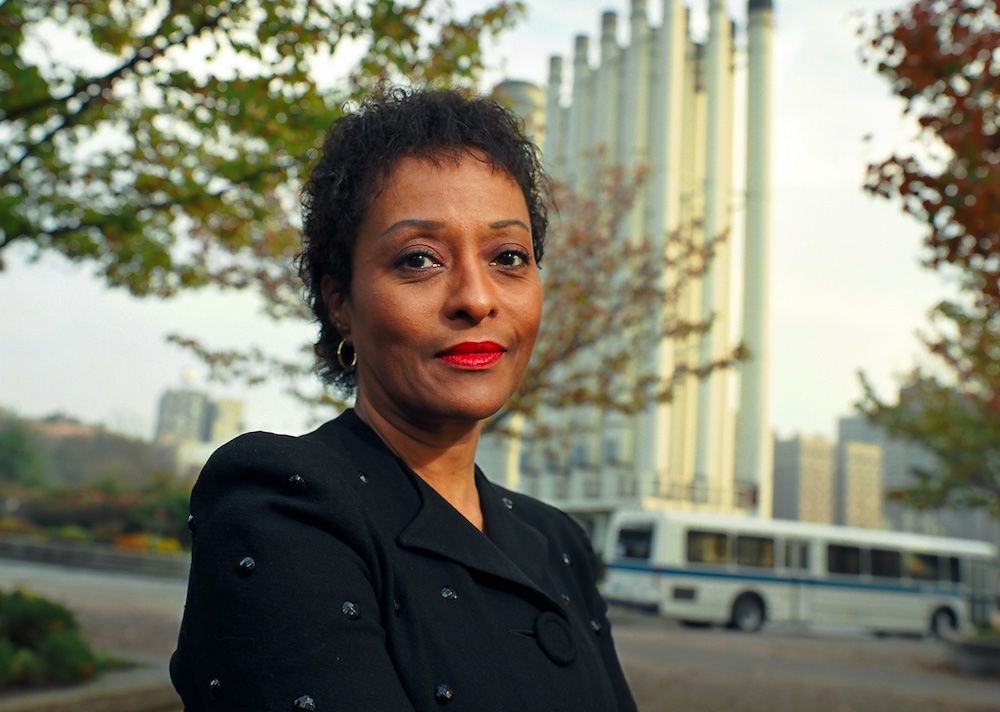
Peggy Shepard

Peggy M. Shepard receives the Heinz Award for the Environment for her courageous advocacy and determined leadership in combating environmental injustice within urban America.

An environmental crusader and tireless champion for ecological equality on behalf of inner cities, she raised her voice - and later a veritable army - against a systemic form of racism that threatens to sacrifice the environmental health of poor urban areas. She is the co-founder and executive director of West Harlem Environmental Action (WE ACT), a platform from which she has helped do battle locally against environmental hazards as well as serve nationally as a model for grassroots activism and coalition building.

Ms. Shepard began her career as a journalist, becoming the first African-American beat reporter for the Indianapolis News. She moved to New York in 1971 to begin a publishing career and in 1979, assumed the first of several positions with the State Division of Housing and Community Renewal. It was there perhaps that the first seeds of social activism began to take root.

In 1988, troubled by the noxious odors being emitted by the North River sewage treatment plant, she helped to organize an act of civil disobedience. She and six other community organizers - the "sewage seven" - donned gas masks and held up traffic near the plant. They were promptly arrested, but not before they had made their point.

Ms. Shepard continued to mobilize community support, and later in 1988, co-founded WE ACT. The group filed a lawsuit against New York City over the sewage plant, and four years later, won an unprecedented victory. The mayor created a $55 million odor abatement plan in 1992 and the settlement in 1993 created a $1.1 million fund for the benefit of the West Harlem community.

A dynamic coalition builder, Ms. Shepard since has turned a small group of committed volunteers into a professionally staffed environmental justice organization, both in northern Manhattan and on a national level. She rallied the support of political leaders and the Transit Workers Union in a successful public education campaign that is helping the city make a transition from gas-powered to natural gas-powered buses and depots.

She is a ubiquitous presence within the arena of environmental activism. To improve children's environmental health in northern Manhattan and the South Bronx, Ms. Shepard organized an academic community collaboration through Columbia University's Center for Children's Environmental Health. She is the principal investigator of the center, is a board member of the New York League of Conservation Voters and supervises staff of the EPA-sponsored project, Real-Time Monitoring and Communication of Levels of Fine Particles - Ozone and Black Carbon in Northern Manhattan.

From an abandoned Harlem brownstone that will be converted to a state-of-the-art "green building," WE ACT operates programs in environmental health and community-based research, environmental education, and community and youth empowerment. The organization has cooperative partnerships with physicians and scientists at leading medical institutions, labor unions and diverse environmental, public health and urban constituencies.

Peggy Shepard has successfully combined grassroots organization, environmental advocacy and scientific research to become one of the most highly respected environmental advocates in the country today. She has been a pioneer for advancing the cause of environmental equality in our inner cities, ensuring that the entitlement of clean air, water and soil extends to all people, irrespective of their socio-economic status. Hers is a brave voice, speaking out for many silent and powerless voices.

Note: This profile is excerpted from the commemorative brochure published at the time of the awards' presentation.


UPDATES SINCE RECEIVING THE HEINZ AWARD  

September 2007 - The U.S. Environmental Protection Agency awards Shepard's organization WE ACT a $100,000 Community Action for a Renewed Environment (CARE) grant. Now in its third year, EPA's CARE program supports communities in creating and using collaborative partnerships to identify sources of pollution and reduce human exposure. WE ACT's Northern Manhattan neighborhood is the first CARE community in New York City. WE ACT was chosen out of a field of 127 applicants nationwide.

March 2007 - Shepherd is among a distinguished group of individuals to receive the 2008 New York State Women of Excellence Award from Governor Designate David Paterson.  Given in conjunction with Women's History Month, the award recognizes extraordinary contributions to communities in a wide range of disciplines. - Office of the Governor of the State of New York


May 2006 - Shepard and her organization WE ACT for Environmental Justice join the fight for "car-free Central and Prospect Parks" in New York City. By publicly supporting Intro 276, WE ACT and Shepard have thrown their weight behind a bill that would remove traffic and restore the parks as "safe, healthy, car-free places of summer recreation." Intro 276 "has been gaining momentum in the City Council" but no official decision has been reached. - U.S. Newswire  

October 2005 - Shepard is honored by West Harlem Group Assistance, Inc. at a "reshaping our neighborhood fundraiser." As one of five honorees, Shepard was recognized for her work in improving "environmental policy, public health, and quality of life in communities of color." - The New York Beacon  

March 2005 - Shepard receives a Sol Feinstone Environmental Award from the SUNY College of Environmental Science and Forestry. She is being honored with the award for her "revitalization of her community of West Harlem." - Environmental Science and Forestry website (www.esf.edu)  

November 2004
- Shepard's non-profit organization WE ACT, together with the Natural Resources Defense Council in Washington, are suing the Environmental Protection Agency. The two organizations  'filed suit to reinstate federal controls that reduce the risk to children from rat poisons." - Los Angeles Times  

May 2004 - "In recognition of her leadership and commitment to promoting environmental justice for the child, youth, and families of the West Harlem Community" Shepard receives the Dean's Distinguished Service Award from Columbia University's Mailman School of Public Health.


Speech

12/4/2003 - Acceptance Speech

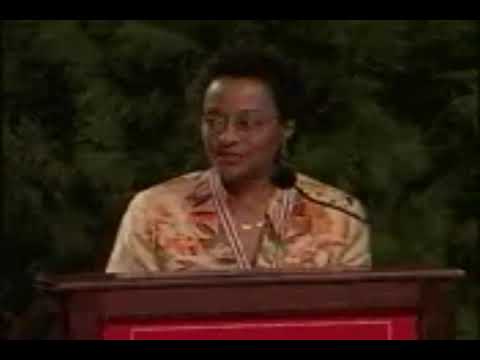
These awards are dedicated to the spirit of the late Sen. John Heinz who confronted environmental concerns with innovation, action and creativity. I am honored that the Heinz Foundation, its nominators, jurors and directors believe that I have brought these characteristics to my work and to West Harlem Environmental Action, which was founded as a result of community environmental struggles. Its mission - with significant value added by co-founder Vernice Miller-Travis, our program director Cecil Corbin-Mark, a committed staff, and hundreds of other environmental justice leaders - is to build community power to achieve environmental justice by improving environmental protection, policy, and environmental health.

I believe that this award I accept tonight is an acknowledgement of the vigor, vision, and strength passionately exhibited by hundreds of affected residents of color and low-income, those here and abroad working within the multi-issue, multi-racial Environmental Justice Movement. This environmental, economic, and social justice uprising is a young and dynamic one that has redefined environment to embrace all the habitats where we live, work, play and go to school.

We raise our voices to declare that all residents do not have access to clean water and clean air, equal environmental enforcement and protection, and equitable land use and zoning. Many are sick and dying from disproportionate environmental exposure to pollution, toxins, and policies that have scarred the health, and quality of life of residents in communities of color and low income especially children and the elderly. To address the increased risk and poor outcomes, we work with innovators like Dr. Kenneth Olden at the National Institute of Environmental Health Sciences (NIEHS) to help define the environmental health research agenda nationally and locally. Through the development of community/academic partnerships -- like ours with researchers at the Columbia School of Public Health - we are able to assess community-identified exposures of concern and address these real and potential health impacts through community-based participatory research. Our partnerships enrich the science and research ethics, develop strategic interventions and broad coalitions, help translate the research into policy and practice, and communicate the findings in culturally appropriate ways.

Building power and democracy is at the heart of building robust communities that speak for themselves. It is at the heart of our own sustainability: how we will evolve as a planet, a nation or a neighbor. As an observant, introverted young woman growing up in the 1960s, I had a vision of communicating social and cultural concerns by writing a great novel, a play or publishing a magazine. That was the passion of all the successful women I saw in 1950s era movies. Though women's lib had not erupted yet, my parents never cautioned against my quiet passions that had no role model I had ever met. Instead my parents talked in their way of power and democracy, of community, culture, and demonstrated their connection and contribution to building community.

I have had many challenges and opportunities, and sadly I could not take so many roads and be one traveler. Over time, my writing skills led me to "behind the scenes" politics - a seminal turn in the road for me - where I appreciated a closer view of power and democracy at hard work or, in some communities, out to lunch. My embattled community needed to speak for itself, and my Harlem neighbors elected and empowered me to organize its voice to address environmental concerns. Instead of continuing to pursue public office, I had help from many including my partner Charles in understanding the different but significant contribution I could make by institutionalizing resources and advocacy in an underserved community like Harlem. In projecting and unifying a voice in one's own community, environmental justice leaders have built power and the passion for democratic environmental decision making from the streets and the fields, to statehouses and hallowed halls.

On behalf of the staff and board of West Harlem Environmental Action, on behalf of the Harlems of this world, I sincerely thank you for this honor.
Peggy Shepard
Peggy Shepard