
Senator John Heinz

RELATED NEWS

  • Janine Benyus to share the 2013 Gothenburg Award for Sustainable Development go >>
  • Mary Good and her career in chemistry is profiled in a short film by the Chemical Heritage Foundation go >>
  • Jay Keasling to receive 2013 George Washington Carver Award for innovation in industrial biotechnology go >>
  • Jay Keasling and his current work on artemisinin profiled in San Francisco Business Times go >>
  • Joint BioEnergy Institute, headed by Jay Keasling, to be renewed until 2018 go >>
  • The Nuclear Threat Initiative, with Sam Nunn and Richard Lugar, proposes new strategy to reduce conflict and to encourage security go >>
  • Robert Langer pens a piece for Project Syndicate on Going Against Conventional Wisdom go >>
  • Robert Langer is interviewed on NPR’s Science Friday go >>
  • C. Everett Koop, former surgeon general, has died at age 96 go >>
  • Marian Wright Edelman to receive Harvard Graduate School of Education's Medal for Education Impact go >>
  • Susan Seacrest is profiled by the Lincoln Star Journal go >>
  • Jay Keasling's semi-synthetic anti-malarial artemisinin now being produced in bulk and ready for introduction go >>
  • Hugh Herr speaks on cutting edge bionics at the Digital-Life-Design Conference go >>
  • Jay Keasling is profiled on CNN's The Next List go >>
  • Sidney Drell receives the National Medal of Science go >>
  • Philosopher Anthony Grayling interviews Robert Langer on the BBC's "Exchanges on the Frontier" go >>
  • Robert Langer to receive Israel's 2013 Wolf Prize for innovations that "have had a profound impact on medicine" go >>
  • Mildred Dresselhaus interviewed on The Age of Reason on the BBC World Service go >>
  • Leroy Hood to receive the National Medal of Science go >>
  • Robert Langer to receive the National Medal of Technology and Innovation go >>
  • Leroy Hood and his vision of P4 medicine is profiled by The National go >>
  • The New York Times reviews Ann Hamilton’s installation, “the event of a thread,” at the Park Avenue Armory go >>
  • Robert Langer's MIT lab's success in technology transfer is profiled in the New York Times go >>
  • James Balog is profiled on NPR's Weekend Edition go >>
  • Bernard Amadei appointed as Science Envoy for the U.S. State Department go >>
  • The Harvard Crimson writes about Robert Langer and a 'cyborg tissue' breakthrough at MIT and Harvard go >>
  • PandoDaily writes about "The Return of Dean Kamen" and the buzz surrounding his Stirling Engine go >>
  • Dean Kamen and his work is profiled by A Total Disruption, a project by Ondi Timoner go >>
  • James Balog interviewed in Fast Company on tracing the global decay of glaciers go >>
  • Janine Benyus is interviewed for TrimTab online magazine go >>
  • Robert Berkebile is interviewed by the Omega Institute for their Design by Nature Conference go >>
  • The Washington Post cites the work of Richard Feely and Joan Kleypas on the impact of ocean acidification on fisheries go >>
  • Dudley Cocke makes the case for rural theater in Howlround go >>
  • Dean Kamen interviewed on Charlie Rose on working with Coca-Cola on water issues go >>
  • Paul Farmer co-authors article "Cholera and the Road to Modernity" in America's Quarterly go >>
  • Tom "Smitty" Smith pens OpEd requesting Texas PUC to embrace energy alternatives go >>
  • Richard Jackson is interviewed on Living On Earth go >>
  • Russell Train, renowned conservationist and recipient of the 7th Heinz Award Chairman's Medal, dies at 92 go >>
  • Lou Bellamy to direct August Wilson's play, "Fences," at the Denver Center Theatre Company go >>
  • Hugh Herr believes that bionics can put people with disabiities back to work go >>
  • Elizabeth Kolbert reports from the Andes in Yale's Environment 360 go >>
  • di Suvero sculpture settles into new home at Stanford University go >>
  • NPR reports on Joseph DeRisi's work on a link between deadly Ebola virus and disease that's been killing boa constrictors go >>
  • New study by James Hansen ties recent heat waves to global warming go >>
  • James Hansen pens an Op-Ed piece on climate change for The Washington Post go >>
  • Mildred Dresselhaus profiled in U.S. News and World Report go >>
  • Prized Science's first episode of 2012 highlights the work of Robert Langer go >>
  • Mildred Dresselhaus is interviewed in The New York Times go >>
  • Hugh Herr is profiled on Jothy Rosenberg's "Who Says I Can't" go >>
  • Dave Egger's latest novel, A Hologram for the King, is reviewed in The New York Times go >>
  • Mildred Dresselhaus is the 2012 recipient of the Kavli Prize for Nanoscience go >>
  • Robert Langer to receive the 2012 Society of Chemical Industry's Perkin Medal go >>
  • Paul Anastas to receive the German Chemical Society’s Wohler Prize go >>
  • Pittsburgh Symphony Orchestra offers videos of Mason Bates discussing his go >>
  • Janine Benyus is named the 2012 Design Mind Award recipient by the Cooper-Hewitt Design Museum go >>
  • Andrew Grove is interviewed with Gordon Moore for NPR's Mornng Edition on their place in Silicon Valley history go >>
  • CNN's "The Next List" profiles Dr. Hugh Herr and his Biomechatronics Group at the MIT Media Lab go >>
  • Robert Langer's entrepreneurial drive is profiled in Chemical and Engineering News go >>
  • Hugh Herr and his bionics are profiled for TechWeekEurope go >>
  • Dean Kamen joins Elon Musk and Craig Venter to discuss energy innovation at ECOnomics Conference go >>
  • Kirk Smith shares the 2012 Tyler Prize for Environmental Achievement from USC go >>
  • Ruth Patrick, "Den Mother of Ecology", is profiled by the Intelligencer Journal go >>
  • Ralph Gomory co-authors op-ed in Bloomberg News on transparency for corporate money in political campaigns go >>
  • Carol Gilligan looks back on her 1982 book, In a Different Voice, in the current issue of Harvard's online journal Classics@ go >>
  • Jane Lubchenco is named Woman of the Year by the Women's Council on Energy and the Environment go >>
  • Bruce Katz is interviewed in Wired magazine on optimizing economic structures for revitalization go >>
  • Cary Fowler interviewed in The Atlantic on the importance of crop diversity and the vital role of the Svalbard Global Seed Vault go >>
  • New paper from Brookings’ Bruce Katz on "Remaking Federalism to Remake the American Economy" go >>
  • Mario Molina co-authors editorial piece on "How to cut climate change in half" go >>
  • Rita Dove is awarded the 2011 National Medal of Arts go >>
  • James Nachtwey honored with 3rd Dresden International Peace Prize go >>
  • Paul Anastas is profiled in Forbes go >>
  • Paul Farmer writes editorial in the New York Times on why the global fund matters go >>
  • Marian Wright Edelman on the need for dedicated support and education opportunities to allow access to the American Dream go >>
  • The Scripps Center for Marine Biodiversity and Conservation, founded by Nancy Knowlton, celebrates its first decade go >>
  • Geoffrey Canada to receive the second Harvard Graduate School of Education Medal for Education Impact go >>
  • Chasing Ice, on James Balog's Extreme Ice Survey, is one of the most-sought tickets at Sundance Film Festival go >>
  • Paul Farmer talks to CBS about new state-of-the-art hospital in Haiti go >>
  • Marian Wright Edelman is interviewed on public television's One On One. go >>
  • Environmental reporter Jane Kay interviews Paul Anastas on his move from EPA back to academia go >>
  • Ashok Gadgil is awarded the Zayed Future Energy Prize’s Lifetime Achievement Award go >>
  • Ian Cheney's new film, "The City Dark," reviewed on the Huffington Post go >>
  • Marian Wright Edelman reflects on Martin Luther King, Jr.’s words in Huffington Post column go >>
  • Mildred Dresselhaus is awarded the Enrico Fermi Award by President Obama go >>
  • Daniel Sperling interviewed about CAFE, the new federal fuel-efficiency standards go >>
  • Paul Anastas to depart postion heading EPA's research to return to Yale University in February go >>
  • Curt Ellis and FoodCorps profiled in Associated Press video go >>
  • Dean Kamen writes about 20 years of FIRST at the Huffington Post go >>
  • Elizabeth Kolbert is interviewed on Treehugger Radio go >>
  • The Boston Globe writes about the genesis of John Harbison's new Sixth Symphony, commissioned by the Boston Symphony Orchestra go >>

The Heinz Awards

2003

Paul MacCready

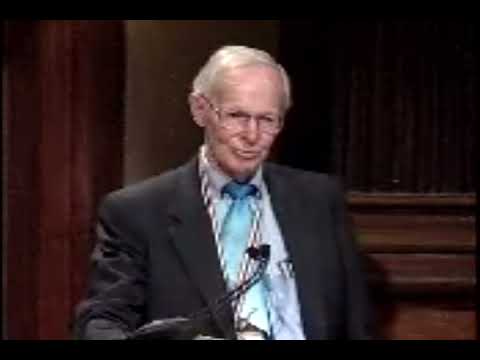
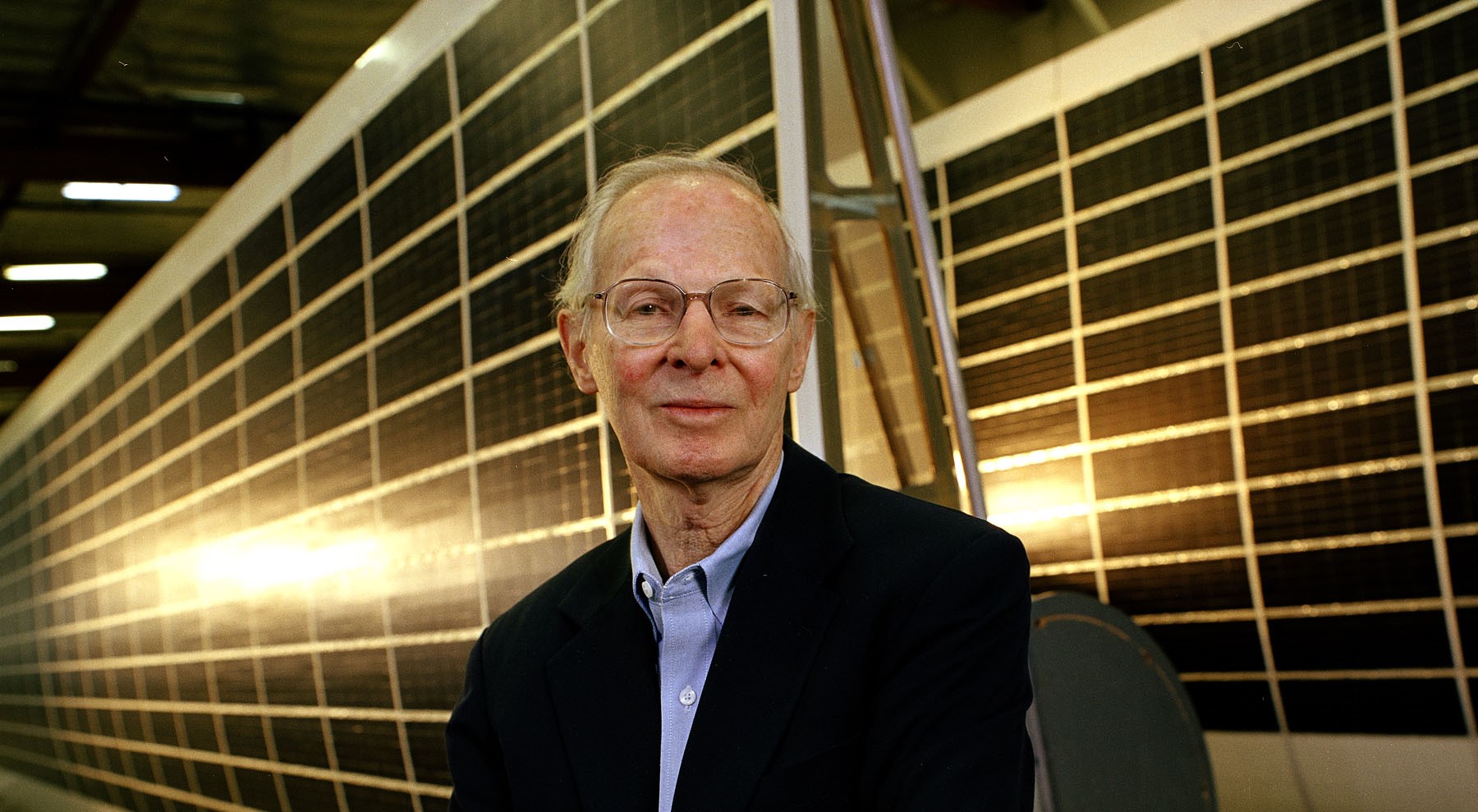
Paul B. MacCready, the "father of human-powered flight", receives the Heinz Award for Technology, the Economy and Employment for his visionary work in creating non-fossil fuel aircraft and automobiles.

This intrepid inventor and unconventional thinker has spent his life creating and building impossible things. His employees call him "Chief Visionary Officer."

Dr. MacCready's fascination with aerodynamics was apparent at an early age. He became a serious model airplane enthusiast as a teenager, yet he had little use for commercial kits. His custom-made miniature planes set records in model airplane competitions.

He soon learned to fly real planes and flew in the U.S. Navy training program during World War II. After the war, he shifted his interest to sailplanes, a type of glider, and won the U.S. National Soaring Championships three times and the international championship in France in 1956. Between all that flying, he earned his bachelor's degree in physics at Yale and a master's and a doctorate in aerosciences at the California Institute of Technology. Armed with the technical knowledge to match his passion for flying, he began to invent astonishing machines.

His theoretical understanding of the soaring patterns of hawks and turkey vultures inspired him to devise a unique way for a person to fly. With balsa wood, cardboard, Mylar plastic, cellophane tape and piano wire, he built a plane with a 96-foot wingspan. A single pedal-driven propeller powered the 70-pound aircraft. The human-powered Gossamer Condor made history in 1977 by flying a mile-long figure eight route to win the prestigious Kremer Prize. The aircraft is now on permanent display at the Smithsonian's National Air and Space Museum. The following year, its successor, the Gossamer Albatross, flew across the English Channel.

Dr. MacCready's inventiveness has not been limited to flying machines. His company, AeroVironment, designed the solar-powered Sunraycer automobile for General Motors in 1987 and three years later developed the GM-Impact electric car.

AeroVironment is currently creating the Helios aircraft for NASA, which uses the sun's energy to fly to almost 97,000 feet, two miles higher than any plane has flown steadily. The Helios is being tailored to stay for months above 60,000 feet to provide efficient radio communications and to conduct studies on the effects of greenhouse gases on the earth's environment. AeroVironment was also involved in developing a widely used, remote-controlled electric spy drone for the Defense Department.

Paul MacCready is not only a brilliant inventor. He is also a deeply committed environmentalist who has used his genius to control pollution and develop alternative energy sources for transportation. He summed up his philosophy in an essay in 1996: "The sky is not the limit; the Earth is."

Note: This profile is excerpted from the commemorative brochure published at the time of the awards' presentation.


REMEMBERING

Paul MacCready passed away on August 28, 2007.

In Memory of Paul MacCready


UPDATES SINCE RECEIVING THE HEINZ AWARD

January 2007 - AeroVironment IPO Launches Skyward. - SeekingAlpha.com

July 2006 - Who Killed the Electric Car? debuts in movie theaters. This documentary explores the issues surrounding General Motors' EV1, the electric car invented by MacCready in 1996. - The Chicago Tribune

August 2005 - MacCready receives the San Gabriel Valley Economic Partnership's Technology Leadership Award for his breakthrough contributions to the world of aviation. He received his award in front of hundreds of friends, business partners, and family who had gathered in Pasadena to pay tribute to his career. - The San Gabriel Valley Tribune

November 2004 - MacCready delivers the sixth William E. Boeing Distinguished Lecture, sponsored by Purdue University's School of Aeronautics & Astronautics. His lecture is entitled "Powering Devices with Minimum Renewable Energy" and concerns ideas about how power and energy can be conserved by simply "paying attention to fundamentals." - Purdue University Aeronautics and Astronautics

April 2003 - MacCready receives a Bower Award from the Franklin Institute in Philadelphia for being "the father of human-powered flight." He is honored for carrying on the traditions of men like the Wright Brothers who took risks and pushed the limits of aeronautics. - The Philadelphia Inquirer

Speech

3/3/2003 - Acceptance Speech

Well, thank you Teresa. And ladies and gentlemen, in two minutes it's hard to give much substance to the thoughts that you've had, but I'll make a stab at it starting with the enthusiasm that you saw in the video for model airplanes as a youngster, but got deeply involved in it. And then after World War II and pilot training, getting involved in sail planes as a hobby and flying light planes as a hobby, but soon these became serious dedications. The sail planning got me connected with people who were very effective at convincing me I should get advanced degrees and do a lot of research. And the power plane flying got me into doing cloud seeding, and because that field was just getting started when I was in school. And flying planes in the company Meteorology Research. Then the company became that largest group in the country, in the world, doing research on how weather modification would work, a subject that I continued in very actively for about 10 years. But that's all because you found if you seeded some place, it made a lot of people happy, but the people who were unhappy with the possible added rainfall would sue. And as a result no large organization has ever gotten involved in the weather modification work.

In 1976 I got the strange mission of the human powered airplane. The mission was because I owed $100,000 to a bank that I had asked to provide money for a friend to start a company. The company didn't succeed, and I was stuck with the debt. And when I realized that the human-powered flight which had been started 17 years earlier and nobody had come close to winning a $100,000 prize associated with it, I suddenly became an enthusiast for human-powered flight and worked out a way eventually that was very simple and straightforward. Just keep the weight of the plane very light. Even though the plane swelled up in size to 96 feet wingspan, it only weighed 70 pounds as it flew and that was the main secret to it. I got various friends involved in it, did the project, succeeded in '77, but unfortunately two thirds of the $100,000 was spent doing the project. So there wasn't enough to handle that debt. But Henry Cramer who put up the prize, now put up a new prize for something he thought would take another 18 years to win ... a flight across the English Channel. And we designed a plane to do that, which is just the basic original plane cleaned up a bit using modern materials, because if you cut down the power required by about 20 percent, a person can put out that power for a much longer period of time if you have the right person, and we did. We were very lucky to have Brian Allen flying the plane. And the flight across the English Channel worked in '79. And then there was a $200,000 prize and when all debts were paid, that was just enough to handle this $100,000 note at the bank. And I did not do any more human powered flights.

But that lead to other subjects and I started a solar plane project because it seemed essential to get the country thinking more about he use of solar cells for power. To fly an airplane with them didn't really seem very practical, but it was something that I could do that would make people sit up and think about solar cells, and got Dupont to sponsor the project and we did a solar, actually two solar powered, airplanes. First fixed up a small version of the human powered plane with a solar panel instead of pedals. My son, Marshall, actually made the first solar powered flight. Marshall is actually with me here tonight. That was on May 18, 1980 which my wife Judy alleged later had been our anniversary day for our marriage. And I should remember it in the future. And also Mount St. Helen's blew up that day, and I have remembered that date.

These projects were interesting, getting to be more a part of my activities. And then I got the Lindberg Award in 1982 and had to make a presentation to the Lindberg Foundation which was the occasion for me to focus all my attention on what I really had been doing, what subjects I was involved in, what I was interested in, and found that they fitted very well. Charles Lindberg's last 15 years when he was an environmentalist and I gave that presentation, but for the first time it got me thinking clearly about what I was interested in. And what I was enthused about was a world that works, a world that will be effective in 2000, 2050, 2100 and so on. And as I looked around at various projects, I pretended I was a space traveler who would visit the earth every 5000 years and just see what was going on. And for the previous 1000 visits just saw the same flora and fauna growing and things going on, but the last time, sort of right now, I saw this huge difference of humans dominating the society. And found that 98 percent of the vertebrate life mass on land and air is now humans and their livestock and pets. And only two percent of vertebrate mass in air and ground is wild nature. Ten thousand years ago, our 98 percent was not even 1/10th of one percent. Now it's 98 percent. And we just have to understand the huge effect that humans have on Earth. We tend to think, we sort of look around us, ourselves, and see what's here now, and may think about how it's going to change a little bit if you let your mind search a few 100 years in the past, a few 100 years in the future, you got a much bigger view and much more important one.

Now I'm trying to see if I can make an impact on these big effects that are going on in the world. The kind of consumption we have. I personally believe we can cut down our use of power, at least the kind of power that we can get from natural things not from fossil fuel. We can cut that power down by a factor of ten or so, from what we're using. We don't realize it until still we start thinking about it and calculate, and yes, you can make that big of a difference in the amount of energy we're using. And we have to if you try and think of what is civilization going to be in 50 years. In 100 years, we've got to be using less not more on one specific on cars. You heard that the company developed the impact car. It became the EV-1 that General Motors produced but now has taken back ... that suddenly batteries have gotten super efficient for cell phones and microcomputers. And you now could make a battery-powered car that would go 200, 250 miles, a regular five-passenger car. And if you do research on it and get the batteries working a little better, you could probably have 350, 400 mile electric car not using any fossil fuel. There's no car company that is interested in this subject right now. But we're putting pressures on them to get them interested and this is not just for this country. It's for many countries, and it's just one example of when you really start doing things that are important for the future.

It's amazing what you can do; things that were mildly efficient a few years back become very efficient and you focus on them. Just a ceiling fan, turns out you can get six times or use one sixth the amount of electricity to run it, and get the same amount of air flow when you want it. So just things like that you keep working on and the future is very exciting, and more exciting than the past has been. We thank Teresa for this honor.
Paul MacCready
Paul MacCready