
Senator John Heinz

RELATED NEWS

  • Steve Wozniak interviewed in Ireland’s Silicon Republic about innovation, the technology economy and Apple go >>
  • Leroy Hood guest blogs at The Wall Street Journal on what “Nonprofits Can Learn from Startups” go >>
  • Mary Good to head a new center focused on data visualization at the University of Arkansas at Little Rock go >>
  • Janine Benyus to share the 2013 Gothenburg Award for Sustainable Development go >>
  • Mary Good and her career in chemistry is profiled in a short film by the Chemical Heritage Foundation go >>
  • Jay Keasling to receive 2013 George Washington Carver Award for innovation in industrial biotechnology go >>
  • Jay Keasling and his current work on artemisinin profiled in San Francisco Business Times go >>
  • Joint BioEnergy Institute, headed by Jay Keasling, to be renewed until 2018 go >>
  • The Nuclear Threat Initiative, with Sam Nunn and Richard Lugar, proposes new strategy to reduce conflict and to encourage security go >>
  • Robert Langer pens a piece for Project Syndicate on Going Against Conventional Wisdom go >>
  • Robert Langer is interviewed on NPR’s Science Friday go >>
  • C. Everett Koop, former surgeon general, has died at age 96 go >>
  • Marian Wright Edelman to receive Harvard Graduate School of Education's Medal for Education Impact go >>
  • Susan Seacrest is profiled by the Lincoln Star Journal go >>
  • Jay Keasling's semi-synthetic anti-malarial artemisinin now being produced in bulk and ready for introduction go >>
  • Hugh Herr speaks on cutting edge bionics at the Digital-Life-Design Conference go >>
  • Jay Keasling is profiled on CNN's The Next List go >>
  • Sidney Drell receives the National Medal of Science go >>
  • Philosopher Anthony Grayling interviews Robert Langer on the BBC's "Exchanges on the Frontier" go >>
  • Robert Langer to receive Israel's 2013 Wolf Prize for innovations that "have had a profound impact on medicine" go >>
  • Mildred Dresselhaus interviewed on The Age of Reason on the BBC World Service go >>
  • Leroy Hood to receive the National Medal of Science go >>
  • Robert Langer to receive the National Medal of Technology and Innovation go >>
  • Leroy Hood and his vision of P4 medicine is profiled by The National go >>
  • The New York Times reviews Ann Hamilton’s installation, “the event of a thread,” at the Park Avenue Armory go >>
  • Robert Langer's MIT lab's success in technology transfer is profiled in the New York Times go >>
  • James Balog is profiled on NPR's Weekend Edition go >>
  • Bernard Amadei appointed as Science Envoy for the U.S. State Department go >>
  • The Harvard Crimson writes about Robert Langer and a 'cyborg tissue' breakthrough at MIT and Harvard go >>
  • PandoDaily writes about "The Return of Dean Kamen" and the buzz surrounding his Stirling Engine go >>
  • Dean Kamen and his work is profiled by A Total Disruption, a project by Ondi Timoner go >>
  • James Balog interviewed in Fast Company on tracing the global decay of glaciers go >>
  • Janine Benyus is interviewed for TrimTab online magazine go >>
  • Robert Berkebile is interviewed by the Omega Institute for their Design by Nature Conference go >>
  • The Washington Post cites the work of Richard Feely and Joan Kleypas on the impact of ocean acidification on fisheries go >>
  • Dudley Cocke makes the case for rural theater in Howlround go >>
  • Dean Kamen interviewed on Charlie Rose on working with Coca-Cola on water issues go >>
  • Paul Farmer co-authors article "Cholera and the Road to Modernity" in America's Quarterly go >>
  • Tom "Smitty" Smith pens OpEd requesting Texas PUC to embrace energy alternatives go >>
  • Richard Jackson is interviewed on Living On Earth go >>
  • Russell Train, renowned conservationist and recipient of the 7th Heinz Award Chairman's Medal, dies at 92 go >>
  • Lou Bellamy to direct August Wilson's play, "Fences," at the Denver Center Theatre Company go >>
  • Hugh Herr believes that bionics can put people with disabiities back to work go >>
  • Elizabeth Kolbert reports from the Andes in Yale's Environment 360 go >>
  • di Suvero sculpture settles into new home at Stanford University go >>
  • NPR reports on Joseph DeRisi's work on a link between deadly Ebola virus and disease that's been killing boa constrictors go >>
  • New study by James Hansen ties recent heat waves to global warming go >>
  • James Hansen pens an Op-Ed piece on climate change for The Washington Post go >>
  • Mildred Dresselhaus profiled in U.S. News and World Report go >>
  • Prized Science's first episode of 2012 highlights the work of Robert Langer go >>
  • Mildred Dresselhaus is interviewed in The New York Times go >>
  • Hugh Herr is profiled on Jothy Rosenberg's "Who Says I Can't" go >>
  • Dave Egger's latest novel, A Hologram for the King, is reviewed in The New York Times go >>
  • Mildred Dresselhaus is the 2012 recipient of the Kavli Prize for Nanoscience go >>
  • Robert Langer to receive the 2012 Society of Chemical Industry's Perkin Medal go >>
  • Paul Anastas to receive the German Chemical Society’s Wohler Prize go >>
  • Pittsburgh Symphony Orchestra offers videos of Mason Bates discussing his go >>
  • Janine Benyus is named the 2012 Design Mind Award recipient by the Cooper-Hewitt Design Museum go >>
  • Andrew Grove is interviewed with Gordon Moore for NPR's Mornng Edition on their place in Silicon Valley history go >>
  • CNN's "The Next List" profiles Dr. Hugh Herr and his Biomechatronics Group at the MIT Media Lab go >>
  • Robert Langer's entrepreneurial drive is profiled in Chemical and Engineering News go >>
  • Hugh Herr and his bionics are profiled for TechWeekEurope go >>
  • Dean Kamen joins Elon Musk and Craig Venter to discuss energy innovation at ECOnomics Conference go >>
  • Kirk Smith shares the 2012 Tyler Prize for Environmental Achievement from USC go >>
  • Ruth Patrick, "Den Mother of Ecology", is profiled by the Intelligencer Journal go >>
  • Ralph Gomory co-authors op-ed in Bloomberg News on transparency for corporate money in political campaigns go >>
  • Carol Gilligan looks back on her 1982 book, In a Different Voice, in the current issue of Harvard's online journal Classics@ go >>
  • Jane Lubchenco is named Woman of the Year by the Women's Council on Energy and the Environment go >>
  • Bruce Katz is interviewed in Wired magazine on optimizing economic structures for revitalization go >>
  • Cary Fowler interviewed in The Atlantic on the importance of crop diversity and the vital role of the Svalbard Global Seed Vault go >>
  • New paper from Brookings’ Bruce Katz on "Remaking Federalism to Remake the American Economy" go >>
  • Mario Molina co-authors editorial piece on "How to cut climate change in half" go >>
  • Rita Dove is awarded the 2011 National Medal of Arts go >>
  • James Nachtwey honored with 3rd Dresden International Peace Prize go >>
  • Paul Anastas is profiled in Forbes go >>
  • Paul Farmer writes editorial in the New York Times on why the global fund matters go >>
  • Marian Wright Edelman on the need for dedicated support and education opportunities to allow access to the American Dream go >>
  • The Scripps Center for Marine Biodiversity and Conservation, founded by Nancy Knowlton, celebrates its first decade go >>
  • Geoffrey Canada to receive the second Harvard Graduate School of Education Medal for Education Impact go >>
  • Chasing Ice, on James Balog's Extreme Ice Survey, is one of the most-sought tickets at Sundance Film Festival go >>
  • Paul Farmer talks to CBS about new state-of-the-art hospital in Haiti go >>
  • Marian Wright Edelman is interviewed on public television's One On One. go >>
  • Environmental reporter Jane Kay interviews Paul Anastas on his move from EPA back to academia go >>
  • Ashok Gadgil is awarded the Zayed Future Energy Prize’s Lifetime Achievement Award go >>
  • Ian Cheney's new film, "The City Dark," reviewed on the Huffington Post go >>
  • Marian Wright Edelman reflects on Martin Luther King, Jr.’s words in Huffington Post column go >>
  • Mildred Dresselhaus is awarded the Enrico Fermi Award by President Obama go >>
  • Daniel Sperling interviewed about CAFE, the new federal fuel-efficiency standards go >>
  • Paul Anastas to depart postion heading EPA's research to return to Yale University in February go >>
  • Curt Ellis and FoodCorps profiled in Associated Press video go >>

The Heinz Awards

2003

Paul Farmer

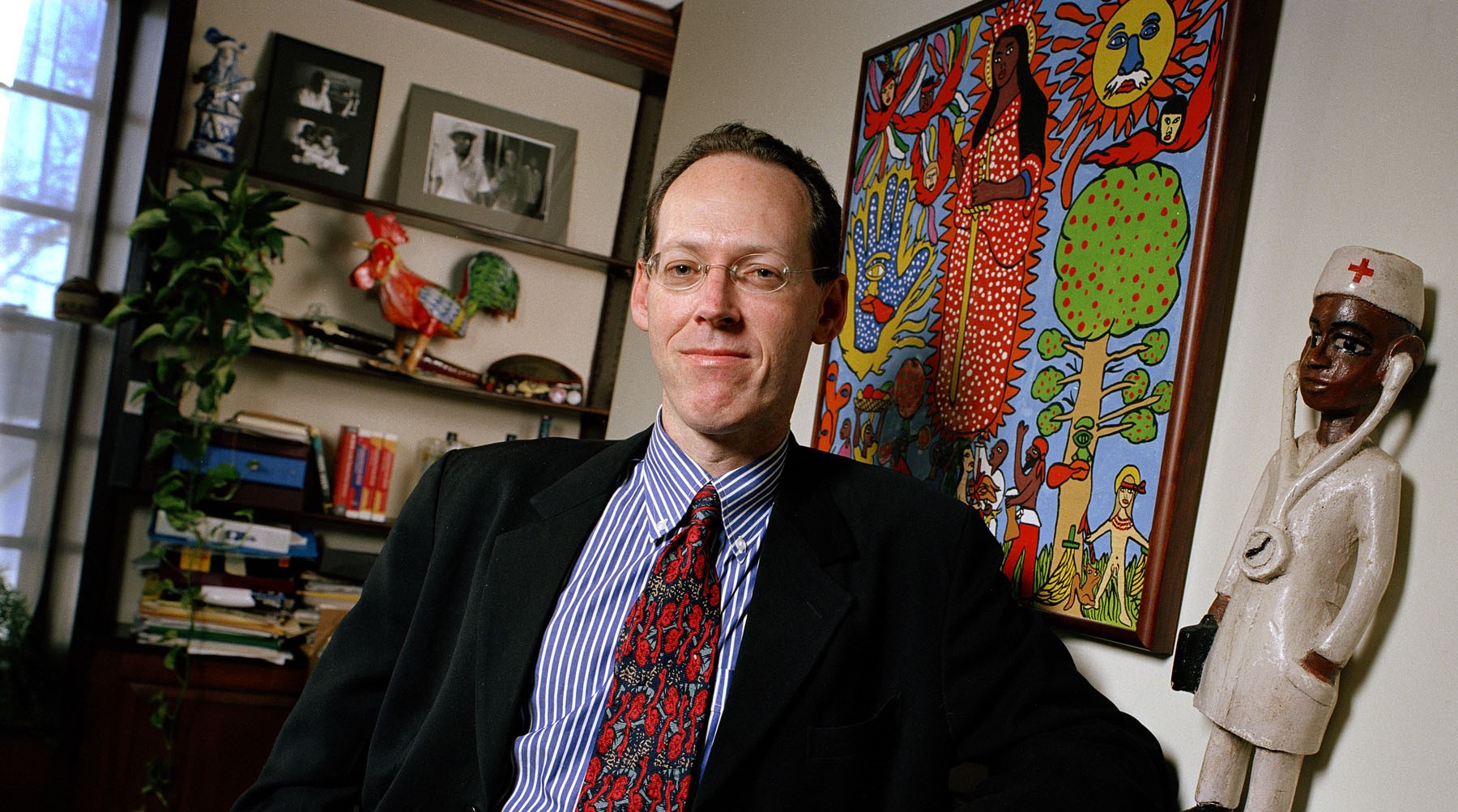
The Heinz Award for the Human Condition goes to Paul E. Farmer for his work in treating deadly infectious diseases among the world's poorest people.

Dr. Farmer is a medical doctor and a professor of anthropology at Harvard's Medical School who shuttles between Harvard and Haiti, where he maintains a practice at Clinique Bon Saveur, a charity hospital he helped found in the central plateau of Haiti.

Research in anthropology took him to Haiti in 1983; the medical needs of the poorest people in the western hemisphere keep taking him back. Infectious disease is endemic to the developing world because poverty breeds conditions hostile to good health. Haiti was challenged by an HIV/AIDS epidemic that began ravaging the island nation in the 1980s. International health experts firmly believed effective treatment of the virus and disease was impossible in the developing world.

Paul Farmer disagreed. He believes access to quality health care is a basic human right. He successfully challenged the conventional wisdom that AIDS drug treatment was too complicated to use in treating the poor in developing countries.

In Haiti, he began treating pregnant women with AZT to stop the transmission of HIV to their unborn babies. Later, his clinic began offering a three-drug treatment regimen to patients who were no longer responding to treatment for the other virulent diseases afflicting many AIDS victims. Because AIDS damages the immune system, other diseases, such as tuberculosis (TB) and severe pneumonia, often kill the weakened patients. Dr. Farmer and his team reinforced care for these and other common diseases.

He developed a community-based treatment method that includes daily and close monitoring by teams of community health workers to make sure the patients follow the complicated drug regimen. As a result, he stunned the medical world with clinical outcomes better than those in many inner cities in the United States.

The same community-based treatment was used to stem the spread of a super-strain of multi-drug resistant tuberculosis (MDRTB) in Peru and in the prisons of Russia. No effective vaccine exists for TB, which infects an estimated eight million people each year and kills more than two million. In the developing world, MDRTB was considered a death sentence. Even the World Health Organization considered the disease untreatable in poor countries.

Paul Farmer and his co-workers at Partners In Health proved them wrong again. He and his colleagues cured more than 80 percent of those with virulent TB in Peru. The World Health Organization, impressed by his success, reversed itself and adopted his treatment modality.

Dr. Farmer has not only devoted his talent and energy to treating the poorest of the poor, but he has also opened the eyes of the world to the inequities in global public health. He is a man of extraordinary modesty and dedication. And, in keeping with the spirit of the Heinz Awards, he has taken concrete steps to address the profound social inequality between rich and poor in health care.

Note: This profile is excerpted from the commemorative brochure published at the time of the awards' presentation.


UPDATES SINCE RECEIVING THE HEINZ AWARD

August 2011 - The Prix Galien USA Committee, responsible for awarding the most prestigious prize in biopharmaceutical research and development, announced today that Dr. Paul Farmer will be awarded the 2011 Pro Bono Humanum Award. Dr. Farmer was selected for his work advancing community-based strategies for treating AIDS and tuberculosis among populations living in extreme poverty, as well as for mobilizing relief efforts after destructive and devastating events such as the 2010 earthquake in Haiti. -Galien Foundation (PDF)

July 2011 - Paul Farmer's new book, “Haiti After the Earthquake," was released today. In the first two-thirds of the book, Farmer gives an account of Haiti in the decades before the quake and the months after it, followed by 11 essays from doctors, humanitarians and families affected. All proceeds from the book will go to support work in Haiti. - Fresh Air

December 2010 - Paul Farmer has been named a University Professor, Harvard’s highest distinction for a faculty member. “Paul Farmer is best known to the public as a pioneering humanitarian,” President Drew Faust said in announcing the appointment. “But among scholars he is equally well-known for his research and writing, which have crossed boundaries between the social sciences and biomedical research and married theory and practice to forge a new approach to global health. - Harvard Gazette

August 2009 - Former United States President Bill Clinton appoints the physician and Harvard University professor Paul Farmer as the United Nations Deputy Special Envoy to Haiti to assist in advancing the economic and social development of the impoverished Caribbean nation. - United Nations News Centre

May 2006
- Farmer and his Partners in Health co-founder Jim Yong, appear in a Frontline PBS special entitled "The Age of AIDS".

April 2006 - Farmer receives the 2006 Mendel Medal Award from Villanova University for his tireless international charity which provides direct health care to the underprivileged. - Villanova University

October 2005 - Farmer and Jim Yong Kim, of Partners In Health, named among America's Best Leaders by U.S. News and World Report. - U.S. News and World Report

September 2005 - Farmer receives Duke University's Distinguished Alumni Award. Farmer was the subject of Mountains Beyond Mountains by Tracey Kidder, which was assigned summer reading for incoming freshmen at Duke. - The Herald Sun

September 2005 - Farmer's Partners in Health is awarded the 2005 Conrad N. Hilton Humanitarian Prize of $1.5 million for their help in alleviating human suffering. - Business Wire

October 2004 - Farmer receives a $100,000 grant from the Ronald McDonald House Charities for his "outstanding contributions to improving children's lives." The grant is to be donated to Farmer's youth charity of choice. - Ronald McDonald House Charities

April 2004 - Partners in Health establishes the first phase of aid in Rwanda with the aid of a $10 million HIV/AIDS initiative from the William J. Clinton Presidential Foundation. - U.S. News and World Report

September 2003 - Tracy Kidder writes the best selling book about Farmer entitled Mountains Beyond Mountains: The Quest of Dr. Paul Farmer, A Man Who Would Cure the World. The book brings Farmer's work into the international spotlight and is acclaimed by critics. - People magazine

April 2003 - Farmer authors Pathologies of Power: Health, Human Rights, and the New War on the Poor. The book speaks largely as to how "the structural violence" of denied opportunities, economic deprivation, violent despots (and the powers supporting them), and international financial organizations harm the health of billions of people."

Speech

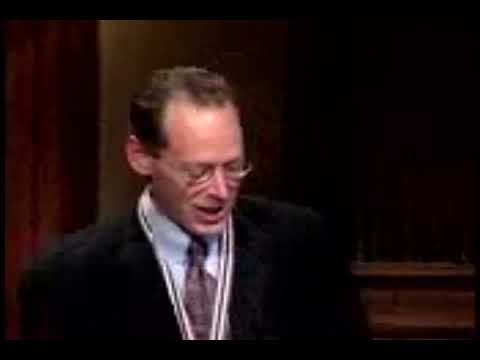
3/3/2003 - Acceptance Speech

Through the generosity of Teresa Heinz Kerry, that's what we call her in Boston ... daughter of a doctor to some very poor patients, several of my co-workers are here tonight. My mother always exhorted us to express our gratitude for kindnesses large and small, and I would like to find 57 ways to thank you for this great honor. Here it goes.

Point number one: I've worked with hundreds of people in Haiti, Peru, Russia, Mexico and Boston. I accept this award on their behalf. We all thank the nominators, the jurors, the wonderful staff of the Foundation and the Heinz family.

Points two through 11: improving the human condition is what moves us. Partners In Health works on behalf of the sick, the naked, the hungry, the thirsty, and the imprisoned. One man's words ... we work for the victims of oppression including racism, gender inequality, mean-spirited policies, and political violence. There are patients because of these misfortunes. Thank you for helping us take on these problems and take care of these patients.

Points 12 through 17: the human condition, including the very bad conditions in which I work, are not created by natural disasters. They are not created by God. They are created by humans, and we are responsible for improving them. We are responsible for each other. But we can't do our work without resources and attention, which this award brings.

Points 18 to 42: those most responsible for conditions good and bad are the powerful. The powerful are not in Haiti. Yesterday morning I almost missed my flight because I was taking a man with a gunshot wound to the hospital. He couldn't eat because we were about to take him to the operating room, but his wife seven months pregnant with their seventh child had not eaten because she had no money. There's plenty of food for all of us on this planet. We can change this and we must.

Points 43 to 55: in my line of work, you won't get far without friends and family. I'll thank those here including Vanessa, Ellen, David, Lois and Tom, Peggy and David, and most of all Ophelia Dahl, director of Partners In Health. And I thank those not here including my wife and daughter, Jim, Loon, and all those in Haiti, Peru and Russia.

Point 56: we all avert our gaze to avoid the spectacle of the powerful who abuse the vulnerable. Thank you for helping us to draw attention to the terrible and unnecessary suffering of the poor. United States policies towards Haiti are unjust. And yet I meet so many good Americans that I conclude that we must speak out so that good Americans can have much more influence in this very city, on this and so many other issues.

Point number 57, and there's some anticipation by now: is that there is a very great man in this room. Okay, so there are several and even more very great women present. But my final point is to say that Thomas Jay White who will be 83 years old next week has made it possible for me to be a doctor to the poor. My patients by definition cannot pay for their medical care. Others must be part of this equation so that doctors can do right by the destitute sick. Tom and Lois, once wealthy, have given away their wealth to serve the poor. They've done much to restore the honor of our people. Some of you may be skeptical. Does this really add up to 57 ways? But I hope you'll trust me. I hope you will join me in our movement to respect the right to healthcare. Most of all, I hope you will let me thank you for this wonderful honor, the company the other honorees, and of all of you.

Thank you.
Paul Farmer
Paul Farmer