
Mary Good
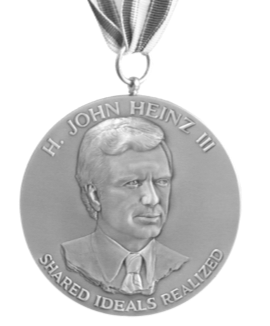
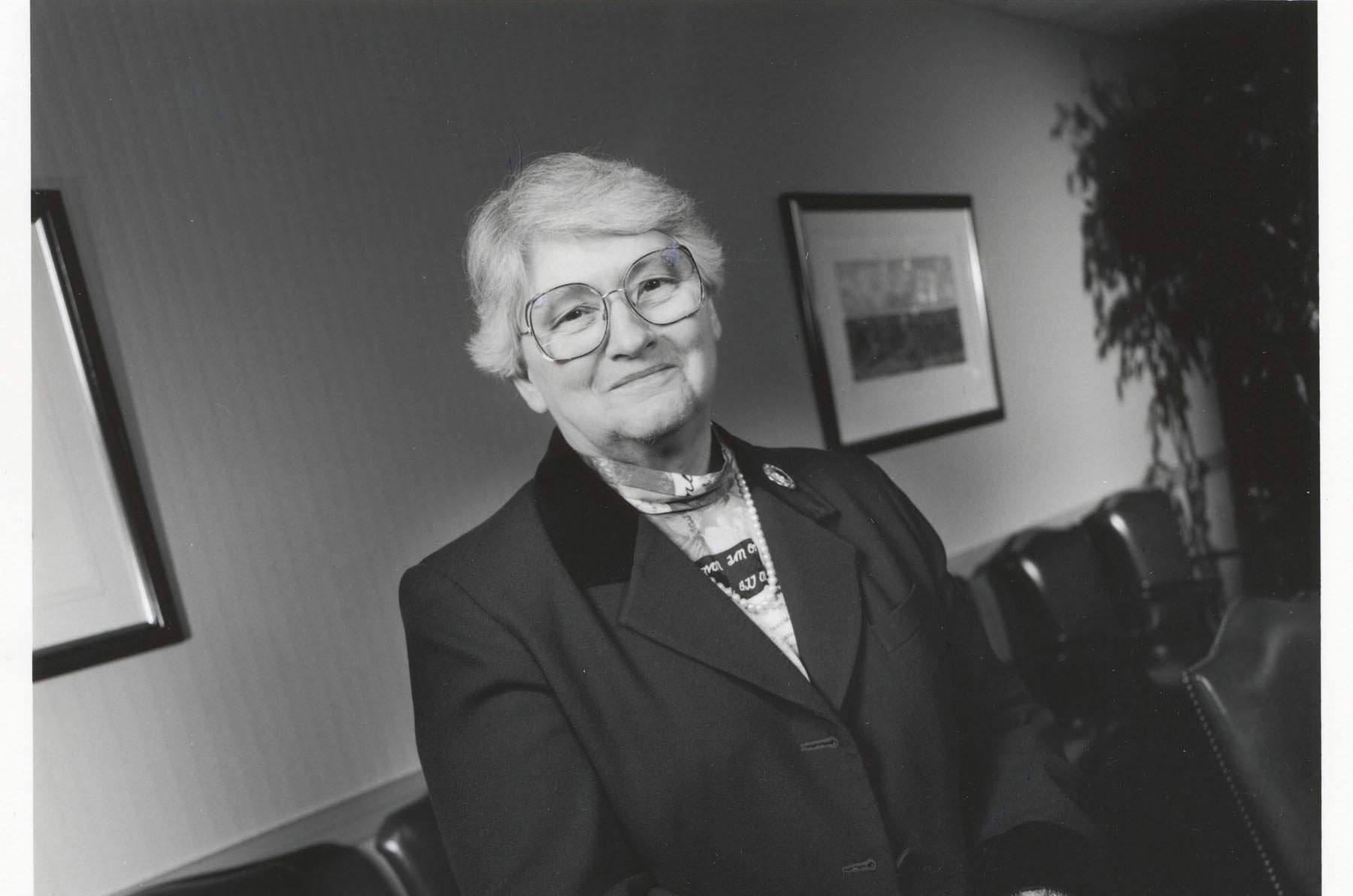
Dr. Mary L. Good receives the Heinz Award in Technology, the Economy and Employment for her singular vision in working to build an economy fueled by scientific knowledge and technological know-how. By winning the Heinz prize in this category, Dr. Good continues a string of "firsts" attesting to her wisdom, versatility and perception.Dr. Good today is the managing member of Venture Capital Investors LLC, an investor group in Little Rock, Arkansas, formed to aid economic growth through the development of technology-based companies. Her distinguished career, however, has spanned all three sectors: academia, government and industry, and her contributions in building public-private technology partnerships that help spur economic growth and make our nation's industries more competitive in the global marketplace have been extensive and extraordinary.
Dr. Good's gentle leadership and wide-ranging knowledge of the interplay between technology and economics has resulted in a legacy that will impact this nation for decades to come. Not only has the role of technology in growing our economy become mainstream economics, but technology partnerships put in place and grown by Dr. Good will deliver results to the American people for a long time to come.
Her accomplishments are remarkable in any view, but are particularly so for a woman who embarked on a career in science at a time when women had to fight for recognition. Seeking a Ph.D. in inorganic chemistry was an unusual pursuit for a woman in the 1950s, but Mary Good achieved just that as the first and only woman in her class. She then put her degree to use teaching at Louisiana State University, eventually rising to the position of Boyd Professor of Chemistry in the division of materials of engineering research.
After 25 years devoted to teaching, Dr. Good entered the private sector by joining AlliedSignal, where she became the only woman in the country to lead a major industrial research center. She emerged in government service through numerous appointments, including her appointment to the National Science Board by both Presidents Carter and Reagan. She eventually served as the first woman chairperson of the Board.
Former President Bush subsequently appointed her to the President's Council of Advisors on Science and Technology, a position that led in 1993 to four years as Under Secretary for Technology in the U.S. Department of Commerce. In this position, Dr. Good brought to bear all of her previous experience to become the champion for public-private partnerships, particularly through the Advanced Technology Program, a group working to foster relationships among universities, industries and government. Despite its critics, this initiative has achieved dramatic results that have brought billions of dollars to the American economy. She has been a visionary in understanding and teaching others the importance of technology to our economy.
Now back in her native South, Dr. Good continues to create programs focusing on the interplay between technology and the economy. She assumes the presidency of the American Association for the Advancement of Science this year and continues to mentor, teach and lecture across the country about the importance of technology to our economy. She is proud to have become a role model for many women entering the fields of science and technology.
Note: This profile is excerpted from the commemorative brochure published at the time of the awards' presentation.
UPDATES SINCE RECEIVING THE HEINZ AWARD
June 2012 - Mary Good is named to the new U.S.News STEM Leadership Hall of Fame. Good and the other four honorees were selected by a national committee of industry, academic, and nonprofit leaders in the science, technology, engineering, and math fields (STEM): - University of Arkansas at Little Rock
June 2007 - Lions World Services for the Blind presents the first annual Sidney McMath Lifetime Achievement Award to Dr. Mary L. Good, founding dean of UALR’s Donaghey College of Information Science and Systems Engineering and world renowned scientist and educator. The lifetime achievement award was established in honor of former Arkansas governor Sidney S. McMath. - University of Arkansas at Little Rock
May 2004 - Good is honored with the 2004 Vannevar Bush Award "for her contributions to science, engineering and technology and for leadership throughout her career." The award is presented to her by the National Science Board. - The Democrat-Gazette
Speech
3/7/2000 - Acceptance SpeechIt has been difficult for me to decide how to respond to my selection as the 1999 recipient of the Heinz Award for Technology, the Economy and Employment. The Citation outlines my long-time activities as an advocate for science and technology, but particularly technology, as a critical and vital part of the sustainability and growth of our economy. If one believes that today's economy is built on the development and effective utilization of scientific and technological knowledge, it follows immediately that one must include all segments of our people, including minorities and women in these activities.
The connections between research and development, responsible technology implementation, a robust and stable economy, a high quality of life, a scientifically educated work force, and a technologically literate public, to me are so obvious that I can't understand how some policy makers, educators and savvy business people can avoid becoming advocates for an understandable science and technology policy for the country, for education and for the global economy. I have tried to make that case in academia, in business, in scientific societies and in the government.
To have these efforts recognized by the Heinz Award is particularly gratifying. It means that the speeches made to small groups in unlikely locations when one would rather be at home, have been recognized for their value and potential for change. It gives one the courage and conviction to continue. At this time in the history of the United States, it would seem that the crucial challenges in this arena are: a quality education, particularly in math and science for all children; accessible and affordable higher education in science, engineering and technology for all students who can qualify; a national science and technology policy that views federal and state supported research and development as a necessary investment; and a public, including political leaders, who can make the connections between education, technology and the economy and provide the necessary resources to maintain and improve our capabilities.
The inclusion of minorities and women in this endeavor is a human issue but also a very pragmatic one. Our current economy's need for technologically trained workers and our demographics suggest that we cannot afford to lose half the brain power of the nation and our democracy will be diminished if certain groups are left out of hope for the future because they have been left being technologically. Thus it is a great honor and a great incentive for me to receive this Heinz Award for Technology, the Economy and Employment. I am most grateful to the Heinz Family Foundation for this award and their recognition of the value of advocacy work in this area.
I would also like to acknowledge the contributions to my career and to my ability to participate in these activities by my husband, Dr. Bill Good, who is in the audience. He has encouraged me and been a major supporter when I'm sure he would have preferred me to be at home with him rather than working overtime in my Commerce Department office or speaking to a group of university research administrators in Chicago. My sister, Dr. Margaret Bogle, is here tonight and she reminds me of the unusual support that I have received from my family during my life. My one regret tonight is that my mother is not with us. She would have enjoyed this library and its Shakespeare heritage in ways that most of us do not, and she would have cheered the thrust of the Heinz Awards and their contributions to an understanding of the human condition.
Thank you.