
Senator John Heinz

RELATED NEWS

  • Beverly Wright is interviewed on NPR's "Living On Earth" go >>
  • August Wilson's boyhood home to become a workshop for artists, musicians and writers go >>
  • Dave Eggers one of the winners of the 31st annual American Book Awards go >>
  • Ashok Gadgil appointed Director of the Environmental Energy Technologies Division of Lawrence Berkeley National Laboratory go >>
  • Richard Lugar writes an Op-Ed for the New York Times on child nutrition programs go >>
  • Ann Hamilton creates new installation for the Pulitzer Foundation for the Arts go >>
  • Mark di Suvero exhibit opens at the Paula Cooper Gallery go >>
  • At 90, Russell Train and his environmental work is profiled on MSNBC go >>
  • Dave Eggers co-authors an Op-Ed piece on Sudan in the New York Times go >>
  • Heinz Awards Chairman Teresa Heinz co-authors editorial on cancer and green chemistry go >>
  • Dr. Butler, gerontologist and psychiatrist, the founding director of the National Institute on Aging, dies at 83 go >>
  • Jacques D'Amboise and the National Dance Institute to perform with young dancers in Shanghai via telepresence technology go >>
  • Andrew Grove writes an Op-Ed piece on job creation and unemployment in the United States go >>
  • James Nachtwey photographs from Iraq field hospitals part of photojournalism show at The Getty go >>
  • Inspired by Bernard Amadei, Israeli students start a Engineers Without Borders chapter and create a project in Nepal go >>
  • James Hansen is awarded the 2010 Sophie Prize go >>
  • James Hansen is co-recipient of the 2010 Blue Planet prize go >>
  • Robert Berkebile pens Op-Ed on energy and oil in Kansas City Star go >>
  • Arthur Mitchell named honorary chairman for 2010 USA International Ballet Competition go >>
  • Colorado Renewable Energy Society presents its 2010 Larson-Notari Award to Amory Lovins go >>
  • James Hansen co-authors paper stating that the global temperature this year reached the warmest average on record go >>
  • Arthur Mitchell's Dance Theater of Harlem honored at California African American Museum go >>
  • Dave Eggers and 826 Valencia links college bound students and donors with Scholar Match site go >>
  • Bernard Amadei inducted as an Ashoka Fellow go >>
  • Amory Lovins inducted as an Ashoka Fellow go >>
  • Jacques D'Amboise to perform for non-profit Kids Excel in El Paso fundraiser go >>
  • Paul Ehrlich interviewed by "Green" blog at New York Times go >>
  • Mario Molina named to IPCC review committee go >>
  • Leroy Hood is awarded the 2010 Kistler Prize from Foundation for the Future go >>
  • Lifetime achievement award presented to John Spengler by the EPA go >>
  • Dorothy Height, a leading female voice of the 1960s civil rights movement, dies at 98 go >>
  • President Obama nominates Donald Berwick to head the Centers for Medicare and Medicaid Services go >>
  • John Harbison and Michael Beattie prepare to hand over reins of Emmanuel Music go >>
  • John Harbison's double concerto world premiere completes the Boston Symphony Orchestra season go >>
  • Ashok Gadgil chosen by NASA as one of 10 Top Innovators on Water Sustainability go >>
  • Leroy Hood and the Institute for Systems Biology profiled in The Seattle Times go >>
  • Robert Berkebile's firm, BNIM, to lead master planning for Chatham University's campus in Gibsonia, PA go >>
  • Slate compares Steve Wozniak's design of the original Apple computer to today's iPad go >>
  • Richard Goldman named UC Berkeley Alumnus of the Year go >>
  • "August Wilson's Women" is staged at the Nuyorican Poets Cafe in New York City go >>
  • Scholar edits second volume of essays on August Wilson cycle of plays go >>
  • Ann Hamilton honored by University of Kansas with Alumni Distinguished Achievement Award go >>
  • Robert Moses co-authors a new book (with Ernesto Cortes) on creating a grassroots movement to transform public education go >>
  • Ernesto Cortes co-authors a new book (with Robert Moses) on creating a grassroots movement to transform public education go >>
  • Bernard Amadei leads development initiative in Haiti documented by Rocky Mountain PBS go >>
  • James Nachtwey's photography project on tuberculosis featured in the New York Times' Lens blog go >>
  • Leroy Hood co-authors paper in Science on the first whole genome sequencing of family of four go >>
  • Hugh Herr is profiled in The O&P Edge go >>
  • Hugh Herr is profiled in The Economist go >>
  • Dave Eggers makes Ad Age's Creativity magazine's 50 list for 2010 go >>
  • Bruce Katz is profiled in Next American City go >>
  • Chris Field and PG&E Chairman Peter Darbee release white paper on climate change for business leaders and policymakers go >>
  • Dave Eggers wins first Innovators Award from the LA TImes Book Awards go >>
  • James Nachtwey featured in exhibition on world events go >>
  • Beverly Wright interviewed about environmental justice on Living on Earth go >>
  • Jane Lubchenco announces National Climate Service at NOAA go >>
  • Heinz Awards Chairman Teresa Heinz urges women to get annual mammogram in Pittsburgh Post Gazette editorial go >>
  • Dee Boersma is featured on ABC Nightly News go >>
  • Paul Farmer interviewed on PBS NewsHour regarding delivery of aid in Haiti go >>
  • Jerry Franklin co-authors Op-Ed on how logging federal lands requires a fresh approach go >>
  • Paul Farmer interviewed on 60 Minutes regarding the crisis in Haiti go >>
  • Paul Farmer pens Op-Ed on Haiti in Miami Herald go >>
  • Dave Eggers among Poets and Writers magazine's "Fifty of the Most Inspiring Authors in the World" go >>
  • Jerry Franklin co-authors editorial in The Oregonian supporting Oregon forests bill go >>
  • Christopher Field co-authors study that links global warming to shifting ecosystems go >>
  • Peggy Shepard co-authors editorial in issue of Environmental Justice journal go >>
  • Hugh Herr and his prosthetics research are profiled in Forbes magazine go >>
  • Rick Lowe receives 2009 United States Artists Fellowship go >>
  • U.S. Senator Dick Lugar named one of the 25 greatest public servants over the past 25 years go >>
  • Bruce Katz co-authors article in The New Republic on revitalizing Detroit go >>
  • The new book, "Storms of My Grandchildren" by James Hansen, released today go >>
  • Geoffrey Canada and the Harlem Children's Zone profiled on 60 Minutes go >>
  • Brenda Krause Eheart receives a 2010 AARP Magazine Inspire Award go >>
  • John Holdren makes Foreign Policy's first annual list of 100 top global thinkers go >>
  • James Hansen makes Foreign Policy's first annual list of 100 top global thinkers go >>
  • Amory Lovins makes Foreign Policy's first annual list of 100 top global thinkers go >>
  • Paul Farmer makes Foreign Policy's first annual list of 100 top global thinkers go >>
  • Bernard Amadei is recipient of 2009 Honorary Member Award from the National Groundwater Association go >>
  • Chip Giller and grist.org profiled on Voice of America go >>
  • Kirk Smith co-authors a six paper series in The Lancet on the direct health benefits of reducing carbon dioxide and other greenhouse emissions go >>
  • Dee Boersma highlighted in Washington Post article on penguins' role as environmental indicators go >>
  • Joel Salatin is profiled in the Christian Science Monitor go >>
  • Aaron Beck presented with the Anna-Monika Prize for lifetime achievement go >>
  • Paul Farmer writes an Op-Ed on juvenile offenders for the Boston Globe go >>
  • Joel Salatin is a speaker at TEDx MidAtlantic go >>
  • The London Times writes about a new nanotechnology cancer therapy co-developed by Robert Langer go >>
  • Dave Eggers wins 2009 Prix Medicis for best foreign work go >>
  • Geoffrey Canada named 2010 winner of the Brock International Prize in Education go >>
  • Hugh Herr profiled in The Jerusalem Post go >>
  • Geoffrey Canada receives Robert Coles Award from Harvard group go >>

The Heinz Awards

2003

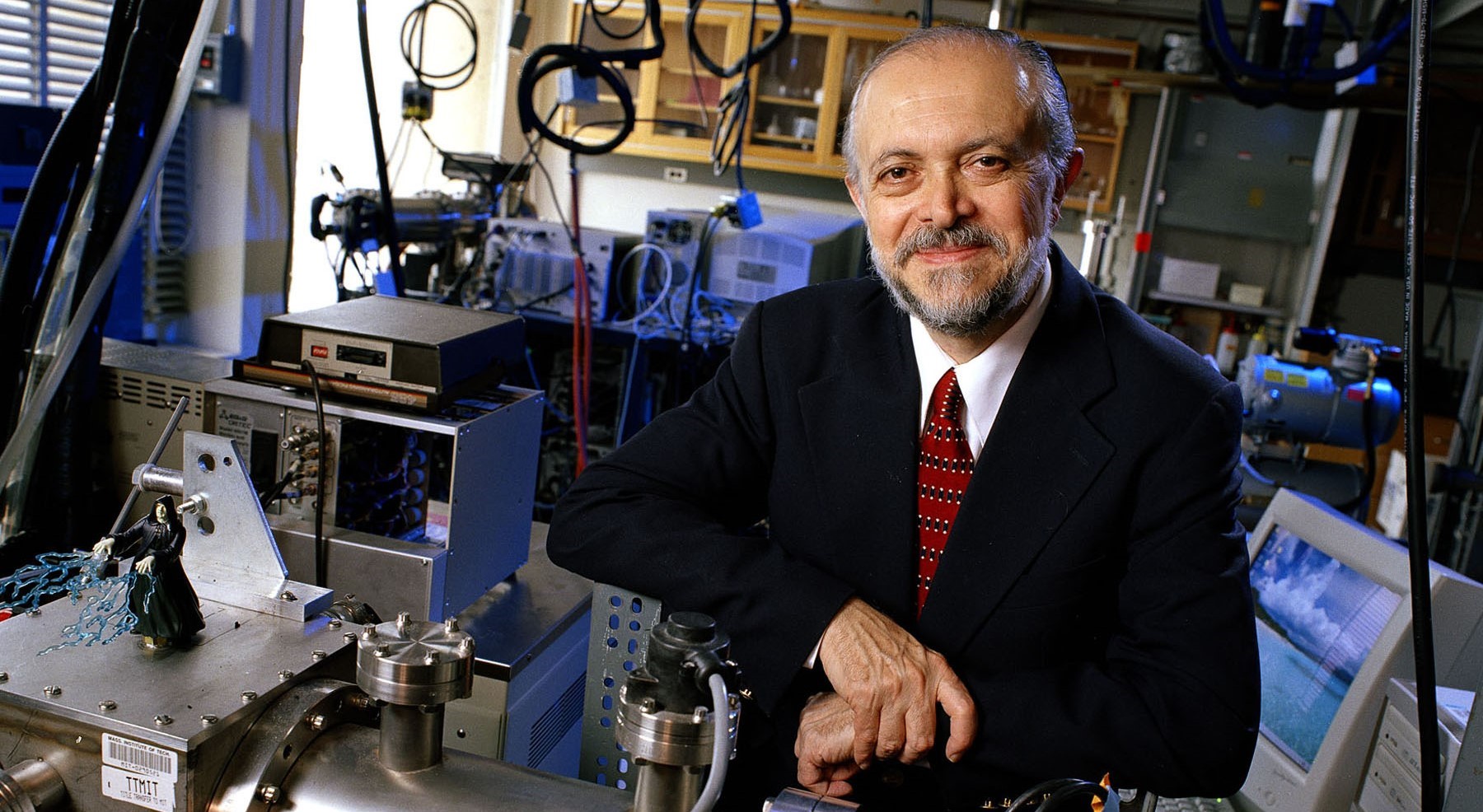
Mario Molina

Mario Molina and John Spengler, groundbreaking pioneers in the way air pollution affects human health, share this year's Heinz Award for the Environment.

Mario Molina, Institute Professor at the Massachusetts Institute of Technology, is one of the world's leading authorities on pollution and the effects of chemical pollution on the environment.

In 1995, he shared the Nobel Prize in chemistry for joint research on the effects of chlorofluorocarbons (CFCs) on the earth's atmosphere. He and a colleague were the first to show that CFCs widely used in refrigeration and household aerosol can propellants, such as hair spray, were destroying the ozone layer, which protects the earth from the most damaging rays of the sun. In 1995, 20 years after their seminal article appeared in Nature magazine, the production of CFCs was banned in developed countries by the Montreal Protocol, an international agreement convened by the United Nations Environment Programme.

Dr. Molina has continued teaching and research. When scientists discovered a huge hole in the ozone layer over Antarctica in 1984, some skeptics still questioned whether CFCs were causing the damage. He showed how chlorine-activation reactions were taking place in the presence of ice under polar stratospheric conditions and eating away the ozone layer. In recent years, he has directed a joint project between MIT and local government in Mexico City to improve the dangerous air quality situation in his hometown.

The individual work of Doctors Molina and Spengler has been extraordinary. But their combined work covers the full range of human health issues related to air pollution, from indoor and ambient air pollution to the global problems of stratospheric ozone depletion and the consequences of fossil fuel combustion. These scientists have used their brilliance to heighten public awareness of the risks of air pollution and have helped to open our eyes to the impact of our own actions and championed new thinking about our stewardship of the earth's resources.

John Spengler, director of the Environmental Science and Engineering program at Harvard's School of Public Health, has devoted his career to studying and understanding the effects of indoor and outdoor air pollution on human health. He pioneered the development of personal monitors to measure how air pollution affects individuals as they go about their daily activities. This breakthrough helped researchers gather data critical to understanding the link between pollution and human health.

He has shown that exposure to indoor pollution can be even more harmful to human beings and their health than outdoor exposure. His work led to recommendation of the airline smoking ban in 1986. He has not been satisfied with merely showing that fungi, molds, radon, mildew, asbestos, lead and tobacco smoke indoors can adversely affect health, but has taken the next step to improve air quality through sustainable development strategies and the design of healthier living conditions, taking into account energy efficiency, comfort and indoor air quality. Dr. Spengler has connected the dots and identified the environmental health triggers in the air that cause illness and other adverse health reactions.

The individual work of Doctors Molina and Spengler has been extraordinary. But their combined work covers the full range of human health issues related to air pollution, from indoor and ambient air pollution to the global problems of stratospheric ozone depletion and the consequences of fossil fuel combustion. These scientists have used their brilliance to heighten public awareness of the risks of air pollution and have helped to open our eyes to the impact of our own actions and championed new thinking about our stewardship of the earth's resources.

Note: This profile is excerpted from the commemorative brochure published at the time of the awards' presentation.


UPDATES SINCE RECEIVING THE HEINZ AWARD

April 2009 - Mario Molina appointed to the President’s Council of Advisors on Science and Technology (PCAST), an advisory group of the nation’s leading scientists and engineers who advise the President and Vice President in the many areas where understanding of science, technology, and innovation is key to strengthening our economy and forming policy that works for the American people. - Office of Science and Technology Policy, Executive Office of the President

July 2006 - Mario Molina announces the formation of the Clean Air Institute and its first project, the Clean Air Initiative for Latin America. Dr. Molina serves as the institute's board chairman. - Business Wire

July 2005 - Molina is named one of the outstanding "trailblazers" in science by Science Spectrum magazine.

October 2004 - Mario Molina opens a new research center, the Molino Center, in Mexico City. The new institute will provide a base camp for scientists, policy-makers, and businessmen who are working toward "resolving environmental and energy problems" in the area. - The Chronicle of Higher Education

August 2004 - Mario Molina is named as one of the "50 Most Important Hispanics in Technology and Business" according to Hispanic Engineer magazine.

May 2004 - Mario Molina proposes "a 10-year plan for cleaning Mexico's air" which Molina sees as one of the main causes to the myriad health issues that plague the region. The plan includes raising gas prices in an attempt to reduce the sulfur levels which cause the atrocious pollution. - United Press International

February 2004 - Molina takes a job with the University of California at San Diego's chemistry department where he will be the university's 16th Nobel Prize-winning faculty member. He will also be working with the Scripps Institution for Oceanography. - The San Diego Union-Tribune

October 2003 - Molina is honored as the Museum of Science and Industry's Hispanic Scientist of the Year. At the sold-out event, Molina is praised for his breakthrough discoveries and research in the field of chemistry throughout his lifetime. - St. Petersburg Times

Speech

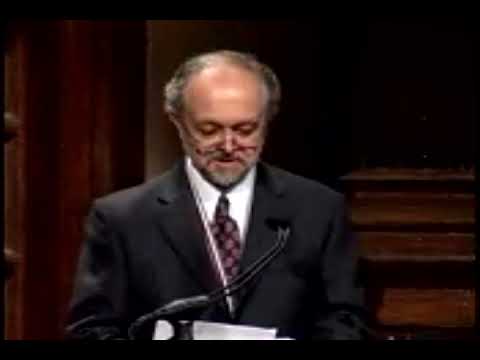
3/3/2003 - Acceptance Speech

I'm greatly honored that I have been selected to receive the Heinz Award for the Environment, together with my colleague Jack Spengler. I would like to thank Teresa, the Heinz Family Foundation, and the jurors for making this possible.

For me, this award represents recognition for years of work carried out in collaboration with many colleagues in the scientific community. And so, I feel this honor belongs to them as well. And to my wife, Louisa, who has been my closest collaborator for many years.

Human society is now facing immense environmental challenges such as air and water pollution, climate change, and loss of bio-diversity. However, even global environmental problems can be addressed effectively, provided there is a strong political wheel. Many years ago I started investigating one such problem, namely stratospheric ozone depletion. This issue is now largely solved, demonstrating that international environmental agreements can succeed if scientists, decision makers, and government, and representatives from industry and non-governmental organizations, work together.

Another problem I have been concerned with is urban and regional air pollution. To a large extent, most major sources of air pollution can now be controlled with existing technologies, such as catalytic converters for modern vehicles. As a consequence, air quality has improved significantly in the United States and in other industrialized nations. However, air quality has become a very serious public health problem in the rapidly growing cities of most developing countries because emission control technologies often involve considerable costs. It is clear that these problems cannot be solved by science and technology alone, and economic, social and political issues need to be considered as well. Nevertheless, these problems can be addressed. Not long ago, Mexico City was considered to be the most polluted city in the world. But its air quality is finally beginning to improve, thanks to the collaborative efforts of the Mexican government with the academic and industrial sectors. However, much work remains to be done before the air quality in the Mexico City area and the many cities throughout the developing world can be considered satisfactory.

Once again, I'm greatly honored to be a recipient of the Heinz Award for the Environment. This award provides a powerful incentive for me to continue to work for the preservation of our environment.

Thank you.
Mario Molina