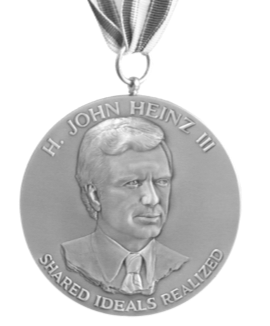

Senator John Heinz

RELATED NEWS

  • Janine Benyus to share the 2013 Gothenburg Award for Sustainable Development go >>
  • Mary Good and her career in chemistry is profiled in a short film by the Chemical Heritage Foundation go >>
  • Jay Keasling to receive 2013 George Washington Carver Award for innovation in industrial biotechnology go >>
  • Jay Keasling and his current work on artemisinin profiled in San Francisco Business Times go >>
  • Joint BioEnergy Institute, headed by Jay Keasling, to be renewed until 2018 go >>
  • The Nuclear Threat Initiative, with Sam Nunn and Richard Lugar, proposes new strategy to reduce conflict and to encourage security go >>
  • Robert Langer pens a piece for Project Syndicate on Going Against Conventional Wisdom go >>
  • Robert Langer is interviewed on NPR’s Science Friday go >>
  • C. Everett Koop, former surgeon general, has died at age 96 go >>
  • Marian Wright Edelman to receive Harvard Graduate School of Education's Medal for Education Impact go >>
  • Susan Seacrest is profiled by the Lincoln Star Journal go >>
  • Jay Keasling's semi-synthetic anti-malarial artemisinin now being produced in bulk and ready for introduction go >>
  • Hugh Herr speaks on cutting edge bionics at the Digital-Life-Design Conference go >>
  • Jay Keasling is profiled on CNN's The Next List go >>
  • Sidney Drell receives the National Medal of Science go >>
  • Philosopher Anthony Grayling interviews Robert Langer on the BBC's "Exchanges on the Frontier" go >>
  • Robert Langer to receive Israel's 2013 Wolf Prize for innovations that "have had a profound impact on medicine" go >>
  • Mildred Dresselhaus interviewed on The Age of Reason on the BBC World Service go >>
  • Leroy Hood to receive the National Medal of Science go >>
  • Robert Langer to receive the National Medal of Technology and Innovation go >>
  • Leroy Hood and his vision of P4 medicine is profiled by The National go >>
  • The New York Times reviews Ann Hamilton’s installation, “the event of a thread,” at the Park Avenue Armory go >>
  • Robert Langer's MIT lab's success in technology transfer is profiled in the New York Times go >>
  • James Balog is profiled on NPR's Weekend Edition go >>
  • Bernard Amadei appointed as Science Envoy for the U.S. State Department go >>
  • The Harvard Crimson writes about Robert Langer and a 'cyborg tissue' breakthrough at MIT and Harvard go >>
  • PandoDaily writes about "The Return of Dean Kamen" and the buzz surrounding his Stirling Engine go >>
  • Dean Kamen and his work is profiled by A Total Disruption, a project by Ondi Timoner go >>
  • James Balog interviewed in Fast Company on tracing the global decay of glaciers go >>
  • Janine Benyus is interviewed for TrimTab online magazine go >>
  • Robert Berkebile is interviewed by the Omega Institute for their Design by Nature Conference go >>
  • The Washington Post cites the work of Richard Feely and Joan Kleypas on the impact of ocean acidification on fisheries go >>
  • Dudley Cocke makes the case for rural theater in Howlround go >>
  • Dean Kamen interviewed on Charlie Rose on working with Coca-Cola on water issues go >>
  • Paul Farmer co-authors article "Cholera and the Road to Modernity" in America's Quarterly go >>
  • Tom "Smitty" Smith pens OpEd requesting Texas PUC to embrace energy alternatives go >>
  • Richard Jackson is interviewed on Living On Earth go >>
  • Russell Train, renowned conservationist and recipient of the 7th Heinz Award Chairman's Medal, dies at 92 go >>
  • Lou Bellamy to direct August Wilson's play, "Fences," at the Denver Center Theatre Company go >>
  • Hugh Herr believes that bionics can put people with disabiities back to work go >>
  • Elizabeth Kolbert reports from the Andes in Yale's Environment 360 go >>
  • di Suvero sculpture settles into new home at Stanford University go >>
  • NPR reports on Joseph DeRisi's work on a link between deadly Ebola virus and disease that's been killing boa constrictors go >>
  • New study by James Hansen ties recent heat waves to global warming go >>
  • James Hansen pens an Op-Ed piece on climate change for The Washington Post go >>
  • Mildred Dresselhaus profiled in U.S. News and World Report go >>
  • Prized Science's first episode of 2012 highlights the work of Robert Langer go >>
  • Mildred Dresselhaus is interviewed in The New York Times go >>
  • Hugh Herr is profiled on Jothy Rosenberg's "Who Says I Can't" go >>
  • Dave Egger's latest novel, A Hologram for the King, is reviewed in The New York Times go >>
  • Mildred Dresselhaus is the 2012 recipient of the Kavli Prize for Nanoscience go >>
  • Robert Langer to receive the 2012 Society of Chemical Industry's Perkin Medal go >>
  • Paul Anastas to receive the German Chemical Society’s Wohler Prize go >>
  • Pittsburgh Symphony Orchestra offers videos of Mason Bates discussing his go >>
  • Janine Benyus is named the 2012 Design Mind Award recipient by the Cooper-Hewitt Design Museum go >>
  • Andrew Grove is interviewed with Gordon Moore for NPR's Mornng Edition on their place in Silicon Valley history go >>
  • CNN's "The Next List" profiles Dr. Hugh Herr and his Biomechatronics Group at the MIT Media Lab go >>
  • Robert Langer's entrepreneurial drive is profiled in Chemical and Engineering News go >>
  • Hugh Herr and his bionics are profiled for TechWeekEurope go >>
  • Dean Kamen joins Elon Musk and Craig Venter to discuss energy innovation at ECOnomics Conference go >>
  • Kirk Smith shares the 2012 Tyler Prize for Environmental Achievement from USC go >>
  • Ruth Patrick, "Den Mother of Ecology", is profiled by the Intelligencer Journal go >>
  • Ralph Gomory co-authors op-ed in Bloomberg News on transparency for corporate money in political campaigns go >>
  • Carol Gilligan looks back on her 1982 book, In a Different Voice, in the current issue of Harvard's online journal Classics@ go >>
  • Jane Lubchenco is named Woman of the Year by the Women's Council on Energy and the Environment go >>
  • Bruce Katz is interviewed in Wired magazine on optimizing economic structures for revitalization go >>
  • Cary Fowler interviewed in The Atlantic on the importance of crop diversity and the vital role of the Svalbard Global Seed Vault go >>
  • New paper from Brookings’ Bruce Katz on "Remaking Federalism to Remake the American Economy" go >>
  • Mario Molina co-authors editorial piece on "How to cut climate change in half" go >>
  • Rita Dove is awarded the 2011 National Medal of Arts go >>
  • James Nachtwey honored with 3rd Dresden International Peace Prize go >>
  • Paul Anastas is profiled in Forbes go >>
  • Paul Farmer writes editorial in the New York Times on why the global fund matters go >>
  • Marian Wright Edelman on the need for dedicated support and education opportunities to allow access to the American Dream go >>
  • The Scripps Center for Marine Biodiversity and Conservation, founded by Nancy Knowlton, celebrates its first decade go >>
  • Geoffrey Canada to receive the second Harvard Graduate School of Education Medal for Education Impact go >>
  • Chasing Ice, on James Balog's Extreme Ice Survey, is one of the most-sought tickets at Sundance Film Festival go >>
  • Paul Farmer talks to CBS about new state-of-the-art hospital in Haiti go >>
  • Marian Wright Edelman is interviewed on public television's One On One. go >>
  • Environmental reporter Jane Kay interviews Paul Anastas on his move from EPA back to academia go >>
  • Ashok Gadgil is awarded the Zayed Future Energy Prize’s Lifetime Achievement Award go >>
  • Ian Cheney's new film, "The City Dark," reviewed on the Huffington Post go >>
  • Marian Wright Edelman reflects on Martin Luther King, Jr.’s words in Huffington Post column go >>
  • Mildred Dresselhaus is awarded the Enrico Fermi Award by President Obama go >>
  • Daniel Sperling interviewed about CAFE, the new federal fuel-efficiency standards go >>
  • Paul Anastas to depart postion heading EPA's research to return to Yale University in February go >>
  • Curt Ellis and FoodCorps profiled in Associated Press video go >>
  • Dean Kamen writes about 20 years of FIRST at the Huffington Post go >>
  • Elizabeth Kolbert is interviewed on Treehugger Radio go >>
  • The Boston Globe writes about the genesis of John Harbison's new Sixth Symphony, commissioned by the Boston Symphony Orchestra go >>

The Heinz Awards

1999

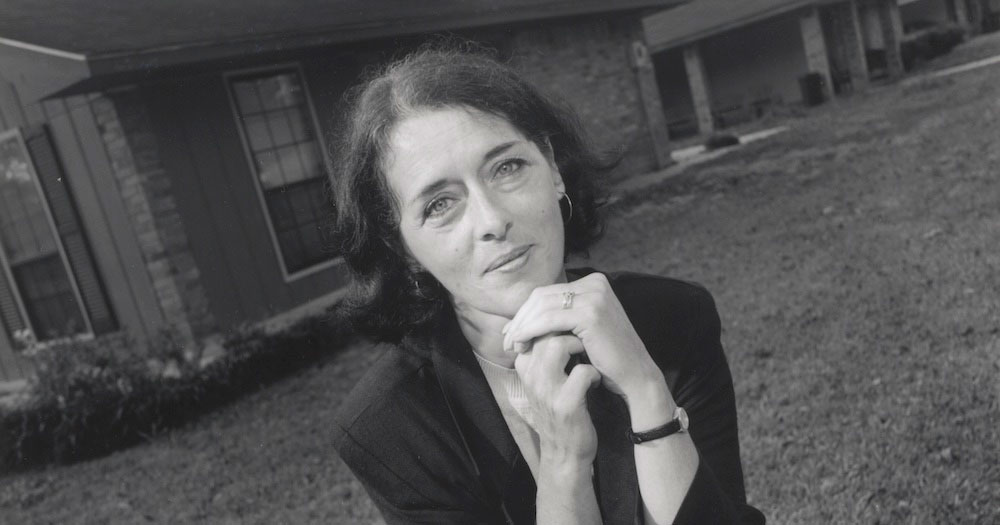
Lois Gibbs

Lois Gibbs shares the Heinz Award in the Environment for demonstrating the importance of citizen activists in protecting both the health of their communities and the environment as a whole.

In 1978, when the first discovery of toxic waste occurred, the residents of Love Canal, near Niagara Falls, New York, discovered that their homes and their children were being poisoned by industrial toxic waste dumped there decades before. After her own son became ill, Lois Gibbs, then a young housewife and a high school graduate, educated herself about toxic waste issues and, as head of her neighborhood association, became the spokesperson for the 1,000 families in Love Canal. Her mission was set. She addressed college classes, gave press conferences, and was eventually invited to testify before Congress. She acted to challenge the government at all levels to redress this environmental assault on her community and, thankfully for all of us, she succeeded.

The victory at Love Canal, and the attention brought to it by Lois Gibbs, awakened the nation to the hazards of chemicals in our environment. A message was sent that individuals can act against powerful industrial and governmental forces to protect themselves, their homes and their families. That message is still reverberating across the land.

Ms. Gibbs did not stop with her victory at Love Canal. In 1981, she established the Citizens Clearinghouse for Hazardous Wastes to provide the information and support needed to empower other communities to organize themselves to reduce and eliminate threats from toxic substances and other environmental ills. Her message was not "not in my backyard," but "not in anybody's backyard."

Ms. Gibbs and her organization continue to grow intellectually and in effectiveness. Now renamed the Center for Health, Environment and Justice, its mission has moved beyond toxic wastes to embrace a wide spectrum of environmental health issues, becoming the leading crusader for environmental equity in the nation. Working with a slender budget, she and the Center now provide information, training, and inspiration to more than 8,000 local groups throughout the United States.

Lois Gibbs has been at the heart of campaigns that have increased public awareness in unprecedented ways and led to major responses by public agencies and elected officials throughout the country. Her work has been critical to the passage and continuing success of the Superfund program in cleaning up hundreds of hazardous waste sites across the United States.

Love Canal was not the first toxic waste dump in America, but it did change the way society thinks about the disposal of such material. Likewise, much of the history of American environmentalism in the past 20 years reflects the leadership and genius of Lois Gibbs. The community participation and local empowerment she pioneered became part of later statues and regulatory policy. Her early writings on community involvement in environmental issues were the blueprint for a form of participation that is now commonplace.

At a time when local action is of increasing importance in the work to preserve public health and the natural world, Lois Gibbs continues to inspire and empower a growing number of Americans to help themselves, their communities, and the planet.

Note: This profile is excerpted from the commemorative brochure published at the time of the awards' presentation.


UPDATES SINCE RECEIVING THE HEINZ AWARD

December 2005 - Gibbs' Center for Health, Environment and Justice leads "a drive to eliminate packaging or products that use what it calls 'the poison plastic'"or polyvinyl chloride packaging. Recently major companies including Microsoft and Crabtree & Evelyn have agreed to phase out PVC packaging, attesting to the success of Gibbs' newest campaign. - Plastics News

March 2005 - Gibbs meets with officials from the Conservation Council of New Brunswick, Canada to demand that they "test every child in the Belledune area for lead poisoning" after heavy metal contamination from a nearby smelter has caused serious health concerns. - The Canadian Press

March 2004 - As the federal government prepares to take Love Canal off the nation's Superfund list, Gibbs criticizes Congress for failing to reauthorize the corporate taxes that once helped pay for Love Canal and many other toxic cleanups. - The Oregonian

September 2003 - Gibbs' Center for Health, Environment and Justice is soon to become the new coordinator of the Environmental Health Alliance, a coalition that includes 160 organizations and which is formed around the Blueprint Ensuring our Safety and Economy (BESAFE) movement. This new direction comes during the 25th anniversary of Gibbs' original crusade at Love Canal. The new BESAFE movement is aimed at forcing the government to "heed early warnings about hazardous materials, put safety first, utilize a democratic decision-making process, and choose the safest solution." - E Magazine

January 2002 - Gibbs, along with the Child Proofing Our Communities Campaign, conducts a study that concludes that there are staggering numbers of schools being built on or around toxic sites. The study also "notes there has been a sharp increase in the number of children afflicted with asthma, cancer, diminished IQs and learning disabilities", thus indicating that the situation could potentially be grave and needs to be addressed. - The Washington Post

March 2000 - Gibbs joins protesting residents in South Buffalo "during a 'toxic tour.'" The protestors and Gibbs were demanding that the city take action against the "large deposits of cancer-causing coke wastes" in the area. - Buffalo News

December 1999 - The agency responsible for the clean up of Gibbs Love Canal, the Love Canal Revitalization Agency, is officially relieved of its burden as it has successfully "restored and sold 239 homes." While "Love Canal lives on" as an example about the seriousness of toxic waste, "the agency's job is done" and it will be closed shortly. - Buffalo News

February 1999 - Gibbs is one of six women to be inducted into the Western New York Women's Hall of Fame. Gibbs is being recognized for her tireless work with Love Canal, "a campaign that led to the relocation of families from the chemically contaminated site in Niagara Falls and drew national attention to toxic waste sites." - Buffalo News


January 1999 - Gibbs receives the John W. Gardner Leadership Award for her selfless work at Love Canal and more recently at the Center for Health, Environment and Justice. - Independent Sector
Lois Gibbs