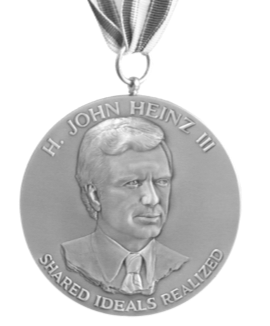

Senator John Heinz

RELATED NEWS

  • Beverly Wright is interviewed on NPR's "Living On Earth" go >>
  • August Wilson's boyhood home to become a workshop for artists, musicians and writers go >>
  • Dave Eggers one of the winners of the 31st annual American Book Awards go >>
  • Ashok Gadgil appointed Director of the Environmental Energy Technologies Division of Lawrence Berkeley National Laboratory go >>
  • Richard Lugar writes an Op-Ed for the New York Times on child nutrition programs go >>
  • Ann Hamilton creates new installation for the Pulitzer Foundation for the Arts go >>
  • Mark di Suvero exhibit opens at the Paula Cooper Gallery go >>
  • At 90, Russell Train and his environmental work is profiled on MSNBC go >>
  • Dave Eggers co-authors an Op-Ed piece on Sudan in the New York Times go >>
  • Heinz Awards Chairman Teresa Heinz co-authors editorial on cancer and green chemistry go >>
  • Dr. Butler, gerontologist and psychiatrist, the founding director of the National Institute on Aging, dies at 83 go >>
  • Jacques D'Amboise and the National Dance Institute to perform with young dancers in Shanghai via telepresence technology go >>
  • Andrew Grove writes an Op-Ed piece on job creation and unemployment in the United States go >>
  • James Nachtwey photographs from Iraq field hospitals part of photojournalism show at The Getty go >>
  • Inspired by Bernard Amadei, Israeli students start a Engineers Without Borders chapter and create a project in Nepal go >>
  • James Hansen is awarded the 2010 Sophie Prize go >>
  • James Hansen is co-recipient of the 2010 Blue Planet prize go >>
  • Robert Berkebile pens Op-Ed on energy and oil in Kansas City Star go >>
  • Arthur Mitchell named honorary chairman for 2010 USA International Ballet Competition go >>
  • Colorado Renewable Energy Society presents its 2010 Larson-Notari Award to Amory Lovins go >>
  • James Hansen co-authors paper stating that the global temperature this year reached the warmest average on record go >>
  • Arthur Mitchell's Dance Theater of Harlem honored at California African American Museum go >>
  • Dave Eggers and 826 Valencia links college bound students and donors with Scholar Match site go >>
  • Bernard Amadei inducted as an Ashoka Fellow go >>
  • Amory Lovins inducted as an Ashoka Fellow go >>
  • Jacques D'Amboise to perform for non-profit Kids Excel in El Paso fundraiser go >>
  • Paul Ehrlich interviewed by "Green" blog at New York Times go >>
  • Mario Molina named to IPCC review committee go >>
  • Leroy Hood is awarded the 2010 Kistler Prize from Foundation for the Future go >>
  • Lifetime achievement award presented to John Spengler by the EPA go >>
  • Dorothy Height, a leading female voice of the 1960s civil rights movement, dies at 98 go >>
  • President Obama nominates Donald Berwick to head the Centers for Medicare and Medicaid Services go >>
  • John Harbison and Michael Beattie prepare to hand over reins of Emmanuel Music go >>
  • John Harbison's double concerto world premiere completes the Boston Symphony Orchestra season go >>
  • Ashok Gadgil chosen by NASA as one of 10 Top Innovators on Water Sustainability go >>
  • Leroy Hood and the Institute for Systems Biology profiled in The Seattle Times go >>
  • Robert Berkebile's firm, BNIM, to lead master planning for Chatham University's campus in Gibsonia, PA go >>
  • Slate compares Steve Wozniak's design of the original Apple computer to today's iPad go >>
  • Richard Goldman named UC Berkeley Alumnus of the Year go >>
  • "August Wilson's Women" is staged at the Nuyorican Poets Cafe in New York City go >>
  • Scholar edits second volume of essays on August Wilson cycle of plays go >>
  • Ann Hamilton honored by University of Kansas with Alumni Distinguished Achievement Award go >>
  • Robert Moses co-authors a new book (with Ernesto Cortes) on creating a grassroots movement to transform public education go >>
  • Ernesto Cortes co-authors a new book (with Robert Moses) on creating a grassroots movement to transform public education go >>
  • Bernard Amadei leads development initiative in Haiti documented by Rocky Mountain PBS go >>
  • James Nachtwey's photography project on tuberculosis featured in the New York Times' Lens blog go >>
  • Leroy Hood co-authors paper in Science on the first whole genome sequencing of family of four go >>
  • Hugh Herr is profiled in The O&P Edge go >>
  • Hugh Herr is profiled in The Economist go >>
  • Dave Eggers makes Ad Age's Creativity magazine's 50 list for 2010 go >>
  • Bruce Katz is profiled in Next American City go >>
  • Chris Field and PG&E Chairman Peter Darbee release white paper on climate change for business leaders and policymakers go >>
  • Dave Eggers wins first Innovators Award from the LA TImes Book Awards go >>
  • James Nachtwey featured in exhibition on world events go >>
  • Beverly Wright interviewed about environmental justice on Living on Earth go >>
  • Jane Lubchenco announces National Climate Service at NOAA go >>
  • Heinz Awards Chairman Teresa Heinz urges women to get annual mammogram in Pittsburgh Post Gazette editorial go >>
  • Dee Boersma is featured on ABC Nightly News go >>
  • Paul Farmer interviewed on PBS NewsHour regarding delivery of aid in Haiti go >>
  • Jerry Franklin co-authors Op-Ed on how logging federal lands requires a fresh approach go >>
  • Paul Farmer interviewed on 60 Minutes regarding the crisis in Haiti go >>
  • Paul Farmer pens Op-Ed on Haiti in Miami Herald go >>
  • Dave Eggers among Poets and Writers magazine's "Fifty of the Most Inspiring Authors in the World" go >>
  • Jerry Franklin co-authors editorial in The Oregonian supporting Oregon forests bill go >>
  • Christopher Field co-authors study that links global warming to shifting ecosystems go >>
  • Peggy Shepard co-authors editorial in issue of Environmental Justice journal go >>
  • Hugh Herr and his prosthetics research are profiled in Forbes magazine go >>
  • Rick Lowe receives 2009 United States Artists Fellowship go >>
  • U.S. Senator Dick Lugar named one of the 25 greatest public servants over the past 25 years go >>
  • Bruce Katz co-authors article in The New Republic on revitalizing Detroit go >>
  • The new book, "Storms of My Grandchildren" by James Hansen, released today go >>
  • Geoffrey Canada and the Harlem Children's Zone profiled on 60 Minutes go >>
  • Brenda Krause Eheart receives a 2010 AARP Magazine Inspire Award go >>
  • John Holdren makes Foreign Policy's first annual list of 100 top global thinkers go >>
  • James Hansen makes Foreign Policy's first annual list of 100 top global thinkers go >>
  • Amory Lovins makes Foreign Policy's first annual list of 100 top global thinkers go >>
  • Paul Farmer makes Foreign Policy's first annual list of 100 top global thinkers go >>
  • Bernard Amadei is recipient of 2009 Honorary Member Award from the National Groundwater Association go >>
  • Chip Giller and grist.org profiled on Voice of America go >>
  • Kirk Smith co-authors a six paper series in The Lancet on the direct health benefits of reducing carbon dioxide and other greenhouse emissions go >>
  • Dee Boersma highlighted in Washington Post article on penguins' role as environmental indicators go >>
  • Joel Salatin is profiled in the Christian Science Monitor go >>
  • Aaron Beck presented with the Anna-Monika Prize for lifetime achievement go >>
  • Paul Farmer writes an Op-Ed on juvenile offenders for the Boston Globe go >>
  • Joel Salatin is a speaker at TEDx MidAtlantic go >>
  • The London Times writes about a new nanotechnology cancer therapy co-developed by Robert Langer go >>
  • Dave Eggers wins 2009 Prix Medicis for best foreign work go >>
  • Geoffrey Canada named 2010 winner of the Brock International Prize in Education go >>
  • Hugh Herr profiled in The Jerusalem Post go >>
  • Geoffrey Canada receives Robert Coles Award from Harvard group go >>

The Heinz Awards

2004

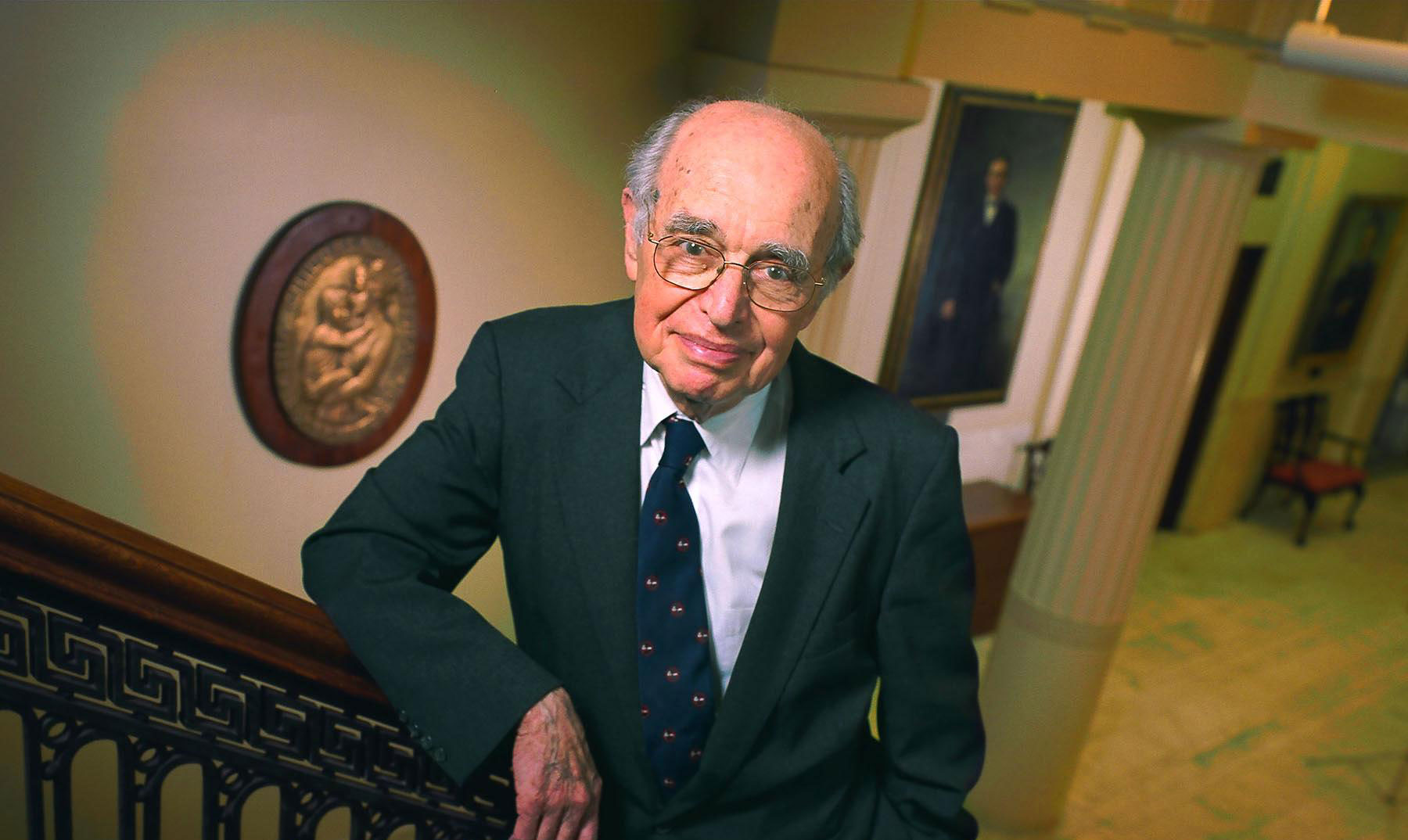
Julius Richmond

Julius B. Richmond receives the Heinz Award for Public Policy for pioneering a revolution that helped transform Americans' attitudes toward their own health and improve the collective quality of life across generations.

A pediatrician and child development researcher, Dr. Richmond is professor of Health Policy, emeritus, at Harvard University. His leadership within government and academia has helped empower millions of Americans to take responsibility for their own well-being, and as a consequence, has helped reduce the nation's mortality rates, particularly among children.

Dr. Richmond was one of the original founders and the first director of Head Start, the federally backed effort to improve the early development of poor and at-risk children through comprehensive child care services. During the 1960s, he also organized and directed the Community Health Centers program as part of the federal anti-poverty program.

In 1977, President Carter appointed him to serve as the U.S. surgeon general and assistant secretary for health in the U.S. Department of Health, Education and Welfare. Two years later, he issued a seminal report, Healthy People: The Surgeon General's Report on Health Promotion and Disease Prevention. He leveraged the report to create greater awareness about the role of health promotion and disease prevention - rather than focusing on the treatment of disease. The report challenged the country to meet 226 goals over the next decade to make people healthier, reduce deaths by 20-35 percent and lower sick days by 20 percent for the elderly. By 1987, the ambitious goal had been fully achieved for children between one and 14, with the rest of the age groups achieving an 80 percent success rate. Dr. Richmond's original objectives since have been updated by two administrations.

In 1979, Dr. Richmond tackled another pervasive public health issue - cigarette smoking. His report, Smoking and Health, documented the harmful effects of cigarettes and cautioned that smoking was the "single, most preventable killer in America." The report went well beyond the government's 1964 report on smoking. It offered particularly sobering warnings to women, leading to a change in cigarette warning labels to include the risks of smoking during pregnancy.

The following year, Dr. Richmond focused the public spotlight on prenatal and pediatric health care. He organized the "Workshop on Maternal and Infant Health," calling together a panel of 75 experts to help develop a national strategy for combating infant mortality and eliminating the disparities in health status, particularly between blacks and whites.

Dr. Richmond has served as the director of Harvard University's Division of Health Policy Research and Education, a joint venture of the schools of medicine, public health and government. He has also served as the director of the Judge Baker Children's Center, a program dedicated to the healthy development of children through research and education. He co-chaired the Carnegie Task Force on Meeting the Needs of Young Children, which has called for expanding social programs such as Head Start and the Special Supplemental Food Program for Women, Infants and Children to better meet the needs of children living in poor environments.

Dr. Richmond's energetic and steadfast leadership for more than 50 years has produced profound results. He has brought to the process a level of insight, involvement and enthusiasm that has been truly remarkable. One of this nation's true giants in the area of public health policy, Dr. Richmond's life's work leaves as its legacy a healthier America - especially its poorest young children.

Note: This profile is excerpted from the commemorative brochure published at the time of the awards' presentation.


REMEMBERING

Julius Richmond passed away on July 27, 2008.


UPDATES SINCE RECEIVING THE HEINZ AWARD

September 2006 - Harvard creates Center on the Developing Child to honor the lifelong work of Julius Richmond. - Harvard University Gazette

January 2006 - Richmond receives the Public Advocacy Award from the Friends of the National Institute of Dental and Craniofacial Research. The award went to Richmond for his lifetime contributions to public health service and education which have "lessened health disparities for disadvantaged groups, provided extensive media information about the state of public health, and helped convince Americans that cigarette smoking was a major contributor to preventable disease." - Friends of the National Institute of Dental and Craniofacial Research

July 2005 - Richmond co-authors the book The Health Care Mess: How We Got Into It and What It Will Take to Get Out with Rashi Fein. The book analyzes the current "quest for profits" state of the health care industry in the United States, and offers the idea of government sponsored health insurance for everyone as a possible solution. - Publishers Weekly Review

April 2005 - Richmond signs on as part of a new group whose purpose is "to promote expanded trade with Cuba." The new U.S.-Cuba Trade Association's first agenda is to defend and strengthen trade interactions that concern agricultural and medical products, which the group sees as vital to both nations, and then to work toward restoring normal trade relations between the United States and Cuba on a more general level. - National Journal's Congress Daily

February 2004 - Richmond is one of four former surgeon generals to unveil a new national plan to curb smoking. The plan calls for a tax of $2 on every pack of cigarettes, a burden that is predicted to encourage at least five million Americans to quit smoking. - The Associated Press

Speech

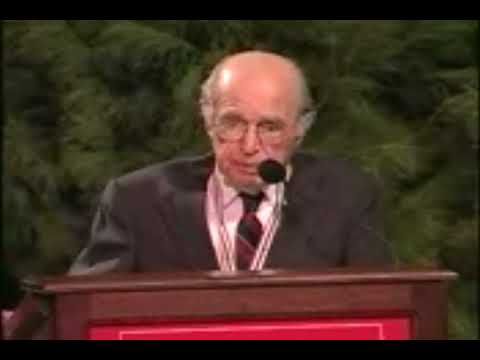
12/4/2003 - Acceptance Speech

It was a privilege for me to have served in Washington at the same time as Senator Heinz. He exemplified the best in our democratic tradition; he worked to improve the lot of all people in a non-partisan way. He was our social conscience and it is indeed an honor to be recognized by the Foundation, which bears his family's name.

I have had the good fortune to live for almost a century. Therefore my observations on the health, education and welfare of our children are from the perspective of a century. What is our record? Is the glass half-full or half-empty?

If we look at our progress in reducing morbidity and mortality the glass is half full. We have dramatically reduced infant mortality - although we could do better. We have virtually eliminated the acute infectious diseases of childhood. During my pediatric training I spent half my time taking care of children with diphtheria, whooping cough, scarlet fever, measles, mumps, rubella and polio, which medical students educated in the U.S. will never see! And we eradicated smallpox from the world! These are dramatic examples of the applications of biomedical research to public health through the development of sound public policies.

But in the development of programs for children growing up in environments of poverty, the glass is half-empty. Please let me become more personal.

Thirty-eight years ago, in 1965, we were in the midst of a civil rights revolution that resulted in the anti-poverty program. I was asked to come to Washington to develop a bold new comprehensive child development program that we called Head Start. Within six months we enrolled 500,000 children in 2700 communities. Most importantly we took seriously the mandate of the legislation for the program: "maximum feasible participation of the poor." We empowered people in their communities. Those were days when we had the political will to do bold things.

But unfortunately the political will waned. Today only 60% of eligible children are enrolled. And the cynics keep raising questions about whether the program works. Leaving aside all the research which shows that it does, who should apologize for feeding hungry children or providing them with medical care; or helping them to develop sound habits of learning.

Even more significantly, the gap between rich and poor children has grown larger. Children growing up in urban and in rural poverty still need Head Start. We know how to raise children well and how to educate them. But we lost the political will. It is time to regenerate it in the spirit and in the memory of Senator Heinz.
Julius Richmond
Julius Richmond