
Senator John Heinz

RELATED NEWS

  • Paul Farmer talks to CBS about new state-of-the-art hospital in Haiti go >>
  • Marian Wright Edelman is interviewed on public television's One On One. go >>
  • Environmental reporter Jane Kay interviews Paul Anastas on his move from EPA back to academia go >>
  • Ashok Gadgil is awarded the Zayed Future Energy Prize’s Lifetime Achievement Award go >>
  • Ian Cheney's new film, "The City Dark," reviewed on the Huffington Post go >>
  • Marian Wright Edelman reflects on Martin Luther King, Jr.’s words in Huffington Post column go >>
  • Mildred Dresselhaus is awarded the Enrico Fermi Award by President Obama go >>
  • Daniel Sperling interviewed about CAFE, the new federal fuel-efficiency standards go >>
  • Paul Anastas to depart postion heading EPA's research to return to Yale University in February go >>
  • Curt Ellis and FoodCorps profiled in Associated Press video go >>
  • Dean Kamen writes about 20 years of FIRST at the Huffington Post go >>
  • Elizabeth Kolbert is interviewed on Treehugger Radio go >>
  • The Boston Globe writes about the genesis of John Harbison's new Sixth Symphony, commissioned by the Boston Symphony Orchestra go >>
  • Mercury News profiles Ashok Gadgil's Darfur Stoves Project go >>
  • Rita Dove interviewed on NPR about her work on the Norton Anthology of 20th Century Poetry go >>
  • Leroy Hood is interviewed by the Seattle Business Magazine on his background, education, work and his vision for medicine go >>
  • Documentary on James Balog and the Extreme Ice Survey has world premiere at Sundance Film Festival go >>
  • Watch Vartan Gregorian, president of the Carnegie Corporation, serve as host for the 17th Heinz Awards go >>
  • University of Massachusetts Boston adds another major sculpture by Mark di Suvero to its Arts on the Point go >>
  • Lynn Goldman interviewed on NPR regarding mercury emissions from power plants go >>
  • Robert Langer's 34 year career at MIT is profiled in The Tech newspaper go >>
  • Elizabeth Kolbert posts "Top Ten Signs We Are Living in a Warming World" for 2011 in The New Yorker go >>
  • Bill Thomas pens an Op-Ed piece on the elderly for BBC News Health go >>
  • On Paul Farmer's struggle to reassemble a health strategy for Haiti go >>
  • Andrew Grove and Ralph Gomory contribute to 'roundtable' on returning manufacturing to the U.S. for The American Prospect go >>
  • Richard Alley is presented with the inaugural Stephen H. Schneider Award go >>
  • Cary Fowler writes in the Huffington Post about the impact of "Feeding an Ever-growing Population" go >>
  • Marian Wright Edelman emphasized the role of young people in advocating for change in Stanford University lecture go >>
  • Ralph Gomory and Andrew Grove contribute to 'roundtable' on returning manufacturing to the U.S. for The American Prospect go >>
  • "songbirdsongs," composed by John Luther Adams, reviewed in The New York Times go >>
  • Richard Alley interviewed on EarthSky about his work on abrupt climate change go >>
  • Joseph DeRisi part of panel discussing how bacteria research can help explore disease and drug discovery go >>
  • Huffington Post explores the Green House Project developed by Dr. William Thomas go >>
  • Robert Langer's work on recreating vocal cords profiled in Bloomberg News go >>
  • Amory Lovins' new book, Reinventing Fire, is released go >>
  • Bruce Katz co-authors piece for Time magazine on the Pragmatic Caucus and creating jobs go >>
  • The Atlantic excerpts Sandra Steingraber's thoughts on gardening and climate change from her latest book, Raising Elijah go >>
  • SmartPlanet interviews Louis Guillette on impact of toxic chemicals on the reproductive systems of wildlife go >>
  • Joel Salatin is profiled in Time magazine go >>
  • Indiana University creates AIDS-HIV research grants in honor of Surgeon General C. Everett Koop go >>
  • Joan Kleypas is interviewed about her research on ocean acidification on EarthSky go >>
  • Cary Fowler's Svalbard Seed Vault in Norway featured in Dornith Doherty's photographs in Wired go >>
  • Jacques d'Amboise's National Dance Institute establishes itself in a permanent home in Harlem go >>
  • Joel Salatin is interviewed for NPR's On Point about his new book go >>
  • The Wisconsin State Journal writes about John Harbison's commission for Pro Arte Quartet's 100th anniversary go >>
  • Gretchen Daily wins 2011 Biodiversity Award from the Prince Albert II of Monaco Foundation go >>
  • Marian Wright Edelman writes in the Huffington Post about adults needing to "shape up and close the hypocrisy gap" go >>
  • "Clouds of Forgetting, Clouds of Unknowing" by John Luther Adams is performed by San Francisco Contemporary Music Players go >>
  • The Los Angeles Times profiles Donald Berwick and his work on Medicare and Medicaid go >>
  • Aaron Beck is co-author on new study showing cognitive behavioral therapy can work to treat severe schizophrenia go >>
  • Fast Company and EarthSky partner to produce, "Biomimicry, Nature of Innovation," starting with Janine Benyus interview go >>
  • Andrew Grove's push to accelerate medical research profiled in San Jose Mercury News go >>
  • Leroy Hood offers "A Personal View of Systems Biology and the Coming of Big Science" in Genetic Engineering News go >>
  • Curt Ellis talks about FoodCorps on the Nourish blog go >>
  • Dr. Mildred Dresselhaus is named as the 2012 Acta Materialia Materials and Society recipient go >>
  • The Medical University of South Carolina interviews Louis Guillette about his work and the 17th Heinz Award go >>
  • Geoffrey Canada debates questions about the nation's education system on NBC's Education Summit go >>
  • Geoffrey Canada participates in New York Times debate on the length of the school day go >>
  • Nancy Knowlton is interviewed on NPR's Living On Earth go >>
  • Marian Wright Edelman is interviewed by theGrio on education and poverty go >>
  • Elizabeth Kolbert to receive the David R. Brower Award from the Sierra Club, which recognizes outstanding environmental reporting go >>
  • Students from Dave Eggers' 826 writing centers collaborate on new book, "Be Honest" go >>
  • Robert Langer is to receive the 2011 Economist Innovation Award for Bioscience go >>
  • The Memphis Flyer profiles Cary Fowler and his brainchild, the Svalbard Global Seed Vault go >>
  • Brenda Eheart receives the Harmony with Hope award from the Elfenworks Foundation go >>
  • John Luther Adams interviewed by Fairbanks News-Miner on recieving the Heinz Award go >>
  • The 17th Heinz Awards and the ten recipients are highlighted in The Huffington Post go >>
  • Ian Cheney and Curt Ellis are interviewed on MSNBC about receiving the Heinz Award go >>
  • Rita Dove offers a fresh take on American poetry as editor of The Penguin Anthology of 20th Century American Poetry go >>
  • Robert Langer is named co-recipient of this year's $250,000 Warren Alpert Foundation Prize go >>
  • Bruce Katz pens "big picture" essay for the newly launched The Atlantic: Cities web site go >>
  • Kirk Smith is profiled in Bridges, the magazine from the Center for Occupational and Environmental Health go >>
  • Richard Alley, and 17th Heinz Awards, are profiled in the Pittsburgh Post-Gazette go >>
  • Nancy Rabalais profiled as 17th Heinz Award recipient in The Times-Picayune go >>
  • Nancy Rabalais' work on oceans, and as Heinz Award recipient, highlighted at Mother Jones go >>
  • Marian Wright Edelman on 'Supporting Grandparents Caring for Grandchildren' in Huffington Post go >>
  • Leroy Hood is chosen to receive the Julio Palmaz Award for 2011 go >>
  • Hugh Herr and his PowerFoot is profiled in a Time magazine "Game Changers" video go >>
  • PEN Center USA recognizes Dave Eggers for writings and literacy centers go >>
  • Joseph DeRisi co-authors study linking malaria parasite's survival to a single, crucial chemical go >>
  • Paul Farmer is named as the 2011 Pro Bono Humanum Honoree from Prix Galien USA go >>
  • University of Michigan Art Museum to host solo exhibit of Mark di Suvero's "tabletop" works go >>
  • Mark di Suvero profiled in The Wall Street Journal go >>
  • Lynn Goldman interviewed by Yale 360 about the environmental health challenges the U.S. faces go >>
  • Hugh Herr is interviewed on NPR's Fresh Air go >>
  • Gretchen Daily and the Natural Capital Project are profiled in The New York Times go >>
  • Aaron Beck, at 90, is profiled in The Philadelphia Inquirer go >>
  • Jane Lubchenco is awarded the 2011 Blue Planet Prize from the Asahi Glass Foundation go >>
  • Bruce Katz blogs about smart cities and the global competitive edge in Fast Company go >>
  • Joel Salatin and Polyface Farm profiled in The Atlantic go >>

The Heinz Awards

2005

Jerry Franklin

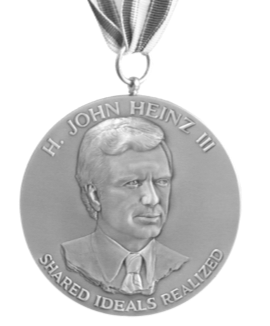
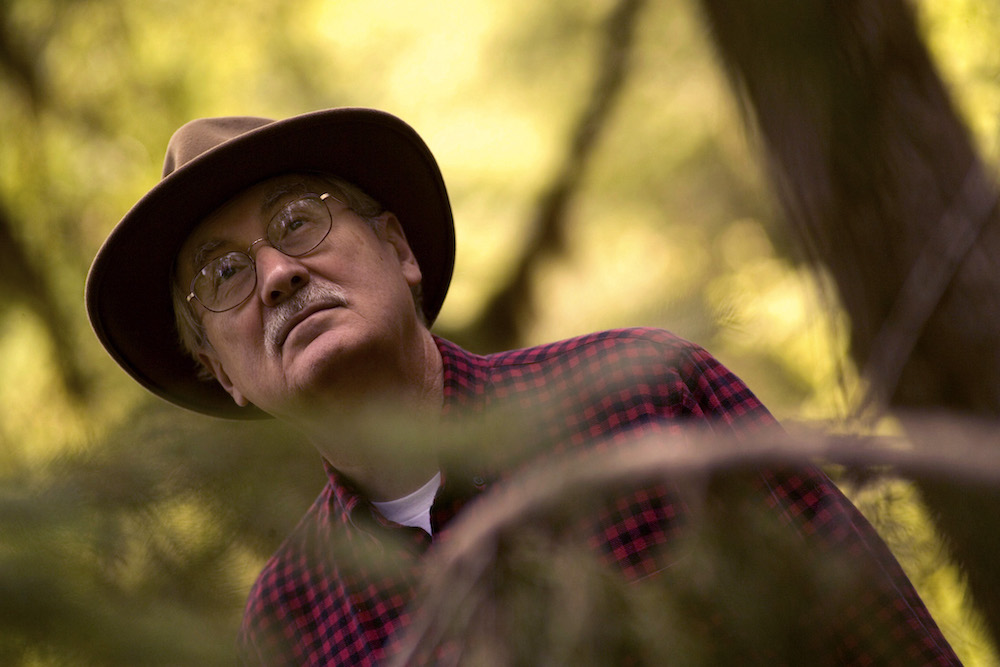
Jerry Franklin receives the Heinz Award for the Environment for transforming forest management in a way that helps to better sustain America's forests.

A forest ecologist and progenitor of a new paradigm integrating ecological and economic objectives in managing the nation's forests, Dr. Franklin has been dubbed the "father of new forestry." He is one of the country's leading authorities on sustainable forest management, and his one-time unconventional views on forest management have since become established practice.

Dr. Franklin challenged the long-accepted practice of clear-cutting and, instead, advanced solutions that were based more on science. His "new forestry" strategy for logging - which advocates leaving logs and other wood debris, standing dead trees and some larger live trees - more closely aligns with the scale and character of natural disturbances. While his views were met at first with skepticism and derision within the industry, his "new forestry" principles now have been embraced by environmentalists and timber companies alike.

Long before he became known as the "guru of old-growth forests," Dr. Franklin was a research forester for the USDA Forest Service, a position he accepted in 1959. Since then, he has established a legacy of long-term experiments designed to enrich the science of future generations. His knowledge of the distinctive and vital attributes of old-growth forests, as well as his understanding of natural disturbances and the ecosystem recovery process, have placed him on many local, national and global commissions dedicated to scientific and policy analyses of forest issues.

He was director of the ecosystem studies program for the National Science Foundation and president of the Ecological Society of America, among other positions. In 1993 he was among the scientists who assembled with President Clinton to discuss old-growth preserves, logging practices and threatened and endangered species. He was a major contributor to the Northwest Forest Plan, the first large ecologically integrated forest plan in the world, which covered 24 million acres of federal lands in the Northwest. The plan resolved the controversy over the spotted owls and timber jobs.

Dr. Franklin's career as a teacher began in 1975 at Oregon State University. Later, he became professor of ecosystem analysis at the University of Washington in Seattle, and now serves as the director of the Wind River Canopy Crane Research Facility, where he has installed a 250-foot-tall construction crane that allows scientists to probe the relationship between forests and climate change within the canopy.

With unwavering courage and conviction, wisdom and passion, Dr. Jerry Franklin has dramatically expanded our knowledge of natural forest ecosystems and used this knowledge to help redefine forest management in the United States and many parts of the world. Because of his contributions, millions of acres of forests have a more sustainable future.

Note: This profile is excerpted from the commemorative brochure published at the time of the awards' presentation.


UPDATES SINCE RECEIVING THE HEINZ AWARD

October 2006 - "Widely regarded as the preeminent forest ecologist of our time," Franklin receives the Outstanding Alumni Award from the College of Forestry, Oregon State University where he received is B.S. and M.S. degrees. - Oregon State University

Speech

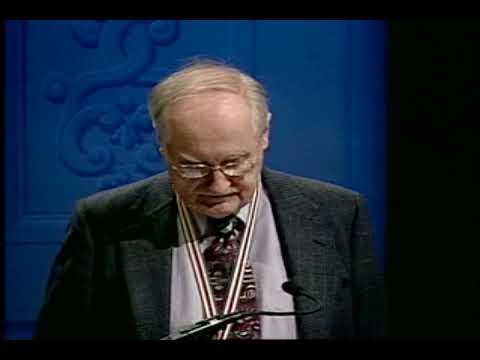
5/24/2005 - Acceptance Speech

Mark, I admire you for your remarks. My reflections are in part a little more personal. My decision to work for trees and forests was borne in the mind of an eight-year old boy playing beneath some immense old-growth Douglas Firs. Forestry was the path I chose. Science was the branch that I chose to follow - believing that knowledge would be the most persuasive tool for a forest advocate - for that's what I've been; an advocate for the trees and the forests. The joys and rewards of this path have exceeded the wildest imaginations of that boy.

Circumstances have allowed me to contribute to an enlarged understanding of how natural forest ecosystems work and how we can use that knowledge in improving our stewardship of our natural resources. I have to say the most important of those circumstances were the extraordinary individuals and teams of people with whom I have worked and on whose shoulders I stand in terms of my accomplishments. And I particularly acknowledge a friend, an advisor and a mentor, William K. Ferrell, who was there at some very critical points giving me some very wise advice when the trail branched.

As we enter the 21st Century, there are some major, major threats, new ones, to our forests and wild lands. And foremost among these threats are the effects of global climate change, of virulent introduced exotic forest pests and pathogens, and globalization of the wood products industry. All of these things are ultimately going to require the most comprehensive understanding that we can have of these forests and how they work and an application of that knowledge. Introductions of exotic pests and pathogens are probably the most dangerous potential threat to the forests of North America and this is because global change requires a lot of adaptation, a lot of adjustment. When you extirpate a species, as we effectively did with the chestnut blight, you don't have anything to work with anymore. Tree species, even forest ecosystems are lost.

Some of the effects of a globalized wood products industry are counter-intuitive and I don't think many people out there recognize what the real issues are for us here in North America and in other temperate regions of the world, because there are risks to our ability to maintain much of our forest landscape and to conduct the appropriate stewardship of those forest landscapes. And effectively we are losing timber industry from the North American continent. While you might think that to be a good thing, in fact, it creates some very serious challenges for us here in the United States and North America.

With a loss of economic incentives that go with various goods and services like timber, what incentives will exist for tens of millions of private forest landowners to retain their lands and forest cover and to carry out the stewardship? Similarly on our public lands, where will we find the will and the funds to carry out the stewardship that is so essential, because we have an incredible job of both restoration and continued stewardship? Hence the need for continuing research and applications of scientific information in ecologically based management has never been grateful.

I would like to conclude by saying that I am deeply grateful to the Heinz Foundation for this award. Both for the personal recognition and for the heightened public profile that it gives to the challenges that we face in stewardship of our forests. In this century, we have to be partners with those forests because we have changed this globe so much. I also want to just say to Teresa, I'm overwhelmed by receiving an award that in many ways acknowledges the life of what was clearly a very extraordinary individual.

Thank you.
Jerry Franklin