
Senator John Heinz

RELATED NEWS

  • Beverly Wright is interviewed on NPR's "Living On Earth" go >>
  • August Wilson's boyhood home to become a workshop for artists, musicians and writers go >>
  • Dave Eggers one of the winners of the 31st annual American Book Awards go >>
  • Ashok Gadgil appointed Director of the Environmental Energy Technologies Division of Lawrence Berkeley National Laboratory go >>
  • Richard Lugar writes an Op-Ed for the New York Times on child nutrition programs go >>
  • Ann Hamilton creates new installation for the Pulitzer Foundation for the Arts go >>
  • Mark di Suvero exhibit opens at the Paula Cooper Gallery go >>
  • At 90, Russell Train and his environmental work is profiled on MSNBC go >>
  • Dave Eggers co-authors an Op-Ed piece on Sudan in the New York Times go >>
  • Heinz Awards Chairman Teresa Heinz co-authors editorial on cancer and green chemistry go >>
  • Dr. Butler, gerontologist and psychiatrist, the founding director of the National Institute on Aging, dies at 83 go >>
  • Jacques D'Amboise and the National Dance Institute to perform with young dancers in Shanghai via telepresence technology go >>
  • Andrew Grove writes an Op-Ed piece on job creation and unemployment in the United States go >>
  • James Nachtwey photographs from Iraq field hospitals part of photojournalism show at The Getty go >>
  • Inspired by Bernard Amadei, Israeli students start a Engineers Without Borders chapter and create a project in Nepal go >>
  • James Hansen is awarded the 2010 Sophie Prize go >>
  • James Hansen is co-recipient of the 2010 Blue Planet prize go >>
  • Robert Berkebile pens Op-Ed on energy and oil in Kansas City Star go >>
  • Arthur Mitchell named honorary chairman for 2010 USA International Ballet Competition go >>
  • Colorado Renewable Energy Society presents its 2010 Larson-Notari Award to Amory Lovins go >>
  • James Hansen co-authors paper stating that the global temperature this year reached the warmest average on record go >>
  • Arthur Mitchell's Dance Theater of Harlem honored at California African American Museum go >>
  • Dave Eggers and 826 Valencia links college bound students and donors with Scholar Match site go >>
  • Bernard Amadei inducted as an Ashoka Fellow go >>
  • Amory Lovins inducted as an Ashoka Fellow go >>
  • Jacques D'Amboise to perform for non-profit Kids Excel in El Paso fundraiser go >>
  • Paul Ehrlich interviewed by "Green" blog at New York Times go >>
  • Mario Molina named to IPCC review committee go >>
  • Leroy Hood is awarded the 2010 Kistler Prize from Foundation for the Future go >>
  • Lifetime achievement award presented to John Spengler by the EPA go >>
  • Dorothy Height, a leading female voice of the 1960s civil rights movement, dies at 98 go >>
  • President Obama nominates Donald Berwick to head the Centers for Medicare and Medicaid Services go >>
  • John Harbison and Michael Beattie prepare to hand over reins of Emmanuel Music go >>
  • John Harbison's double concerto world premiere completes the Boston Symphony Orchestra season go >>
  • Ashok Gadgil chosen by NASA as one of 10 Top Innovators on Water Sustainability go >>
  • Leroy Hood and the Institute for Systems Biology profiled in The Seattle Times go >>
  • Robert Berkebile's firm, BNIM, to lead master planning for Chatham University's campus in Gibsonia, PA go >>
  • Slate compares Steve Wozniak's design of the original Apple computer to today's iPad go >>
  • Richard Goldman named UC Berkeley Alumnus of the Year go >>
  • "August Wilson's Women" is staged at the Nuyorican Poets Cafe in New York City go >>
  • Scholar edits second volume of essays on August Wilson cycle of plays go >>
  • Ann Hamilton honored by University of Kansas with Alumni Distinguished Achievement Award go >>
  • Robert Moses co-authors a new book (with Ernesto Cortes) on creating a grassroots movement to transform public education go >>
  • Ernesto Cortes co-authors a new book (with Robert Moses) on creating a grassroots movement to transform public education go >>
  • Bernard Amadei leads development initiative in Haiti documented by Rocky Mountain PBS go >>
  • James Nachtwey's photography project on tuberculosis featured in the New York Times' Lens blog go >>
  • Leroy Hood co-authors paper in Science on the first whole genome sequencing of family of four go >>
  • Hugh Herr is profiled in The O&P Edge go >>
  • Hugh Herr is profiled in The Economist go >>
  • Dave Eggers makes Ad Age's Creativity magazine's 50 list for 2010 go >>
  • Bruce Katz is profiled in Next American City go >>
  • Chris Field and PG&E Chairman Peter Darbee release white paper on climate change for business leaders and policymakers go >>
  • Dave Eggers wins first Innovators Award from the LA TImes Book Awards go >>
  • James Nachtwey featured in exhibition on world events go >>
  • Beverly Wright interviewed about environmental justice on Living on Earth go >>
  • Jane Lubchenco announces National Climate Service at NOAA go >>
  • Heinz Awards Chairman Teresa Heinz urges women to get annual mammogram in Pittsburgh Post Gazette editorial go >>
  • Dee Boersma is featured on ABC Nightly News go >>
  • Paul Farmer interviewed on PBS NewsHour regarding delivery of aid in Haiti go >>
  • Jerry Franklin co-authors Op-Ed on how logging federal lands requires a fresh approach go >>
  • Paul Farmer interviewed on 60 Minutes regarding the crisis in Haiti go >>
  • Paul Farmer pens Op-Ed on Haiti in Miami Herald go >>
  • Dave Eggers among Poets and Writers magazine's "Fifty of the Most Inspiring Authors in the World" go >>
  • Jerry Franklin co-authors editorial in The Oregonian supporting Oregon forests bill go >>
  • Christopher Field co-authors study that links global warming to shifting ecosystems go >>
  • Peggy Shepard co-authors editorial in issue of Environmental Justice journal go >>
  • Hugh Herr and his prosthetics research are profiled in Forbes magazine go >>
  • Rick Lowe receives 2009 United States Artists Fellowship go >>
  • U.S. Senator Dick Lugar named one of the 25 greatest public servants over the past 25 years go >>
  • Bruce Katz co-authors article in The New Republic on revitalizing Detroit go >>
  • The new book, "Storms of My Grandchildren" by James Hansen, released today go >>
  • Geoffrey Canada and the Harlem Children's Zone profiled on 60 Minutes go >>
  • Brenda Krause Eheart receives a 2010 AARP Magazine Inspire Award go >>
  • John Holdren makes Foreign Policy's first annual list of 100 top global thinkers go >>
  • James Hansen makes Foreign Policy's first annual list of 100 top global thinkers go >>
  • Amory Lovins makes Foreign Policy's first annual list of 100 top global thinkers go >>
  • Paul Farmer makes Foreign Policy's first annual list of 100 top global thinkers go >>
  • Bernard Amadei is recipient of 2009 Honorary Member Award from the National Groundwater Association go >>
  • Chip Giller and grist.org profiled on Voice of America go >>
  • Kirk Smith co-authors a six paper series in The Lancet on the direct health benefits of reducing carbon dioxide and other greenhouse emissions go >>
  • Dee Boersma highlighted in Washington Post article on penguins' role as environmental indicators go >>
  • Joel Salatin is profiled in the Christian Science Monitor go >>
  • Aaron Beck presented with the Anna-Monika Prize for lifetime achievement go >>
  • Paul Farmer writes an Op-Ed on juvenile offenders for the Boston Globe go >>
  • Joel Salatin is a speaker at TEDx MidAtlantic go >>
  • The London Times writes about a new nanotechnology cancer therapy co-developed by Robert Langer go >>
  • Dave Eggers wins 2009 Prix Medicis for best foreign work go >>
  • Geoffrey Canada named 2010 winner of the Brock International Prize in Education go >>
  • Hugh Herr profiled in The Jerusalem Post go >>
  • Geoffrey Canada receives Robert Coles Award from Harvard group go >>

The Heinz Awards

2001

James Hansen

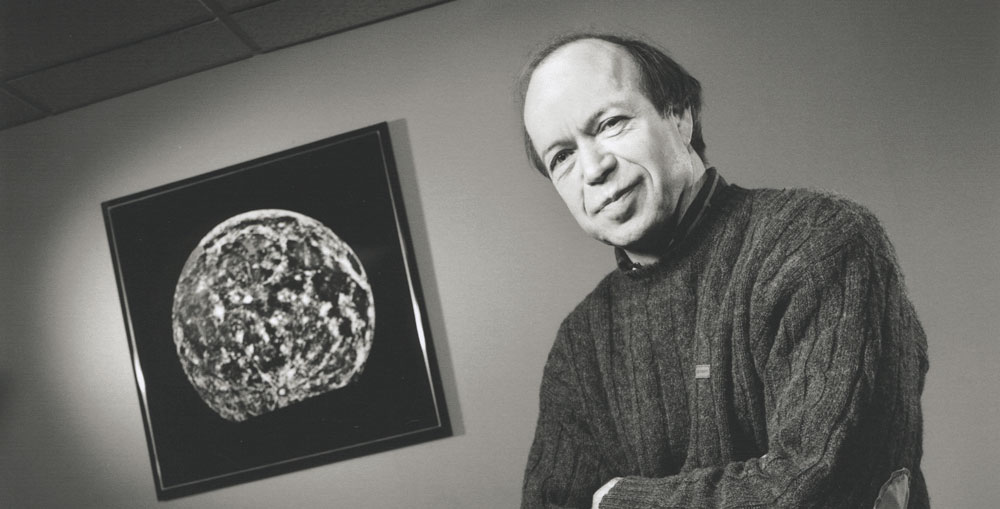
Dr. James Hansen receives the Heinz Award in the Environment for his exemplary leadership in the critical and often contentious debate over the threat of global climate change.

The theory that industrial pollution continues to create an atmospheric "greenhouse effect" or warming has pitted scientist against scientist and politician against politician. In the eye of the storm that swirls around this issue is Dr. Hansen. He calmly pursues his research while scrupulously maintaining his scientific credibility and modifying his views as new data and techniques have become available, all the while acting as a messenger from the esoteric world of computer climate models to the public and policymakers alike.

It was Dr. Hansen who, in the sweltering, drought-scorched summer of 1988, went where few scientists were willing to go - before Congress, to explain just how serious the potential for global warming truly was. Dr. Hansen courageously testified that the time had come to recognize that the "greenhouse effect" was real and that new and cleaner sources of energy had to be found. Time has validated his position.

The director of the National Aeronautics and Space Administration's Goddard Institute for Space Studies in New York, Dr. Hansen has collected and analyzed global surface temperatures and studied the earth's atmosphere since the 1970s. The advocacy role he has undertaken has placed him squarely in the uncomfortable role of serving as lightening rod in the debate. He is respected among his peers for his creativity, his intellectual rigor and flexibility, and his dogged pursuit of this pressing global problem. Dr. Hansen's critics, however, claim that his findings and computer models are uncertain, contradictory and prone to induce hysteria.

Easier to document, however, is that the 1990s proved to be the warmest decade in a millennium and in the process, changed many minds about the seriousness of global warming. Dr. Hansen continues to direct his research in ways that contribute both to the body of knowledge of climate systems and to the broader implications of public policy.

The deliberate, soft-spoken Dr. Hansen has also recognized the need and the potential for researchers to influence science education. In 1994, with Carolyn Harris, he founded the Institute on Climate and Planets at the Goddard Institute in collaboration with local public high schools and colleges. Teachers and selected inner-city students, many of them minorities, are given the opportunity to join research groups at the Institute during their summer vacations. After the summer program, they continue their work on the Internet. Inspired by this work, teachers have developed courses that have been offered to schools across the country, with some 20 high schools and colleges now partnering with the Institute. The idea to assist in the teaching of science in many high schools and colleges, to involve students who might otherwise not have access to these complex issues, and most important, to attract minority students into science as a career, has become a model for how research institutes may reach out to high school and undergraduate students.

Dr. James Hansen's work has thrust him into the center of a scientifically polarized and politically charged debate. It is to his credit that he has navigated these treacherous waters admirably and we are fortunate to have him pointing the way when scientific complexities and political ramifications provide such a challenge.

Note: This profile is excerpted from the commemorative brochure published at the time of the awards' presentation.


UPDATES SINCE RECEIVING THE HEINZ AWARD

June 2010 - Dr. James E. Hansen was award the 2010 Sophie Prize for his reputation as an outstanding scientist who has combined his research with political activism based on personal conviction. The Sophie Prize is awarded to one or several persons, or an organisation, which has created awareness of alternatives to modern-day development and/or initiated such alternatives in a pioneering or particularly inventive manner. The Sophie Prize is an annual environment and sustainable development prize (US$ 100.000). - The Sophie Prize

June 2010 - James Hansen was one of two prominent climate scientists - one from Great Britain (Bob Watson) and one from the United States (Dr. Hansen) - chosen as the recipients of the 2010 Blue Planet Prize, an international environmental award which is considered to be Japan's equivalent of the Nobel Prize, with a monetary equivalent of over $550,000 for each awardee. - Environmental News Service

December 2009 - Climate scientist James Hansen's conviction that a climate catastrophe is looming prompted him, at the age of 68, to write his first book. The title, Storms of My Grandchildren, refers to the ferocity of extreme weather events that will greet the next generation if the unmitigated use of fossil fuels continues. - Nature

April 2009 - James E. Hansen, director of the NASA Goddard Institute for Space Studies, and David Foster, executive director of the Blue Green Alliance, are the first recipients of the Peter A. A. Berle Environmental Integrity Award, established to recognize demonstrated courage and integrity in defense of the environment. - Audubon Society

August 2008 - James Hansen, internationally-known climate scientist, received a 29th Annual Common Wealth Award of Distinguished Service. This prestigious award recognizes individuals who advance and enrich society through their life's work. The Common Wealth Awards of Distinguished Service were first presented in 1979 by the Common Wealth Trust, which honors the legacy of the late philanthropist Ralph Hayes. - Common Wealth Trust

March 2006 - Hansen appears on a 60 Minutes special entitled "Rewriting the Science". The special reports that the ice flow into the Atlantic ocean "has nearly doubled over the last five years."  Hansen continues to speak out on global warming despite attempts by NASA's public affairs office to restrict his comments. - Greenwire

December 2003 - Hansen publishes a report paper in the Proceedings of the National Academy of Sciences. Co-authored with NASA scientist Larissa Nazarenko, the paper assert that soot, mostly from diesel engines, "is causing as much as a quarter of all observed global warming" because it reduces "the ability of snow and ice to reflect sunlight." - Associated Press

September 2002 - Hansen leads a study at NASA's Goddard Institute for Space Studies which concluded that continued global warming will occur to the extent that "global temperature should rise by about 3 degrees Fahrenheit in the next 50 years." - Newsday

December 2001 - Hansen receives the Roger Revelle Medal for bringing "global change to the forefront" of current scientific research and concern - American Geophysical Union

Speech

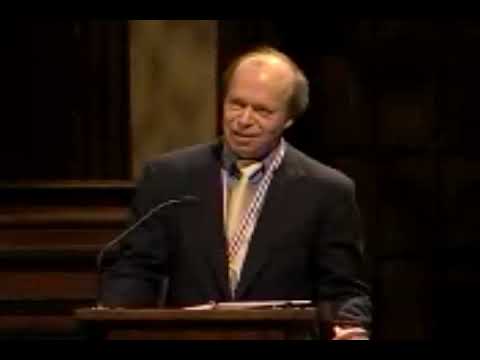
3/5/2001 - Acceptance Speech

Thanks very much, Teresa. An Award named for John Heinz has special significance for me for reasons that I would like to explain. I seem fated to be known for my testimony to Congress in 1988 to Tim Wirth's committee, by the way. That was the year that global warming became popular. But, events of the next year stand out in my mind. One week in May of 1989, global warming was in the news almost every day. Beginning on Monday with a page one article in The New York Times, saying 'scientist says budget office altered his testimony,' and ending on Friday with an article 'U.S. in a shift ... seeks treaty on global warming.'

Understandably, some people in Washington felt that the issue was being pushed too fast, and indeed the scientific community was still trying to decide if global warming was real. I thought that I was in trouble, but behind the scenes, Senator Heinz called the President's Chief-of-Staff on my behalf, and he wrote a two page letter. It was a remarkable letter, showing his depth of understanding of the scientific problem, and also his interest in fair play.

Another characteristic of Senator Heinz was evident in a town meeting that he organized in Philadelphia. He wanted to hear all sides of the global warming story and to find a balanced approach. He was a strong environmentalist, but he also worked to improve the economy of Pennsylvania and the nation. He realized that these goals need not conflict. He was thoughtful, or, as a scientist, I like the word objective.

In the current issue of Audubon Magazine, I suggest that the President appoint a commission of scientists, businessmen, consumers, and environmentalists to recommend actions to slow global warming. We can take common sense steps to do that. Our industry and our technology hold the key. We should reduce air pollution including low level ozone and soot, improve energy efficiency, and develop renewable energy. Collateral benefits improve public health and reduce dependence on foreign energy sources justify the cost. This practical approach could gain bipartisan and international consensus for addressing climate change. It's the kind of approach that John Heinz would have advocated.

I want to thank, Teresa Heinz and the Foundation for this Award, which I hope will encourage other scientists to speak their minds. Also, my wife Anniek, and Erik, and Kiki, for their generosity in letting me spend so much of my time on my science. And Reto Ruedy and Makiko Sato and Andy Lacis and my other colleagues who deserve most of the credit for the scientific work that we've done together. And Carolyn Harris, who's here tonight someplace, who deserves the credit for our student and educator outreach program. Thanks.
James Hansen
James Hansen