

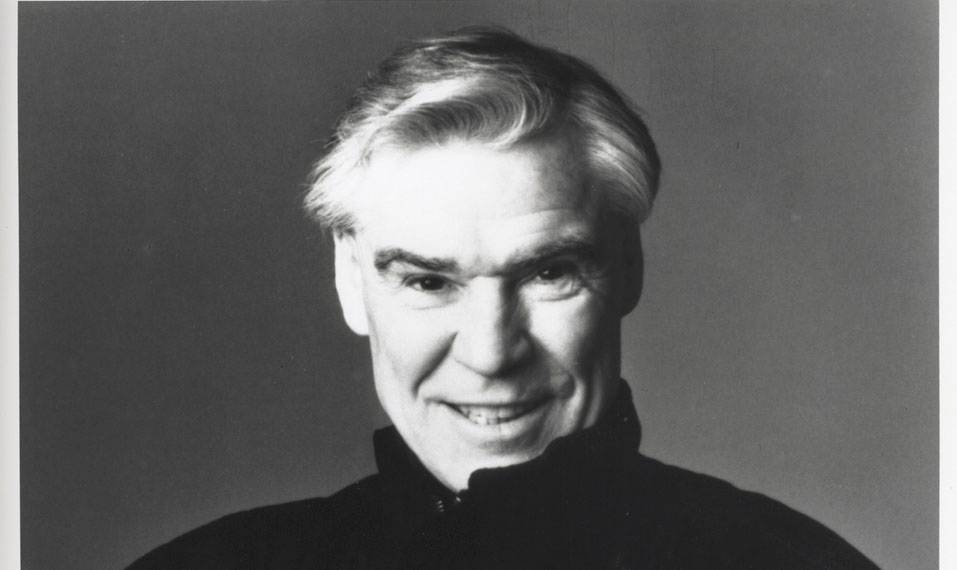
Senator John Heinz

RELATED NEWS

  • Janine Benyus is named the 2012 Design Mind Award recipient by the Cooper-Hewitt Design Museum go >>
  • Andrew Grove is interviewed with Gordon Moore for NPR's Mornng Edition on their place in Silicon Valley history go >>
  • CNN's "The Next List" profiles Dr. Hugh Herr and his Biomechatronics Group at the MIT Media Lab go >>
  • Robert Langer's entrepreneurial drive is profiled in Chemical and Engineering News go >>
  • Hugh Herr and his bionics are profiled for TechWeekEurope go >>
  • Dean Kamen joins Elon Musk and Craig Venter to discuss energy innovation at ECOnomics Conference go >>
  • Kirk Smith shares the 2012 Tyler Prize for Environmental Achievement from USC go >>
  • Ruth Patrick, "Den Mother of Ecology", is profiled by the Intelligencer Journal go >>
  • Ralph Gomory co-authors op-ed in Bloomberg News on transparency for corporate money in political campaigns go >>
  • Carol Gilligan looks back on her 1982 book ‘In a Different Voice’ in the current issue of Harvard’s online journal Classics@ go >>
  • Jane Lubchenco is named Woman of the Year by the Women's Council on Energy and the Environment go >>
  • Bruce Katz is interviewed in Wired magazine on optimizing economic structures for revitalization go >>
  • Cary Fowler interviewed in The Atlantic on the importance of crop diversity and the vital role of the Svalbard Global Seed Vault go >>
  • New paper from Brookings’ Bruce Katz on "Remaking Federalism to Remake the American Economy" go >>
  • Mario Molina co-authors editorial piece on "How to cut climate change in half" go >>
  • Rita Dove is awarded the 2011 National Medal of Arts go >>
  • Paul Anastas is profiled in Forbes go >>
  • Paul Farmer writes editorial in the New York Times on why the global fund matters go >>
  • Marian Wright Edelman on the need for dedicated support and education opportunities to allow access to the American Dream go >>
  • The Scripps Center for Marine Biodiversity and Conservation, founded by Nancy Knowlton, celebrates its first decade go >>
  • Geoffrey Canada to receive the second Harvard Graduate School of Education Medal for Education Impact go >>
  • Chasing Ice, on James Balog's Extreme Ice Survey, is one of the most-sought tickets at Sundance Film Festival go >>
  • Paul Farmer talks to CBS about new state-of-the-art hospital in Haiti go >>
  • Marian Wright Edelman is interviewed on public television's One On One. go >>
  • Environmental reporter Jane Kay interviews Paul Anastas on his move from EPA back to academia go >>
  • Ashok Gadgil is awarded the Zayed Future Energy Prize’s Lifetime Achievement Award go >>
  • Ian Cheney's new film, "The City Dark," reviewed on the Huffington Post go >>
  • Marian Wright Edelman reflects on Martin Luther King, Jr.’s words in Huffington Post column go >>
  • Mildred Dresselhaus is awarded the Enrico Fermi Award by President Obama go >>
  • Daniel Sperling interviewed about CAFE, the new federal fuel-efficiency standards go >>
  • Paul Anastas to depart postion heading EPA's research to return to Yale University in February go >>
  • Curt Ellis and FoodCorps profiled in Associated Press video go >>
  • Dean Kamen writes about 20 years of FIRST at the Huffington Post go >>
  • Elizabeth Kolbert is interviewed on Treehugger Radio go >>
  • The Boston Globe writes about the genesis of John Harbison's new Sixth Symphony, commissioned by the Boston Symphony Orchestra go >>
  • Mercury News profiles Ashok Gadgil's Darfur Stoves Project go >>
  • Rita Dove interviewed on NPR about her work on the Norton Anthology of 20th Century Poetry go >>
  • Leroy Hood is interviewed by the Seattle Business Magazine on his background, education, work and his vision for medicine go >>
  • Documentary on James Balog and the Extreme Ice Survey has world premiere at Sundance Film Festival go >>
  • Watch Vartan Gregorian, president of the Carnegie Corporation, serve as host for the 17th Heinz Awards go >>
  • University of Massachusetts Boston adds another major sculpture by Mark di Suvero to its Arts on the Point go >>
  • Lynn Goldman interviewed on NPR regarding mercury emissions from power plants go >>
  • Robert Langer's 34 year career at MIT is profiled in The Tech newspaper go >>
  • Elizabeth Kolbert posts "Top Ten Signs We Are Living in a Warming World" for 2011 in The New Yorker go >>
  • Bill Thomas pens an Op-Ed piece on the elderly for BBC News Health go >>
  • On Paul Farmer's struggle to reassemble a health strategy for Haiti go >>
  • Andrew Grove and Ralph Gomory contribute to 'roundtable' on returning manufacturing to the U.S. for The American Prospect go >>
  • Richard Alley is presented with the inaugural Stephen H. Schneider Award go >>
  • Cary Fowler writes in the Huffington Post about the impact of "Feeding an Ever-growing Population" go >>
  • Marian Wright Edelman emphasized the role of young people in advocating for change in Stanford University lecture go >>
  • Ralph Gomory and Andrew Grove contribute to 'roundtable' on returning manufacturing to the U.S. for The American Prospect go >>
  • "songbirdsongs," composed by John Luther Adams, reviewed in The New York Times go >>
  • Richard Alley interviewed on EarthSky about his work on abrupt climate change go >>
  • Joseph DeRisi part of panel discussing how bacteria research can help explore disease and drug discovery go >>
  • Huffington Post explores the Green House Project developed by Dr. William Thomas go >>
  • Robert Langer's work on recreating vocal cords profiled in Bloomberg News go >>
  • Amory Lovins' new book, Reinventing Fire, is released go >>
  • Bruce Katz co-authors piece for Time magazine on the Pragmatic Caucus and creating jobs go >>
  • The Atlantic excerpts Sandra Steingraber's thoughts on gardening and climate change from her latest book, Raising Elijah go >>
  • SmartPlanet interviews Louis Guillette on impact of toxic chemicals on the reproductive systems of wildlife go >>
  • Joel Salatin is profiled in Time magazine go >>
  • Indiana University creates AIDS-HIV research grants in honor of Surgeon General C. Everett Koop go >>
  • Joan Kleypas is interviewed about her research on ocean acidification on EarthSky go >>
  • Cary Fowler's Svalbard Seed Vault in Norway featured in Dornith Doherty's photographs in Wired go >>
  • Jacques d'Amboise's National Dance Institute establishes itself in a permanent home in Harlem go >>
  • Joel Salatin is interviewed for NPR's On Point about his new book go >>
  • The Wisconsin State Journal writes about John Harbison's commission for Pro Arte Quartet's 100th anniversary go >>
  • Gretchen Daily wins 2011 Biodiversity Award from the Prince Albert II of Monaco Foundation go >>
  • Marian Wright Edelman writes in the Huffington Post about adults needing to "shape up and close the hypocrisy gap" go >>
  • "Clouds of Forgetting, Clouds of Unknowing" by John Luther Adams is performed by San Francisco Contemporary Music Players go >>
  • The Los Angeles Times profiles Donald Berwick and his work on Medicare and Medicaid go >>
  • Aaron Beck is co-author on new study showing cognitive behavioral therapy can work to treat severe schizophrenia go >>
  • Fast Company and EarthSky partner to produce, "Biomimicry, Nature of Innovation," starting with Janine Benyus interview go >>
  • Andrew Grove's push to accelerate medical research profiled in San Jose Mercury News go >>
  • Leroy Hood offers "A Personal View of Systems Biology and the Coming of Big Science" in Genetic Engineering News go >>
  • Curt Ellis talks about FoodCorps on the Nourish blog go >>
  • Dr. Mildred Dresselhaus is named as the 2012 Acta Materialia Materials and Society recipient go >>
  • The Medical University of South Carolina interviews Louis Guillette about his work and the 17th Heinz Award go >>
  • Geoffrey Canada debates questions about the nation's education system on NBC's Education Summit go >>
  • Geoffrey Canada participates in New York Times debate on the length of the school day go >>
  • Nancy Knowlton is interviewed on NPR's Living On Earth go >>
  • Marian Wright Edelman is interviewed by theGrio on education and poverty go >>
  • Elizabeth Kolbert to receive the David R. Brower Award from the Sierra Club, which recognizes outstanding environmental reporting go >>
  • Students from Dave Eggers' 826 writing centers collaborate on new book, "Be Honest" go >>
  • Robert Langer is to receive the 2011 Economist Innovation Award for Bioscience go >>
  • The Memphis Flyer profiles Cary Fowler and his brainchild, the Svalbard Global Seed Vault go >>
  • Brenda Eheart receives the Harmony with Hope award from the Elfenworks Foundation go >>
  • John Luther Adams interviewed by Fairbanks News-Miner on recieving the Heinz Award go >>
  • The 17th Heinz Awards and the ten recipients are highlighted in The Huffington Post go >>
  • Ian Cheney and Curt Ellis are interviewed on MSNBC about receiving the Heinz Award go >>

The Heinz Awards

2001

Jacques d'Amboise

Jacques d'Amboise and Arthur Mitchell share the Heinz Award in the Arts and Humanities for moving beyond their own individual achievements as two of America's - and the world's - premier classical dancers. They have individually rededicated their extraordinary talents to offer inner-city children a golden glimpse of a world not governed by poverty, deprivation or conflict, but rather one of discipline, of dreams, of hope - a world of art.

As young men, both resisted the potentially destructive enticements of the mean streets of their New York City neighborhoods, Mr. d'Amboise in Washington Heights and the Harlem of Mr. Mitchell. Their talent was unmistakable, however, and led both of them to careers with the New York City Ballet in the 1950s. Mr. d'Amboise electrified audiences with his virility and exuberant athleticism. Mr. Mitchell, as the first black male dancer to become a member of a major ballet company, was mesmerizing in his elegance and strength.

Despite their successes, neither of these incredibly talented dancers was content to rest on his professional laurels. In 1969, Mr. Mitchell responded to the death of Martin Luther King Jr. with a determination to share with the children of Harlem the kind of opportunities he felt had been given to him and so, 30 years ago, in a New York City garage, the Dance Theatre of Harlem was born. In a similar personal commitment, in 1976, Mr. d'Amboise founded the National Dance Institute, the goal of which was to permit inner-city school children the opportunity to experience, as he had, the sheer joy of pursuing excellence in an art form, be it dance, painting or music.

Today, the Dance Theatre of Harlem is a world-famous institution, credited with playing the single most significant role in helping to break down racial stereotypes in dance and with pioneering a uniquely American perspective in classical ballet. Arthur Mitchell's extraordinary commitment to identifying and developing artistic talent has provided a chance for professional achievement and recognition in the arts for scores of leading dancers who might otherwise have been denied the chance to share their creativity. The Dance Theatre of Harlem, its birth, survival and success, ranks as one of this nation's most inspiring cultural achievements.

Likewise, the National Dance Institute is today one of the nation's largest arts education organizations, having fostered a heightened awareness of the arts and self in over a half million urban students. Using a distinctive combination of dance classes, performances and educational materials, the Institute offers a unique experience in developing self-esteem, discipline and a standard of achievement among inner-city youth. Its success must be credited to its founder's commitment to make the arts accessible to all children as an integral part of their education and with performance goals that inspire hard work and perseverance.

Jacques d'Amboise and Arthur Mitchell have demonstrated that it is simply not sufficient just to be legends. They have generously taken their individual joy in dancing and channeled it into new directions. In the process, they continue to nourish the spirit of young people by using their art to instill feelings of hope, courage, understanding and pride in those who might otherwise never know such accomplishments.

Note: This profile is excerpted from the commemorative brochure published at the time of the awards' presentation.


UPDATES SINCE RECEIVING THE HEINZ AWARD

May 2004 - d'Amboise is honored with a Mayor's Award for Arts & Culture which is given "to individuals and organizations that have made outstanding contributions to the cultural life of New York City." - Education Update Online

May 2003 - A group of d'Amboise's students, known as the SWAT (Super Wonderful Advanced Team), from the National Dance Institute perform a show entitled "Jacques d'Amboise: The Magic Man" in Albuquerque, N.M. Originally choreographed by d'Amboise, the show details "d'Amboise's journey from Manhattan street kid to dance icon." - Albuquerque Tribune

May 2003 - d'Amboise's National Dance Institute of New Mexico opens its new headquarters. The new institution marks the presence of NDI in 10 states, and is extra special to d'Amboise as he "bought a second home in Santa Fe more than a decade ago" and has since lived and worked there extensively. - Albuquerque Tribune

February 2002 - d'Amboise receives a Christopher Award. The award, founded by a Maryknoll priest, annually honor those who "affirm the highest values of the human spirit." - New York Voice

January 2002 - d'Amboise receives the 2002 Arison Award for his dedication "to sharing the arts with children all over the world." The Arison award is given by the National Foundation for Advancement in the Arts, a body which was created "to identify and nurture exceptionally talented young artists." - PR Newswire

January 2002 - d'Amboise is named People First honoree by People magazine for his exceptional and tireless effort to involve America's youth in the arts.

Speech

3/5/2001 - Acceptance Speech

Thank you to so many people. Tonight of course, there were the jurors, the nominators, the panel, the Board, Teresa. Other people that I'm not even aware of that somehow brought me here. But thank you to those influences that kept me from being one of the world's greatest gangsters and criminal minds, and with my gang on the block in Washington Heights, it was so easy to fall into that. And somehow or other, those early teachers, those influences that write the scripts that we end up performing through out our life were seminal and I want to thank them. A lot of them are gone, Balanchine among them.

Anyway, I got a phone call from Teresa saying that you won this Award, and I was so excited about it, because I knew what it was, and I knew what a prestigious thing... and it had a monetary gift, and it had a history, even though it was short, of some amazing, amazing people. And then Teresa said, 'You're going to share it with another artist because, the panel couldn't decide on the two of you - they liked you both.' I said, 'Who is it?' And she says, 'Oh, I can't tell you that.' And I said, 'I hope it's Arthur Mitchell.' I'm not kidding, Arthur. I said, 'I hope it's Arthur Mitchell.' We shared dressing rooms together, we danced on the stage together, we partnered ballerinas of the finest, we were Balanchine's students, and he was our mentor, and there's no one in the whole world that I, would rather be together with again, than you, Arthur. So, anyway - I want to go on and find out more about these extraordinary people that we're sharing this award with tonight. They're amazing.

Thank you all.

Jacques d'Amboise