
Senator John Heinz

RELATED NEWS

  • Paul Farmer interviewed on PBS NewsHour regarding delivery of aid in Haiti go >>
  • Paul Farmer interviewed on 60 Minutes regarding the crisis in Haiti go >>
  • Paul Farmer pens Op-Ed on Haiti in Miami Herald go >>
  • Dave Eggers among Poets and Writers magazine's "Fifty of the Most Inspiring Authors in the World" go >>
  • Jerry Franklin co-authors editorial in The Oregonian supporting Oregon forests bill go >>
  • Christopher Field co-authors study that links global warming to shifting ecosystems go >>
  • Peggy Shepard co-authors editorial in issue of Environmental Justice journal go >>
  • Hugh Herr and his prosthetics research are profiled in Forbes magazine go >>
  • Rick Lowe receives 2009 United States Artists Fellowship go >>
  • U.S. Senator Dick Lugar named one of the 25 greatest public servants over the past 25 years go >>
  • The new book, "Storms of My Grandchildren" by James Hansen, released today go >>
  • Geoffrey Canada and the Harlem Children's Zone profiled on 60 Minutes go >>
  • Brenda Krause Eheart receives a 2010 AARP Magazine Inspire Award go >>
  • John Holdren makes Foreign Policy's first annual list of 100 top global thinkers go >>
  • James Hansen makes Foreign Policy's first annual list of 100 top global thinkers go >>
  • Amory Lovins makes Foreign Policy's first annual list of 100 top global thinkers go >>
  • Paul Farmer makes Foreign Policy's first annual list of 100 top global thinkers go >>
  • Bernard Amadei is recipient of 2009 Honorary Member Award from the National Groundwater Association go >>
  • Chip Giller and grist.org profiled on Voice of America go >>
  • Kirk Smith co-authors a six paper series in The Lancet on the direct health benefits of reducing carbon dioxide and other greenhouse emissions go >>
  • Dee Boersma highlighted in Washington Post article on penguins' role as environmental indicators go >>
  • Joel Salatin is profiled in the Christian Science Monitor go >>
  • Aaron Beck presented with the Anna-Monika Prize for lifetime achievement go >>
  • Paul Farmer writes an Op-Ed on juvenile offenders for the Boston Globe go >>
  • Joel Salatin is a speaker at TEDx MidAtlantic go >>
  • The London Times writes about a new nanotechnology cancer therapy co-developed by Robert Langer go >>
  • Dave Eggers wins 2009 Prix Medicis for best foreign work go >>
  • Geoffrey Canada named 2010 winner of the Brock International Prize in Education go >>
  • Hugh Herr profiled in The Jerusalem Post go >>
  • Geoffrey Canada receives Robert Coles Award from Harvard group go >>
  • Dean Kamen receives the Stevens Honor Award go >>
  • Mario Molina co-authors a paper that targets non-CO2 climate change agents to help curb global warming go >>
  • James Hansen co-authors a report on the retreat of the Himalayn glaciers go >>
  • Dave Eggers to be presented with The Literarian Award from the National Book Council go >>
  • President Obama proposal hopes to export success of Harlem Children's Zone go >>
  • Thomas Smith profiled on Voice of America go >>
  • Joel Salatin profiled on culinate.com go >>
  • Ashok Gadgil Appointed to the Rudd Family Foundation Chair at University of California, Berkeley go >>
  • Ashok Gadgil interviewed on EarthSky go >>
  • Mark di Duvero's "Motu Viget" in Grand Rapids is revisited 32 years later go >>
  • Geoffrey Canada profiled in the Seattle Times go >>
  • Rick Lowe's Project Row Houses is revisited by the Houston Chronicle go >>
  • August Wilson Center for African American Culture opens in Pittsburgh go >>
  • Andrew Grove profiled in The Economist go >>
  • Bruce Katz and Metropolitan Policy Program at Brookings launch blog on TNR go >>
  • Token Creek Chamber Music Festival, co-founded by John Harbinson, celebrates 20 year anniversary go >>
  • Paul Farmer appointed as Deputy Special Envoy to Haiti by former President Bill Clinton go >>
  • Paul Anastas nominated by President Obama to head research at the EPA go >>
  • Geoffrey Canada and the Harlem Children's Zone profiled in The Washington Post go >>
  • George Woodwell authors a book, "The Nature of a House, Building a World that Works" go >>
  • Hurricane Katrina and its aftermath is the setting of Dave Eggers' new non-fiction book, "Zeitoun" go >>
  • Jane Lubchenco interviewed by Yale Environment 360 go >>
  • George Woodwell pens a column on the Amazon basin for Washington Monthly go >>
  • James Hansen is profiled in The New Yorker go >>
  • Leroy Hood pens "A Doctor's Vision of the Future of Medicine" for Newsweek magazine go >>
  • James Hansen opinion piece is published in Yale Environment 360 go >>
  • Jerry Franklin and co-authors release a new study on the decline of old growth trees in Yosemite go >>
  • Rita Dove publishes a new book of poetry go >>
  • Geoffrey Canada and the Harlem Children's Zone profiled by David Brooks in The New York Times go >>
  • James Hansen shares the inaugural Peter A. A. Berle Environmental Integrity Award from the Audubon Society go >>
  • Amory Lovins wins 10th National Design Awards from the Cooper-Hewitt in the Design Mind category go >>
  • Andrew Grove honored with lifetime achievement award at National Inventors Hall of Fame go >>
  • Mario Molina appointed to President's Council of Advisors on Science and Technology (PCAST) go >>
  • Dorothy Height honored with the Louis E. Martin Great American Award go >>
  • James Hansen interviewed on EarthSky go >>
  • 60 Minutes profiles DEKA prosthetic arm developed by Dean Kamen go >>
  • Millie Dresselhaus to Receive 2009 Vannevar Bush Award go >>
  • A new book highlights Herbert Needleman's groundbreaking work on lead poisoning go >>
  • Hugh Herr profiled in Boston Magazine go >>
  • Dean Kamen interviewed about his FIRST competitions in The National Journal go >>
  • Paul Farmer honored with Lois Pope LIFE International Achievement Award at the University of Miami go >>
  • Video of Joseph DeRisi's TED presentation of the ViroChip made available on TED.com go >>
  • Steve Wozniak to join start-up company Fusion-io as chief scientist go >>
  • Aaron Beck and his research into depression are profiled in The Boston Globe go >>
  • Bernard Amadei writes guest commentary in the Boulder Daily Camera go >>
  • James Hansen selected as EarthSky Scientist Communicator of the Year go >>
  • Jane Lubchenco named to head NOAA by President-elect Barack Obama go >>
  • John Holdren named as President-elect Barack Obama's chief science advisor go >>
  • Herb Needleman featured on NPR's Tech Nation with Moira Gunn go >>
  • Lois Gibbs is profiled in Audubon Magazine on the 30th anniversary of Love Canal go >>
  • Paul Ehrlich interviewed on EarthSky on his new book go >>
  • James Hansen named one of Discover Magazine's 10 Most Influential People in Science in 2008 go >>
  • Jane Lubchenco contributes to National Public Radio Morning Edition go >>
  • Peter Matthiessen is the 2008 National Book Award winner for fiction go >>
  • Amory Lovins featured among America's Best Leaders of 2008 by U.S News and World Report go >>
  • Marian Wright Edelman featured among America's Best Leaders of 2008 by U.S News and World Report go >>
  • Jane Lubchenco writes op-ed for The Oregonian on protecting ocean treasures go >>
  • Paul Farmer pens editorial on health care in The Daily Beast go >>
  • Dorothy Height is interviewed on 'Tell Me More' on NPR go >>
  • Joseph DeRisi interviewed on Tech Nation go >>

The Heinz Awards

1996

Herbert Needleman

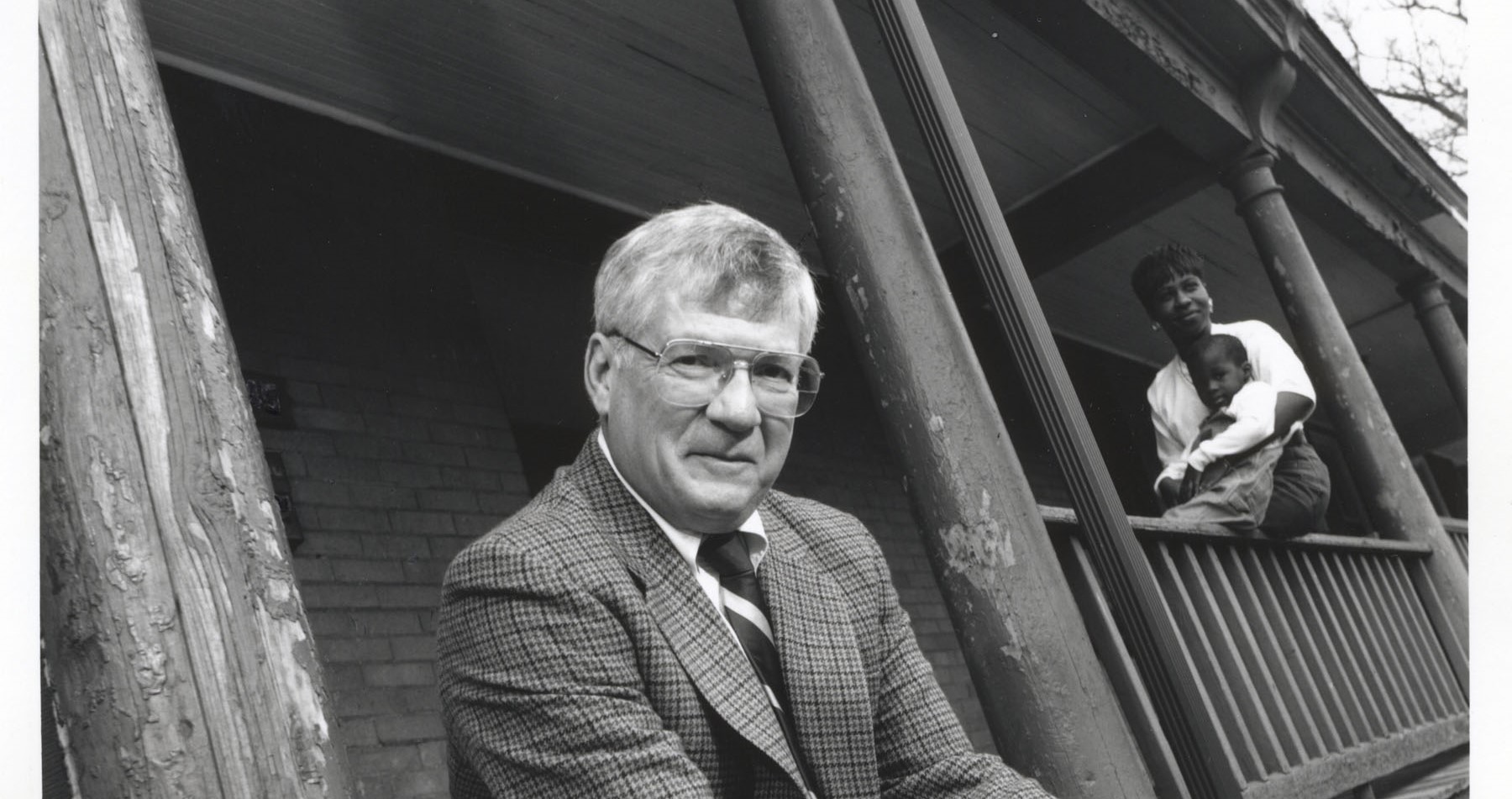
Dr. Herbert Needleman receives the Heinz Award in the Environment for his extraordinary contributions to the understanding and prevention of childhood lead poisoning.

A pediatrician and child psychiatrist at the University of Pittsburgh Medical Center, Dr. Needleman is distinguished as a researcher who, having determined the developmental implications of excessive exposure to lead, has worked tirelessly and at great personal cost to force governments and industry to confront the implications of his findings. While this has made him the target of frequent attacks, he has fought off his critics with courage, tenacity and dignity. Dr. Needleman continues his work today, despite having already played a key role in one of the greatest environmental health gains of modern times - a five-fold reduction in the prevalence of lead poisoning in American children.

In the 1970s, Dr. Herbert Needleman conducted a study while at the Harvard Medical School that provided the first clear evidence that lead, even at very low levels, could affect a child's IQ. And, in a series of follow-up studies, he determined that lead poisoning had long-term implications for a child's attentiveness, behavior, and school success.

Despite the significance of his findings, Dr. Needleman never assumed that his studies spoke for themselves, or that the job of interpreting them for policy makers and the general public belonged to someone else. Having identified a preventable affliction harming millions of children, he set about the process of educating everyone - from parents to government advisory committees - on the dangers of childhood lead poisoning. After extensive scientific review, his findings spurred the Centers for Disease Control to issue guidelines for the diagnosis and management of lead poisoning in children.

Dr. Needleman's work was instrumental in the decisions made by the Environmental Protection Agency to mandate the removal of lead from gasoline and by the Consumer Product Safety Commission to ban lead from interior paints. Additionally, Dr. Needleman's studies prompted the Department of Housing and Urban Development to remove lead from thousands of housing units across the country. The results, in public health terms, have been dramatic, with average blood lead levels in this country dropping an estimated 78 percent from 1976 to 1991.

It is not surprising that Dr. Needleman's work made him a frequent target of criticism by the lead industry, or that he was once forced to defend himself against charges of scientific fraud and misconduct. Not only was he exonerated, but he fought for and won the right for those accused of such charges to an open hearing with legal representation - a right that has benefited the entire scientific community.

Dr. Needleman is a superb medical educator and writer who remains committed to the cause of eradicating pediatric lead poisoning. The founder of the Alliance to End Childhood Lead Poisoning, an education and advocacy organization, he continues to work today on one of the most difficult issues in environmental health - reducing the hazards of lead-based paint in the homes of those living in the inner city.

Note: This profile is excerpted from the commemorative brochure published at the time of the awards' presentation.


UPDATES SINCE RECEIVING THE HEINZ AWARD 

February 2006 - Needleman receives the 2006 Distinguished Investigator Award from the Neurotoxicology Specialty Section of the Society of Toxicology. The award goes to Needleman for "his research showing that even low-level exposure to lead can affect children's I.Q. and behavior, and for his efforts to eliminate lead products from the environment." - University Medical Center of Pittsburgh website (www.umc.pit.edu)  

January 2004 - Needleman wins the Prince Mahidol Award for 2003 in the field of public health. This prestigious honor is generally bestowed upon people and organizations "which have demonstrated outstanding and exemplary contributions to the advancement of medical, public health and human services throughout the world." Needleman receives it for his groundbreaking research into lead poisoning and its prevention. - Thai Press Report (Global News Wire- Asia Africa Intelligence Wire)  

July 2004 - Needleman is honored with the Rachel Carson Award for Integrity in Science. The award is presented by the Center for Science in the Public Interest, and goes to Needleman for his exceptional work in publicizing the issue of lead poisoning. - Center for Science in the Public Interest website (www.cspinet.org)  

June 2001 - Needleman, in conjunction with UPMC Health Systems and the Homewood Healthy Homes Collaborative, kicks off a campaign to install "aluminum siding over a frame house coated with lead-based paint" in the Homewood area of Pittsburgh. This work will remove or at least cover lead that has proven to be hazardous in many historic Homewood homes where Needleman dealt with his first case of severe lead poisoning in children. - Pittsburgh (Pa.) Post-Gazette  

May 2000 - Needleman leads the way with new research which "estimates that 11 to 38 percent of the nation's delinquency is attributable to high lead exposure." This new assertion comes after years of research that including testing for lead exposure, looking for behavioral problems, and then retesting participants as they got older. - The Washington Post  

January 1998 - Needleman authors Childhood Lead Poisoning: The Promise and Abandonment of Primary Prevention, which discusses several of his research based conclusions on lead toxicity and prevention. 

January 1997 - Needleman receives the Vernon Houk Award from the Society for Occupational and Environmental Health. The award is granted to individuals, like Needleman, who play a "vital leadership role in advancing national policy to prevent childhood lead poisoning." - Society for Occupational and Environmental Health website (www.soeh.org)

Herbert Needleman