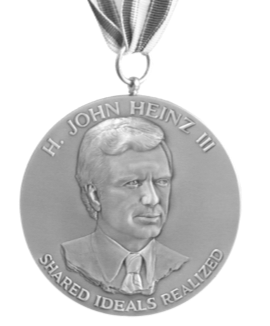

Senator John Heinz

RELATED NEWS

  • Beverly Wright is interviewed on NPR's "Living On Earth" go >>
  • August Wilson's boyhood home to become a workshop for artists, musicians and writers go >>
  • Dave Eggers one of the winners of the 31st annual American Book Awards go >>
  • Ashok Gadgil appointed Director of the Environmental Energy Technologies Division of Lawrence Berkeley National Laboratory go >>
  • Richard Lugar writes an Op-Ed for the New York Times on child nutrition programs go >>
  • Ann Hamilton creates new installation for the Pulitzer Foundation for the Arts go >>
  • Mark di Suvero exhibit opens at the Paula Cooper Gallery go >>
  • At 90, Russell Train and his environmental work is profiled on MSNBC go >>
  • Dave Eggers co-authors an Op-Ed piece on Sudan in the New York Times go >>
  • Heinz Awards Chairman Teresa Heinz co-authors editorial on cancer and green chemistry go >>
  • Dr. Butler, gerontologist and psychiatrist, the founding director of the National Institute on Aging, dies at 83 go >>
  • Jacques D'Amboise and the National Dance Institute to perform with young dancers in Shanghai via telepresence technology go >>
  • Andrew Grove writes an Op-Ed piece on job creation and unemployment in the United States go >>
  • James Nachtwey photographs from Iraq field hospitals part of photojournalism show at The Getty go >>
  • Inspired by Bernard Amadei, Israeli students start a Engineers Without Borders chapter and create a project in Nepal go >>
  • James Hansen is awarded the 2010 Sophie Prize go >>
  • James Hansen is co-recipient of the 2010 Blue Planet prize go >>
  • Robert Berkebile pens Op-Ed on energy and oil in Kansas City Star go >>
  • Arthur Mitchell named honorary chairman for 2010 USA International Ballet Competition go >>
  • Colorado Renewable Energy Society presents its 2010 Larson-Notari Award to Amory Lovins go >>
  • James Hansen co-authors paper stating that the global temperature this year reached the warmest average on record go >>
  • Arthur Mitchell's Dance Theater of Harlem honored at California African American Museum go >>
  • Dave Eggers and 826 Valencia links college bound students and donors with Scholar Match site go >>
  • Bernard Amadei inducted as an Ashoka Fellow go >>
  • Amory Lovins inducted as an Ashoka Fellow go >>
  • Jacques D'Amboise to perform for non-profit Kids Excel in El Paso fundraiser go >>
  • Paul Ehrlich interviewed by "Green" blog at New York Times go >>
  • Mario Molina named to IPCC review committee go >>
  • Leroy Hood is awarded the 2010 Kistler Prize from Foundation for the Future go >>
  • Lifetime achievement award presented to John Spengler by the EPA go >>
  • Dorothy Height, a leading female voice of the 1960s civil rights movement, dies at 98 go >>
  • President Obama nominates Donald Berwick to head the Centers for Medicare and Medicaid Services go >>
  • John Harbison and Michael Beattie prepare to hand over reins of Emmanuel Music go >>
  • John Harbison's double concerto world premiere completes the Boston Symphony Orchestra season go >>
  • Ashok Gadgil chosen by NASA as one of 10 Top Innovators on Water Sustainability go >>
  • Leroy Hood and the Institute for Systems Biology profiled in The Seattle Times go >>
  • Robert Berkebile's firm, BNIM, to lead master planning for Chatham University's campus in Gibsonia, PA go >>
  • Slate compares Steve Wozniak's design of the original Apple computer to today's iPad go >>
  • Richard Goldman named UC Berkeley Alumnus of the Year go >>
  • "August Wilson's Women" is staged at the Nuyorican Poets Cafe in New York City go >>
  • Scholar edits second volume of essays on August Wilson cycle of plays go >>
  • Ann Hamilton honored by University of Kansas with Alumni Distinguished Achievement Award go >>
  • Robert Moses co-authors a new book (with Ernesto Cortes) on creating a grassroots movement to transform public education go >>
  • Ernesto Cortes co-authors a new book (with Robert Moses) on creating a grassroots movement to transform public education go >>
  • Bernard Amadei leads development initiative in Haiti documented by Rocky Mountain PBS go >>
  • James Nachtwey's photography project on tuberculosis featured in the New York Times' Lens blog go >>
  • Leroy Hood co-authors paper in Science on the first whole genome sequencing of family of four go >>
  • Hugh Herr is profiled in The O&P Edge go >>
  • Hugh Herr is profiled in The Economist go >>
  • Dave Eggers makes Ad Age's Creativity magazine's 50 list for 2010 go >>
  • Bruce Katz is profiled in Next American City go >>
  • Chris Field and PG&E Chairman Peter Darbee release white paper on climate change for business leaders and policymakers go >>
  • Dave Eggers wins first Innovators Award from the LA TImes Book Awards go >>
  • James Nachtwey featured in exhibition on world events go >>
  • Beverly Wright interviewed about environmental justice on Living on Earth go >>
  • Jane Lubchenco announces National Climate Service at NOAA go >>
  • Heinz Awards Chairman Teresa Heinz urges women to get annual mammogram in Pittsburgh Post Gazette editorial go >>
  • Dee Boersma is featured on ABC Nightly News go >>
  • Paul Farmer interviewed on PBS NewsHour regarding delivery of aid in Haiti go >>
  • Jerry Franklin co-authors Op-Ed on how logging federal lands requires a fresh approach go >>
  • Paul Farmer interviewed on 60 Minutes regarding the crisis in Haiti go >>
  • Paul Farmer pens Op-Ed on Haiti in Miami Herald go >>
  • Dave Eggers among Poets and Writers magazine's "Fifty of the Most Inspiring Authors in the World" go >>
  • Jerry Franklin co-authors editorial in The Oregonian supporting Oregon forests bill go >>
  • Christopher Field co-authors study that links global warming to shifting ecosystems go >>
  • Peggy Shepard co-authors editorial in issue of Environmental Justice journal go >>
  • Hugh Herr and his prosthetics research are profiled in Forbes magazine go >>
  • Rick Lowe receives 2009 United States Artists Fellowship go >>
  • U.S. Senator Dick Lugar named one of the 25 greatest public servants over the past 25 years go >>
  • Bruce Katz co-authors article in The New Republic on revitalizing Detroit go >>
  • The new book, "Storms of My Grandchildren" by James Hansen, released today go >>
  • Geoffrey Canada and the Harlem Children's Zone profiled on 60 Minutes go >>
  • Brenda Krause Eheart receives a 2010 AARP Magazine Inspire Award go >>
  • John Holdren makes Foreign Policy's first annual list of 100 top global thinkers go >>
  • James Hansen makes Foreign Policy's first annual list of 100 top global thinkers go >>
  • Amory Lovins makes Foreign Policy's first annual list of 100 top global thinkers go >>
  • Paul Farmer makes Foreign Policy's first annual list of 100 top global thinkers go >>
  • Bernard Amadei is recipient of 2009 Honorary Member Award from the National Groundwater Association go >>
  • Chip Giller and grist.org profiled on Voice of America go >>
  • Kirk Smith co-authors a six paper series in The Lancet on the direct health benefits of reducing carbon dioxide and other greenhouse emissions go >>
  • Dee Boersma highlighted in Washington Post article on penguins' role as environmental indicators go >>
  • Joel Salatin is profiled in the Christian Science Monitor go >>
  • Aaron Beck presented with the Anna-Monika Prize for lifetime achievement go >>
  • Paul Farmer writes an Op-Ed on juvenile offenders for the Boston Globe go >>
  • Joel Salatin is a speaker at TEDx MidAtlantic go >>
  • The London Times writes about a new nanotechnology cancer therapy co-developed by Robert Langer go >>
  • Dave Eggers wins 2009 Prix Medicis for best foreign work go >>
  • Geoffrey Canada named 2010 winner of the Brock International Prize in Education go >>
  • Hugh Herr profiled in The Jerusalem Post go >>
  • Geoffrey Canada receives Robert Coles Award from Harvard group go >>

The Heinz Awards

1995

Geoffrey Canada

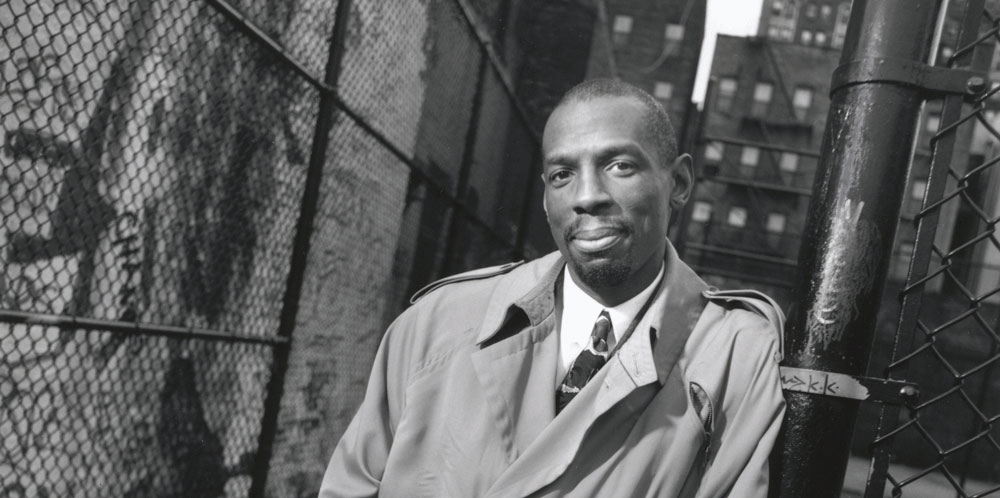
Geoffrey Canada receives the Heinz Award in the Human Condition in recognition of his battle against what he calls the "monsters" preying on the children of the depressed inner city. As President and CEO of the New York-based Rheedlen Centers for Children and Families, he has not only created model programs, he also sets an example for all adults wanting to protect children from crime, drugs, lawlessness, and despair.

Geoffrey Canada knows life in the inner city first hand. It's where he grew up, and he remembers what it's like to be a child there. "I haven't forgotten about the monsters," he says. "I remember being small, vulnerable, and scared."

Geoffrey Canada was one of those rare and fortunate young men and women who are able to rise above and move beyond the inner city. But, unlike the many who leave and never return, Canada did come back, motivated by a desire to save young people whose lives might otherwise be snuffed out by bullets or smothered by hopelessness. He settled in Harlem in order to provide the role model he so wished for in his own youth. He is optimistic in seeking practical answers to what others view as intractable problems and, as many have observed, the fact that he has no illusions is the very thing that makes him so effective.

Geoffrey Canada grew up on welfare, in a household headed by a single woman in the blighted tenements of New York's South Bronx. Despite the many things he did not have, he realized what he did have. Canada's childhood was blessed by a hard-working and loving mother who gave him a strong set of values, a deep sense of responsibility, a belief in the importance of education, and an almost ardent commitment to make things better ... not only for himself, but for those around him.

In 1963, having completed his graduate education, he joined the staff of the New York-based Rheedlen Centers for Children and Families and was eventually named its President/CEO in 1990. At Rheedlen, he was instrumental in creating or developing programs such as Rheedlen's Beacon School, Community Pride, the Harlem Freedom Schools, and Peacemakers.

The Beacon Schools program uses public school buildings to provide inner-city families with safe shelters and constructive activities 17 hours a day, 365 days a year. There are now 37 Beacon Schools in New York. The program has been replicated in Connecticut, Chicago, and California.

To combat the culture of violence in the inner city, Canada conceived of the Peacemakers program. Concerned by the media's easy promotion of violence as a way of settling disputes, he set out to develop a program to teach children how to use communication to resolve conflicts. His Peacemakers curriculum trains young people in conflict resolution, mediation, and violence prevention and reduction techniques. He is the author of Fist Stick Knife Gun, a book on conflict resolution.

Geoffrey Canada believes that if today's urban youth are to be convinced that a disadvantaged background does not demand despair or dictate defeat, they must have real role models and real heroes. And they need them on the spot ... successful, educated men and women who continue to live alongside them in their communities, shop at their stores, play in their parks, and ride the buses and subways just as they do. Geoffrey Canada's life teaches by example.

Note: This profile is excerpted from the commemorative brochure published at the time of the awards' presentation.


UPDATES SINCE RECEIVING THE AWARD

November - Jury members convening on the campus of the University of Oklahoma in Norman announced Geoffrey Canada, founder of the Harlem Children’s Zone, as this year’s recipient of the Brock International Prize in Education. The $40,000 award is given annually to recognize an individual for innovative and effective ideas in education resulting in a significant impact on the practice or understanding of the field of education. - Oklahoma State University

May 2006 - Canada is awarded an honorary degree by Brown University's School of Medicine. He also delivered the school's commencement speech titled, "Time Out: Preparing America's Next Generation of Leaders."

May 2006 - New York Magazine names Canada as one of the New Yorkers who are affecting real change in education.

April 2006 - Canada is appointed by New York City Mayor Bloomberg to head a 32-member commission that is to come up with a plan to reduce poverty in three of the city's most destitute neighborhoods by Labor Day. - The New York Sun

February 2006 - Canada participates in the forum discussion "Getting Education Right: Will Our Children be Ready for the Real World?" at the DuPont Theater in Wilmington, Delaware, as part of Forum USA Delaware series. - The Wilmington News Journal

October 2005 - Canada is noted as one of "America's Best Black Leaders," in the Journal of Blacks in Higher Education.

October 2005 - Canada makes U.S. News and World Report's "America's Best Leaders" list with the likes of Secretary of State Colin Powell and The New York Times correspondent Thomas Friedman. - The New York Daily News

September 2005 - Canada is one of 10 "hometown heroes" honored with Liberty Medals by The New York Post. The chosen few represent "guardian angels and pioneering advocates who help their neighbors."

November 2004 - Canada receives one of Child magazine's "Children's Champion Awards" for his extensive work with and for inner-city families.

October 2004 - Canada is awarded a $25,000 Prize in Education, an honor which is bestowed upon "individuals dedicated to improving education in the United States", from the McGraw-Hill Companies. - The Chronicle of Philanthropy

June 2002 - Canada authors an essay concerning his vision of violence for the book The Culture of Violence, a collection of both political and personal responses to violence, its place in the media, and its ties to history and culture.

November 2000 - Canada's Rheedlen Centers for Children and Families receive a $500,000 grant from the Annie E. Casey Foundation to be used, according to Canada, "to teach Harlem residents how to hook up to the Internet." - The New York Daily News

January 2000 - Canada's expands his original mission to save New York's children by saving their neighborhoods. His latest effort is to be called the Harlem Children's Zone, and it will be "a seven-year project" to create a 24-block safety zone of sorts. Canada will put his plan into action by working with local businesses, residents, and schools to refurbish and empower the neighborhood block by block. - The New York Times

January 1998 - Canada's "Reaching up for Manhood: Transforming the Lives of Boys in America" is released.

May 1996 - Canada hosts PBS documentary "Jobs: A Way Out." Produced by Pittsburgh's WQED-TV, the show highlights the people and programs working to break the connection between unemployment and violence.

Speech

1/26/1995 - Acceptance Speech

I want to thank the Heinz Family Foundation, and especially Ms. Teresa Heinz for giving me this wonderful honor.

I am so very proud to represent the category of the Human Condition in 1995. I think this will be a pivotal year for humankind as America consolidates its position as the last great super power. We have won a great victory as the Soviet Union has turned toward democracy, and turned its missiles away from our shores. But we have shown little of the grace and compassion at home that this victory should have produced. We have turned from a cold war with the Soviet Union to a cold war with poor Americans, mostly poor women and children.

I have heard much debate about the poor, much of it threatening and angry. There is so much this country needs to know and to understand about poverty. I grew up poor. My mother raised me and my three brothers by herself. When my mother couldn't find work we went on welfare. When she could find work, they paid women, especially black women at that time, so little money that we couldn't tell the difference between welfare and work. Except that our mother wasn't home when she was working.

People talk about poverty and the poor like it's all so easy not to be poor. But I know a different story. It takes great sacrifice to work your way out of poverty. My mother used to make all of her own clothes. You couldn't raise four boys on her salary and afford to buy dresses for work. When we were young she used to make all of our clothes. She used to cut our hair. She used to make toys for us to play with out of cereal boxes.

All her life she sacrificed for us. She put off getting her college degree, and later, her Masters degree, until we were grown and on our own. And you know what? We hated being poor. We loved our mother, but we ruined her Christmases with our tears of disappointment at not getting what we wanted. And I couldn't help but be angry when my shoes had holes in them and we didn't have money to buy new ones. And I couldn't help but stare angrily when I needed money to go on a school trip and there was no money to be had.

And though there was much love in our family, being poor strained our loving bonds. We had to blame someone for our condition, and our mother was our only target. And here she was giving all she had for us. Going without lunch, walking ten blocks to catch the train because she didn't have an extra token for the bus. She couldn't afford to go out evenings or enjoy a movie. And she would come home to us four boys after working all day and there we would be, angry, with our hands out, angry because we wanted something, we needed something that she could not afford to give us.

There may be some in this country who think being poor is a matter of lack of values and determination. But I know it to be something different. You can work hard all of your life, have impeccable values and still be poor.

My grandfather was the pastor of a church in Harlem. My grandmother was a Christian woman. They were hard working moral people. They were poor. I lived with my grandparents during my high school years. My grandmother worked all of her life minding other people's children, selling baked goods, or Avon, or anything she could get her hands on to make enough money to support the house. She was a beautiful woman; kind and intelligent, and she was determined to save my soul. And I was a wild and reckless adolescent and I must admit, my soul was in some peril. And I fell in love with my grandmother, a deep, personal love that any of us would have if suddenly an angel came into our lives. And the more time I spent with her the more I loved her. She cooled my hot temper and anger over being poor and showed me there was dignity, even in poverty.

And all the years I knew her, she was never able to afford material things that others took for granted. She worked so hard and never could afford anything of luxury. She taught me how one could have a deep, spiritual love of life that was not tied to material things. This is a tough lesson to learn in a country that places so much value on materialism.

Each summer my grandmother and I would indulge in her one vice: Cherries. She loved cherries. Two or three times a week, when my grandfather was at work I would walk the mile to the supermarket and I would buy a half a pound of cherries. And my grandmother and I would secretly eat those cherries. Because they were so extravagantly expensive, they were all that much more delicious. And my grandfather, we knew, would have a fit if he knew that we were spending an extra dollar a week on these cherries. And my summers with my grandmother were measured by how good the cherries were that year. It was our little secret. And I was amazed at how much she loved cherries. And I was amazed at how expensive cherries were.

Later, when I went off to college, I would sit in my room and I would think about how much my mother and my grandmother had sacrificed for me to be there. And I would fantasize about how when I graduated and got a good job, the first thing I would do when I got my first check, in August, I would buy a crate of cherries. And it would have to be August, because our cherry summers taught us that the sweetest cherries were in August. And I would wrap the crate up in gift paper, and put a bow on it and present it to grandma. And many a night I would go to sleep in the cold winters of Brunswick, Maine, warmed by the vision of my grandmother's look of excitement when I brought her this small treasure.

Grandma died my sophomore year in college. I never got to give her all the cherries she could ever eat. And if you want my opinion, the summer of 1971, the last summer she was alive -- well, that was really the last great summer for cherries.

Poverty is tough on families in so many ways. It is not quite as simple to get out of poverty as people make out. We must be careful to make sure we build ladders so children and families can climb out of poverty. It's not an easy climb. You can climb all your life and never make it out.

And so, in thanking you for this honor, I want to dedicate my work to my mother who is here with us today in the audience. And I want to say to her --- thank you. I know how hard it was for you. I understand better your sacrifices. And to grandma who sacrificed so much for all of us, I just want to say that I know, in all I've been acknowledged for that I still haven't reached the level of love and compassion that you tried to teach me. I think you accomplished your goal, you saved my soul. And I hope they let us bring gifts to Heaven; you'll know what's in the box.

Thank you very much.
Geoffrey Canada