
Daniel Patrick Moynihan
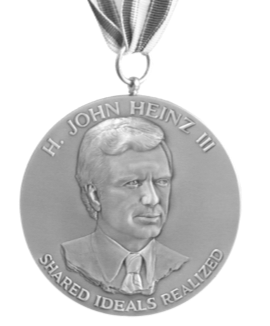
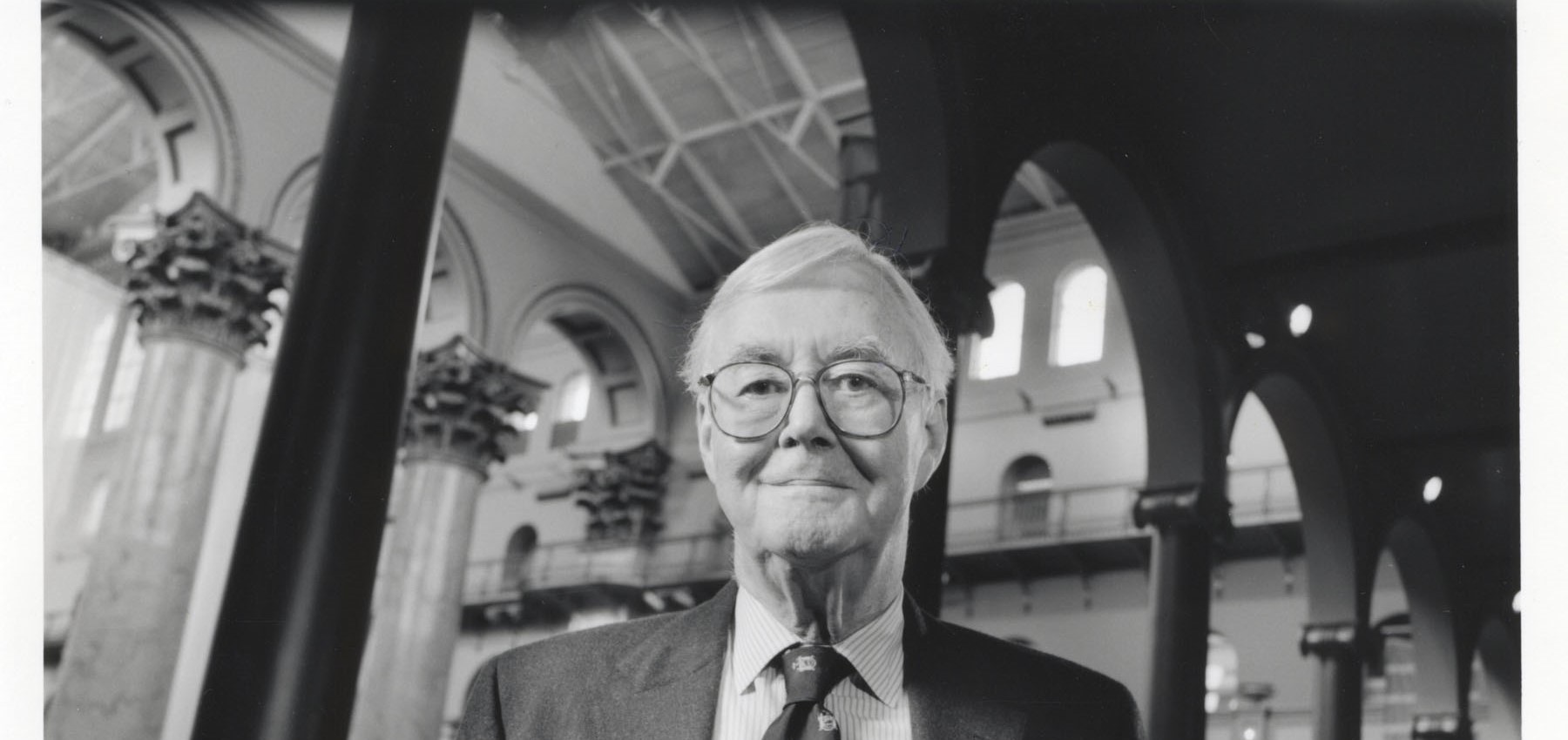
Daniel Patrick Moynihan, the senior United States Senator from New York, receives the Heinz Award in Public Policy for the distinct and unique voice he has brought to our country and his independence in his convictions. A scholar, teacher, statesman, and politician skilled in the art of the possible, he has brought his considerable intellectual gifts to bear on an astonishing range of issues during his lifetime of public service.Elected to the Senate in 1976, for more than a generation Senator Moynihan has been comfortable in the worlds of both ideas and politics and has been centrally involved in many of the major issues of our age. Recognized for his impeccable social policy credentials, Senator Moynihan has shaped the national debate on the future of Social Security, the stability of the American family, welfare reform, fiscal policy and the danger of nuclear proliferation, among many other issues.
Senator Moynihan served on the cabinets or sub-cabinets of Presidents Kennedy, Johnson, Nixon, and Ford, making him the only person in the nation's history to have held such positions in four successive administrations. He has served as ambassador to India and later, to the United Nations. The range of his interests, both scholarly and political, is truly extraordinary: from automobile safety, urban planning and public architecture to welfare, taxation and government secrecy. In all of these areas, as well as others, he is generally acknowledged by his colleagues to be the Senate's most learned member. During his career, he has suffered considerable criticism for being ahead of his time on many issues. But throughout, he has retained the courage of his convictions and, ultimately, found himself vindicated by the passing years.
With his uniquely original mind, Senator Moynihan has sparked new debates and recast old ones through fresh and often provocative approaches. Virtually impossible to categorize in the ideological terms of the day, he consistently follows both the facts as he knows them and his deep personal convictions to whatever conclusions they may lead, regardless of whom they may please or displease.
Senator Moynihan is also wise enough to recognize that in order to keep a situation from worsening, modest action or even inaction is often the best course. He has been called "quite possibly the most diversely interesting and influential political figure of our time" and "at the top of the short - the very short - list of indispensable senators."
Fond of quoting the Hippocratic admonition, "above all do no harm," Senator Moynihan consistently has sought to improve the lives of all Americans. Today, he is one of a rare breed, the intellectual as public servant. He is considered the best thinker among politicians since Abraham Lincoln and the finest politician since Thomas Jefferson. Retiring from the Senate after his current term expires, he will be sorely missed, and will doubtless continue to serve as a priceless national resource in often-turbulent times.
Note: This profile is excerpted from the commemorative brochure published at the time of the awards' presentation.
REMEMBERING
Daniel Patrick Moynihan passed away on March 26, 2003.
HONORS SINCE HIS DEATH
September 2010 - Daniel Patrick Moynihan posthumously reveals his insights into personalities and public policy in thousands of pages of intimate and candid correspondence that has been culled from the Library of Congress to produce “Daniel Patrick Moynihan: A Portrait in Letters of an American Visionary,” which PublicAffairs is to publish next month. - The New York Times
March 2005 - Syracuse University hosts a celebration in honor of "the newly-named Daniel Patrick Moynihan Institute of Global Affairs." Nearly 300 people witness the official dedication of the new institute, which was created with $10 million of federal funding. - The Post-Standard
April 2004 - The Museum of the City of New York honors the late Senator Moynihan in an exhibit portraying his life and his greatest contributions. - The Washington Times
UPDATES SINCE RECEIVING THE HEINZ AWARD
November 2002 - Moynihan is honored with a Chrysler Design Award for all of his work to "get design on the federal agenda." - Newsweek
October 2001 - Moynihan wins the 2001 J.C. Nichols Prize for Visionary Urban Development from the Urban Land Institute. Moynihan is honored with the $100,000 cash prize for "his lifelong dedication to excellence in urban design, public building architecture and community revitalization issues."
December 2000 - Moynihan plans to join the staff of Syracuse University's Maxwell School of Citizenship and Public Affairs when he leaves the Senate in January 2001. While he will not be teaching entire courses, he says he will "lecture, tutor, and hold seminars." - The New York Times
December 2000 - Moynihan announces that he will retire from the Senate after 24 years of service.
August 2000 - Moynihan is awarded the nation's highest civilian honor, the Presidential Medal of Freedom, at a ceremony in Washington, D.C. President Clinton presented the award to Moynihan who was actually a part of the commission that "helped establish the Medal of Freedom" under the Kennedy administration. - The Times Union
Speech
2/24/1999 - Acceptance SpeechWhen Jack died, I put out a simple statement. It just said that if he was given much, he gave more. Most especially to those who had the least. We will miss his high spirit, his great, good humor, and his great heart. I would add today, we will miss his understanding that of all the realms that were open to him, the most difficult but the most important was that of politics.
It would be just 222 years ago that what we came to call the Constitutional Convention finished its work in Philadelphia. Benjamin Franklin emerged from what we now call Independence Hall, and a lady asked him, ?what have you wrought.? And he said, "A Republic, if you can keep it." And how wise he was. There were in 1787 two nations on earth, which both existed at that time and had not had their form of government changed by violence since that time. There are eight nations in the world, which both existed in 1914 and that have not had their form of government changed except by violence since that time. Steve Hess is here, and I think he would agree that not always approved, sometimes very much disparaged, the art of politics and government is the highest calling of a democracy. And the achievement we have in the stability of this society is so easily underestimated. It is normal for us -- it is the rarest conceivable thing for most of mankind.
But it is sustained through the life of such as Jack Heinz who was on his way to a town meeting when he died. George Orwell was a good man, but he didn?t have enough hope. He thought we would be all gone by now. But it hasn?t, and it needn?t. But it will not be sustained and continued if we don?t know in fact how fragile it is, and how much it needs the very best of men and women to continue it with the knowledge and the courage to do. Such was the man that whose desire I have this medal tonight, which I treasure, more than you know. I am saddened only by realizing once more how much he is missed.