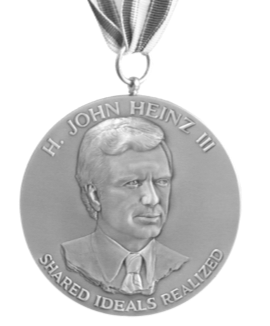

Senator John Heinz

RELATED NEWS

  • Mary Good and her career in chemistry is profiled in a short film by the Chemical Heritage Foundation go >>
  • Jay Keasling to receive 2013 George Washington Carver Award for innovation in industrial biotechnology go >>
  • Jay Keasling and his current work on artemisinin profiled in San Francisco Business Times go >>
  • Joint BioEnergy Institute, headed by Jay Keasling, to be renewed until 2018 go >>
  • The Nuclear Threat Initiative, with Sam Nunn and Richard Lugar, proposes new strategy to reduce conflict and to encourage security go >>
  • Robert Langer pens a piece for Project Syndicate on Going Against Conventional Wisdom go >>
  • Robert Langer is interviewed on NPR’s Science Friday go >>
  • C. Everett Koop, former surgeon general, has died at age 96 go >>
  • Marian Wright Edelman to receive Harvard Graduate School of Education's Medal for Education Impact go >>
  • Susan Seacrest is profiled by the Lincoln Star Journal go >>
  • Jay Keasling's semi-synthetic anti-malarial artemisinin now being produced in bulk and ready for introduction go >>
  • Hugh Herr speaks on cutting edge bionics at the Digital-Life-Design Conference go >>
  • Jay Keasling is profiled on CNN's The Next List go >>
  • Sidney Drell receives the National Medal of Science go >>
  • Philosopher Anthony Grayling interviews Robert Langer on the BBC's "Exchanges on the Frontier" go >>
  • Robert Langer to receive Israel's 2013 Wolf Prize for innovations that "have had a profound impact on medicine" go >>
  • Mildred Dresselhaus interviewed on The Age of Reason on the BBC World Service go >>
  • Leroy Hood to receive the National Medal of Science go >>
  • Robert Langer to receive the National Medal of Technology and Innovation go >>
  • Leroy Hood and his vision of P4 medicine is profiled by The National go >>
  • The New York Times reviews Ann Hamilton’s installation, “the event of a thread,” at the Park Avenue Armory go >>
  • Robert Langer's MIT lab's success in technology transfer is profiled in the New York Times go >>
  • James Balog is profiled on NPR's Weekend Edition go >>
  • Bernard Amadei appointed as Science Envoy for the U.S. State Department go >>
  • The Harvard Crimson writes about Robert Langer and a 'cyborg tissue' breakthrough at MIT and Harvard go >>
  • PandoDaily writes about "The Return of Dean Kamen" and the buzz surrounding his Stirling Engine go >>
  • Dean Kamen and his work is profiled by A Total Disruption, a project by Ondi Timoner go >>
  • James Balog interviewed in Fast Company on tracing the global decay of glaciers go >>
  • Janine Benyus is interviewed for TrimTab online magazine go >>
  • Robert Berkebile is interviewed by the Omega Institute for their Design by Nature Conference go >>
  • The Washington Post cites the work of Richard Feely and Joan Kleypas on the impact of ocean acidification on fisheries go >>
  • Dudley Cocke makes the case for rural theater in Howlround go >>
  • Dean Kamen interviewed on Charlie Rose on working with Coca-Cola on water issues go >>
  • Paul Farmer co-authors article "Cholera and the Road to Modernity" in America's Quarterly go >>
  • Tom "Smitty" Smith pens OpEd requesting Texas PUC to embrace energy alternatives go >>
  • Richard Jackson is interviewed on Living On Earth go >>
  • Russell Train, renowned conservationist and recipient of the 7th Heinz Award Chairman's Medal, dies at 92 go >>
  • Lou Bellamy to direct August Wilson's play, "Fences," at the Denver Center Theatre Company go >>
  • Hugh Herr believes that bionics can put people with disabiities back to work go >>
  • Elizabeth Kolbert reports from the Andes in Yale's Environment 360 go >>
  • di Suvero sculpture settles into new home at Stanford University go >>
  • NPR reports on Joseph DeRisi's work on a link between deadly Ebola virus and disease that's been killing boa constrictors go >>
  • New study by James Hansen ties recent heat waves to global warming go >>
  • James Hansen pens an Op-Ed piece on climate change for The Washington Post go >>
  • Mildred Dresselhaus profiled in U.S. News and World Report go >>
  • Prized Science's first episode of 2012 highlights the work of Robert Langer go >>
  • Mildred Dresselhaus is interviewed in The New York Times go >>
  • Hugh Herr is profiled on Jothy Rosenberg's "Who Says I Can't" go >>
  • Dave Egger's latest novel, A Hologram for the King, is reviewed in The New York Times go >>
  • Mildred Dresselhaus is the 2012 recipient of the Kavli Prize for Nanoscience go >>
  • Robert Langer to receive the 2012 Society of Chemical Industry's Perkin Medal go >>
  • Paul Anastas to receive the German Chemical Society’s Wohler Prize go >>
  • Pittsburgh Symphony Orchestra offers videos of Mason Bates discussing his go >>
  • Janine Benyus is named the 2012 Design Mind Award recipient by the Cooper-Hewitt Design Museum go >>
  • Andrew Grove is interviewed with Gordon Moore for NPR's Mornng Edition on their place in Silicon Valley history go >>
  • CNN's "The Next List" profiles Dr. Hugh Herr and his Biomechatronics Group at the MIT Media Lab go >>
  • Robert Langer's entrepreneurial drive is profiled in Chemical and Engineering News go >>
  • Hugh Herr and his bionics are profiled for TechWeekEurope go >>
  • Dean Kamen joins Elon Musk and Craig Venter to discuss energy innovation at ECOnomics Conference go >>
  • Kirk Smith shares the 2012 Tyler Prize for Environmental Achievement from USC go >>
  • Ruth Patrick, "Den Mother of Ecology", is profiled by the Intelligencer Journal go >>
  • Ralph Gomory co-authors op-ed in Bloomberg News on transparency for corporate money in political campaigns go >>
  • Carol Gilligan looks back on her 1982 book, In a Different Voice, in the current issue of Harvard's online journal Classics@ go >>
  • Jane Lubchenco is named Woman of the Year by the Women's Council on Energy and the Environment go >>
  • Bruce Katz is interviewed in Wired magazine on optimizing economic structures for revitalization go >>
  • Cary Fowler interviewed in The Atlantic on the importance of crop diversity and the vital role of the Svalbard Global Seed Vault go >>
  • New paper from Brookings’ Bruce Katz on "Remaking Federalism to Remake the American Economy" go >>
  • Mario Molina co-authors editorial piece on "How to cut climate change in half" go >>
  • Rita Dove is awarded the 2011 National Medal of Arts go >>
  • James Nachtwey honored with 3rd Dresden International Peace Prize go >>
  • Paul Anastas is profiled in Forbes go >>
  • Paul Farmer writes editorial in the New York Times on why the global fund matters go >>
  • Marian Wright Edelman on the need for dedicated support and education opportunities to allow access to the American Dream go >>
  • The Scripps Center for Marine Biodiversity and Conservation, founded by Nancy Knowlton, celebrates its first decade go >>
  • Geoffrey Canada to receive the second Harvard Graduate School of Education Medal for Education Impact go >>
  • Chasing Ice, on James Balog's Extreme Ice Survey, is one of the most-sought tickets at Sundance Film Festival go >>
  • Paul Farmer talks to CBS about new state-of-the-art hospital in Haiti go >>
  • Marian Wright Edelman is interviewed on public television's One On One. go >>
  • Environmental reporter Jane Kay interviews Paul Anastas on his move from EPA back to academia go >>
  • Ashok Gadgil is awarded the Zayed Future Energy Prize’s Lifetime Achievement Award go >>
  • Ian Cheney's new film, "The City Dark," reviewed on the Huffington Post go >>
  • Marian Wright Edelman reflects on Martin Luther King, Jr.’s words in Huffington Post column go >>
  • Mildred Dresselhaus is awarded the Enrico Fermi Award by President Obama go >>
  • Daniel Sperling interviewed about CAFE, the new federal fuel-efficiency standards go >>
  • Paul Anastas to depart postion heading EPA's research to return to Yale University in February go >>
  • Curt Ellis and FoodCorps profiled in Associated Press video go >>
  • Dean Kamen writes about 20 years of FIRST at the Huffington Post go >>
  • Elizabeth Kolbert is interviewed on Treehugger Radio go >>
  • The Boston Globe writes about the genesis of John Harbison's new Sixth Symphony, commissioned by the Boston Symphony Orchestra go >>
  • Mercury News profiles Ashok Gadgil's Darfur Stoves Project go >>

The Heinz Awards

2004

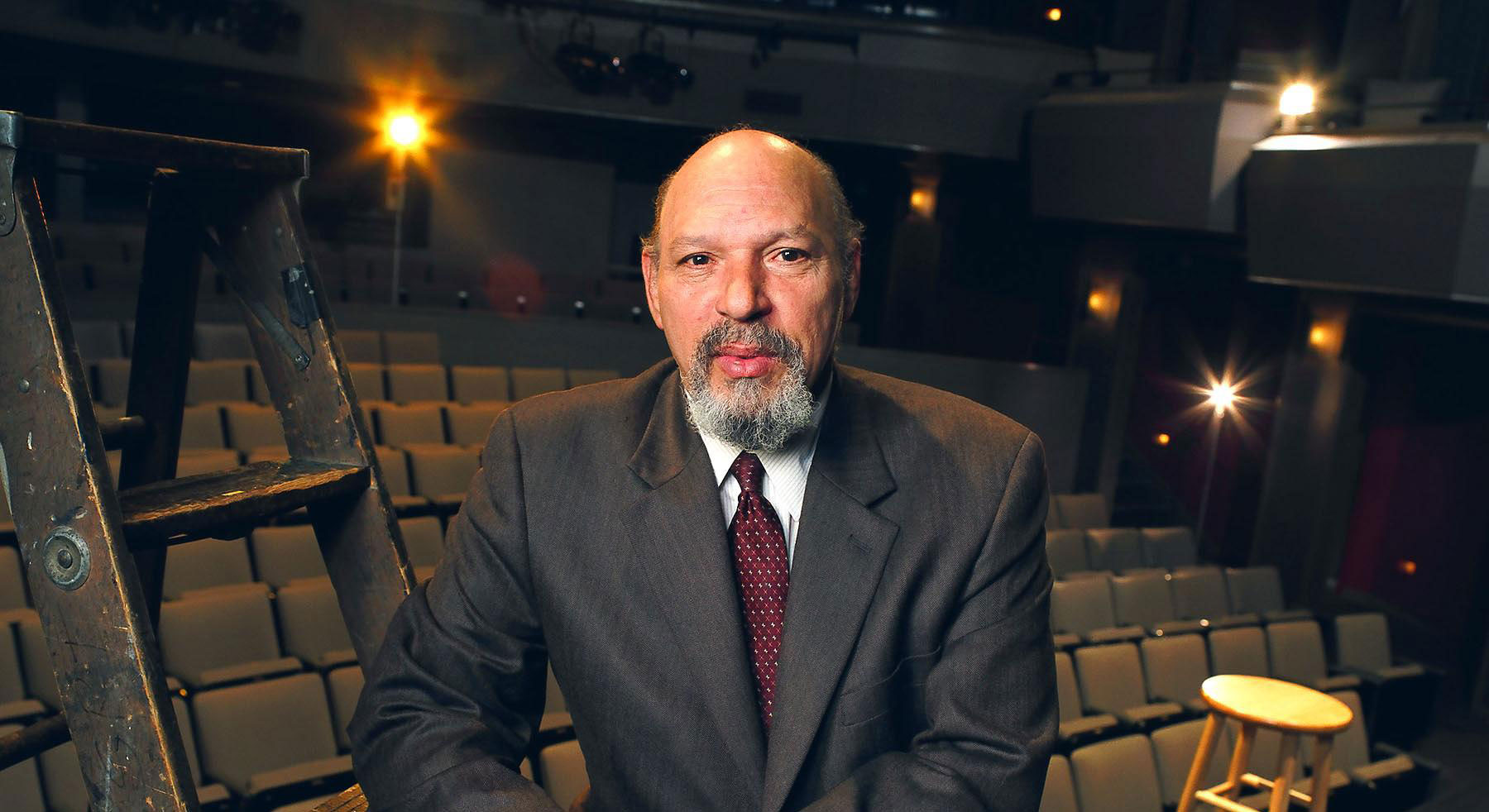
August Wilson

Playwright August Wilson receives the Heinz Award in the category of the Arts and Humanities for a body of dramatic work that poignantly and honestly captures the 20th-century African-American experience.

A two-time Pulitzer Prize winner, Mr. Wilson's sharply hewn characters and lyrical voice embody a century-long struggle against racism and injustice. He was born and reared in Pittsburgh where, as an African-American, he was confronted with the reality of prejudice and bigotry that would become a constant and powerful theme of his work.

Growing up in the Hill District of the city, Mr. Wilson dropped out of school at age 15, turning instead to the local library and its shelves. He consumed books of literature, sociology, theology and philosophy, and by the late 1960s, discovered cultural nationalism. He was intent on using his plays to increase self-awareness and self-determination among African-Americans, and soon the first seeds of his dramatic expression began to spring forth. He and friend Rob Penny founded Black Horizons Theater, a local community theater aimed at raising social consciousness within the black community.

In 1978, he moved to St. Paul, Minn., and wrote and produced his first production, the musical satire, Black Bart and the Sacred Hills, based on a series of his poems. Six years later, his critically acclaimed play, Ma Rainey's Black Bottom, announced his arrival as a major new voice in American theater. He since has become one of this country's most produced playwrights, and at one time, thrilled audiences with two of his works on Broadway simultaneously.

Mr. Wilson's plays explore the heritage and experience of African-Americans throughout the 20th century. All but one of the plays are set in Pittsburgh and are marked by true-to-life dialogue. Each of his plays represents a decade within that 100-year time frame, chronicling his characters' confrontations with racism within the context of the era. Collectively, they form a timeline that traces the development of modern-day African-American culture, a dramatic recounting of the nation's racial history. His plays are populated with complex characters, the most noble of which are often the poor.

Mr. Wilson has written two Pulitzer Prize-winning dramas, The Piano Lesson (1990) and Fences (1987). His eighth installment in the series, King Hedley II, premiered in 1999 to critical acclaim. Taking place in the 1980s, it examined the breakdown of an African-American family. The play garnered several Tony nominations. In fact, he has won every major award the theater has to offer.

His newest play, Gem of the Ocean, set in 1904, premiered this past year and is making its way to Broadway. During 2003, Wilson took the stage himself for the first time. He performed his autobiographical one-man show, How I Learned What I Learned, at the Seattle Repertory Theatre to sold-out audiences, a performance he has been invited to reprise by theaters across the country.

August Wilson is among the most widely produced and critically acclaimed playwrights of his generation. Through hundreds of professional productions of his plays, black artists have been able to develop their talents. His body of work has found a home in America's theaters and in America's heart, stirring us with passion and challenging us to recognize the truths about ourselves.

Note: This profile is excerpted from the commemorative brochure published at the time of the awards' presentation.


REMEMBERING

August Wilson passed away on October 2, 2005.

Teresa Heinz Reflects on the Life of August Wilson


HONORS SINCE HIS DEATH

January 2006 - Off-Broadway's Signature Theatre selects Wilson and his work as its playwright to honor by producing his play for an entire season. - Hartford Courant

February 2006 - Pittsburgh's African American Cultural Center is to be renamed the August Wilson Center for African American Culture, as a tribute to Wilson who loved his native Pittsburgh. - The Los Angeles Times

October 2005 - Wilson is honored and remembered by 450 guests at Soldier's and Sailors National Military Museum Memorial in his hometown of Pittsburgh. - Pittsburgh Post-Gazette

October 2005 - Broadway's Virginia Theater is renamed the August Wilson Theater in a dedication ceremony two weeks after Wilson's death. - Chicago Tribune


UPDATES SINCE RECEIVING THE HEINZ AWARD

April 2005 - Wilson's play, Radio Golf, the final installment in his 10-play series depicting African-American experience in the 20th century, premieres at the Yale Repertory Theatre to strong reviews. - The Associated Press

November 2004 - Wilson's ninth play, Gem of the Ocean, opens on Broadway. The play is about a 200-year-old soothsayer, set in 1904 Pittsburgh. - The Baltimore Sun

June 2003 - Wilson is honored with a Lifetime Achievement Award at the New Dramatists 54th Annual Benefit Luncheon in New York City. The New Dramatists is a non-profit organization "dedicated to the development of new playwrights." - Jet

Speech

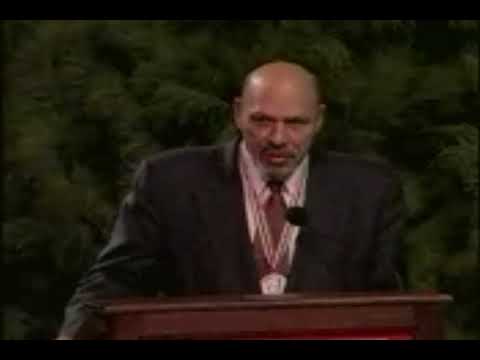
12/4/2003 - Acceptance Speech

Thank you. I would like to first publicly acknowledge and thank my wife, Constanza Romero, without whom my life would not be the occasion of poetry that her presence demands. Unfortunately, she cannot be here tonight. She is at home in Seattle taking care of our six-year-old daughter, Azula Carmen. But I am fortunate to have members of my family here and friends - all of whom have supported me throughout my life and my career. My sister, Freda Ellis who gave me the money to buy my first typewriter, my sister, Linda Jean, who typed my early poems and manuscripts, my brother, Richard, who was my first critic. A lot of the suggestions he's made about the plays in their early incarnations or added got on stage in the later productions and I thank him for his insights. My nephew, Paul Ellis, my niece, Kim Ellis, my adopted niece, Nikki Porter, my mother's best friend and the woman who can remember me when I was in diapers, Julia Burly, wife of the great Pittsburgh prize fighter, Charlie Burly, I thank you all for your support.

This platform is but a few steps from the Carnegie Library where as a 15-year-old high school dropout, I sought refuge from the school system which had failed me. I dropped out of school, but I didn-t drop out of life. And when I left the library at 20, I went out into the streets of the Hill District of Pittsburgh, and there I met lifelong friends who have nurtured me, who sanctioned my life and who ultimately provided it with meaning. It would be remiss of me to stand here among this cascade of coin and blessing and not acknowledge them.

There comes a moment in a man's life where he has to ask himself, the question, how did I get here? If he looks up to find himself thrashing about in the fires of hell's damnation, he must ask the question, how did I get here? Or if, like myself, he looks up and finds himself by God's grace in a landscape rich with welcome, bright beckoning, temperate climate, sweet water and all the possibilities of life exalted, he must ask the question, how did I get here?

To arrive at this moment in my life, I have traveled many roads, some circuitous, some brambled and rough, some sharp and straight, and all of them have led as if by some grand design to the one that burnished with art and small irrevocable tragedies. I've carried in my pocket, to bargain my passage, memory and a wild heart that plies its trade with considerate and sometimes alarming passion.

Some roads have opened to me. Other roads have bred landscapes of severe wolves to blunt and discourage my advance. Still, others closed for repair shall remain closed in one thing forever. In my 35th year, I came to a road marked theater, a road which has welcomed me with fresh endearments and sprouted yams and bolls of cotton at my footfall. And it is that road which I have taken to be here with you this evening.

Now, these many years later, I am older, wiser, back in the saddle, riding an old warhorse, searching for the fuel for all the howls and whispers and songs that I might uncover while storming the barricade. This adds to that fuel. It empowers me in my search for the limitations of my art. And for that most precious of gifts, I thank you.

And now as I did my introductions, I remember the director Lloyd Richards told me that when you start naming someone you are going to forget someone. I realize that I forgot what is for me actually the most important acknowledgment and that is my daughter, Sakina Ansari, who 33 years ago burst upon the world clothed in the light of angelic grace. She has been my first inspiration, and that is the inspiration to live a full and productive life as gift and example to her and Sakina - I love you, I thank you for your love and your understanding.

Thank you all.
August Wilson