
Senator John Heinz

RELATED NEWS

  • Janine Benyus is named the 2012 Design Mind Award recipient by the Cooper-Hewitt Design Museum go >>
  • Andrew Grove is interviewed with Gordon Moore for NPR's Mornng Edition on their place in Silicon Valley history go >>
  • CNN's "The Next List" profiles Dr. Hugh Herr and his Biomechatronics Group at the MIT Media Lab go >>
  • Robert Langer's entrepreneurial drive is profiled in Chemical and Engineering News go >>
  • Hugh Herr and his bionics are profiled for TechWeekEurope go >>
  • Dean Kamen joins Elon Musk and Craig Venter to discuss energy innovation at ECOnomics Conference go >>
  • Kirk Smith shares the 2012 Tyler Prize for Environmental Achievement from USC go >>
  • Ruth Patrick, "Den Mother of Ecology", is profiled by the Intelligencer Journal go >>
  • Ralph Gomory co-authors op-ed in Bloomberg News on transparency for corporate money in political campaigns go >>
  • Carol Gilligan looks back on her 1982 book ‘In a Different Voice’ in the current issue of Harvard’s online journal Classics@ go >>
  • Jane Lubchenco is named Woman of the Year by the Women's Council on Energy and the Environment go >>
  • Bruce Katz is interviewed in Wired magazine on optimizing economic structures for revitalization go >>
  • Cary Fowler interviewed in The Atlantic on the importance of crop diversity and the vital role of the Svalbard Global Seed Vault go >>
  • New paper from Brookings’ Bruce Katz on "Remaking Federalism to Remake the American Economy" go >>
  • Mario Molina co-authors editorial piece on "How to cut climate change in half" go >>
  • Rita Dove is awarded the 2011 National Medal of Arts go >>
  • Paul Anastas is profiled in Forbes go >>
  • Paul Farmer writes editorial in the New York Times on why the global fund matters go >>
  • Marian Wright Edelman on the need for dedicated support and education opportunities to allow access to the American Dream go >>
  • The Scripps Center for Marine Biodiversity and Conservation, founded by Nancy Knowlton, celebrates its first decade go >>
  • Geoffrey Canada to receive the second Harvard Graduate School of Education Medal for Education Impact go >>
  • Chasing Ice, on James Balog's Extreme Ice Survey, is one of the most-sought tickets at Sundance Film Festival go >>
  • Paul Farmer talks to CBS about new state-of-the-art hospital in Haiti go >>
  • Marian Wright Edelman is interviewed on public television's One On One. go >>
  • Environmental reporter Jane Kay interviews Paul Anastas on his move from EPA back to academia go >>
  • Ashok Gadgil is awarded the Zayed Future Energy Prize’s Lifetime Achievement Award go >>
  • Ian Cheney's new film, "The City Dark," reviewed on the Huffington Post go >>
  • Marian Wright Edelman reflects on Martin Luther King, Jr.’s words in Huffington Post column go >>
  • Mildred Dresselhaus is awarded the Enrico Fermi Award by President Obama go >>
  • Daniel Sperling interviewed about CAFE, the new federal fuel-efficiency standards go >>
  • Paul Anastas to depart postion heading EPA's research to return to Yale University in February go >>
  • Curt Ellis and FoodCorps profiled in Associated Press video go >>
  • Dean Kamen writes about 20 years of FIRST at the Huffington Post go >>
  • Elizabeth Kolbert is interviewed on Treehugger Radio go >>
  • The Boston Globe writes about the genesis of John Harbison's new Sixth Symphony, commissioned by the Boston Symphony Orchestra go >>
  • Mercury News profiles Ashok Gadgil's Darfur Stoves Project go >>
  • Rita Dove interviewed on NPR about her work on the Norton Anthology of 20th Century Poetry go >>
  • Leroy Hood is interviewed by the Seattle Business Magazine on his background, education, work and his vision for medicine go >>
  • Documentary on James Balog and the Extreme Ice Survey has world premiere at Sundance Film Festival go >>
  • Watch Vartan Gregorian, president of the Carnegie Corporation, serve as host for the 17th Heinz Awards go >>
  • University of Massachusetts Boston adds another major sculpture by Mark di Suvero to its Arts on the Point go >>
  • Lynn Goldman interviewed on NPR regarding mercury emissions from power plants go >>
  • Robert Langer's 34 year career at MIT is profiled in The Tech newspaper go >>
  • Elizabeth Kolbert posts "Top Ten Signs We Are Living in a Warming World" for 2011 in The New Yorker go >>
  • Bill Thomas pens an Op-Ed piece on the elderly for BBC News Health go >>
  • On Paul Farmer's struggle to reassemble a health strategy for Haiti go >>
  • Andrew Grove and Ralph Gomory contribute to 'roundtable' on returning manufacturing to the U.S. for The American Prospect go >>
  • Richard Alley is presented with the inaugural Stephen H. Schneider Award go >>
  • Cary Fowler writes in the Huffington Post about the impact of "Feeding an Ever-growing Population" go >>
  • Marian Wright Edelman emphasized the role of young people in advocating for change in Stanford University lecture go >>
  • Ralph Gomory and Andrew Grove contribute to 'roundtable' on returning manufacturing to the U.S. for The American Prospect go >>
  • "songbirdsongs," composed by John Luther Adams, reviewed in The New York Times go >>
  • Richard Alley interviewed on EarthSky about his work on abrupt climate change go >>
  • Joseph DeRisi part of panel discussing how bacteria research can help explore disease and drug discovery go >>
  • Huffington Post explores the Green House Project developed by Dr. William Thomas go >>
  • Robert Langer's work on recreating vocal cords profiled in Bloomberg News go >>
  • Amory Lovins' new book, Reinventing Fire, is released go >>
  • Bruce Katz co-authors piece for Time magazine on the Pragmatic Caucus and creating jobs go >>
  • The Atlantic excerpts Sandra Steingraber's thoughts on gardening and climate change from her latest book, Raising Elijah go >>
  • SmartPlanet interviews Louis Guillette on impact of toxic chemicals on the reproductive systems of wildlife go >>
  • Joel Salatin is profiled in Time magazine go >>
  • Indiana University creates AIDS-HIV research grants in honor of Surgeon General C. Everett Koop go >>
  • Joan Kleypas is interviewed about her research on ocean acidification on EarthSky go >>
  • Cary Fowler's Svalbard Seed Vault in Norway featured in Dornith Doherty's photographs in Wired go >>
  • Jacques d'Amboise's National Dance Institute establishes itself in a permanent home in Harlem go >>
  • Joel Salatin is interviewed for NPR's On Point about his new book go >>
  • The Wisconsin State Journal writes about John Harbison's commission for Pro Arte Quartet's 100th anniversary go >>
  • Gretchen Daily wins 2011 Biodiversity Award from the Prince Albert II of Monaco Foundation go >>
  • Marian Wright Edelman writes in the Huffington Post about adults needing to "shape up and close the hypocrisy gap" go >>
  • "Clouds of Forgetting, Clouds of Unknowing" by John Luther Adams is performed by San Francisco Contemporary Music Players go >>
  • The Los Angeles Times profiles Donald Berwick and his work on Medicare and Medicaid go >>
  • Aaron Beck is co-author on new study showing cognitive behavioral therapy can work to treat severe schizophrenia go >>
  • Fast Company and EarthSky partner to produce, "Biomimicry, Nature of Innovation," starting with Janine Benyus interview go >>
  • Andrew Grove's push to accelerate medical research profiled in San Jose Mercury News go >>
  • Leroy Hood offers "A Personal View of Systems Biology and the Coming of Big Science" in Genetic Engineering News go >>
  • Curt Ellis talks about FoodCorps on the Nourish blog go >>
  • Dr. Mildred Dresselhaus is named as the 2012 Acta Materialia Materials and Society recipient go >>
  • The Medical University of South Carolina interviews Louis Guillette about his work and the 17th Heinz Award go >>
  • Geoffrey Canada debates questions about the nation's education system on NBC's Education Summit go >>
  • Geoffrey Canada participates in New York Times debate on the length of the school day go >>
  • Nancy Knowlton is interviewed on NPR's Living On Earth go >>
  • Marian Wright Edelman is interviewed by theGrio on education and poverty go >>
  • Elizabeth Kolbert to receive the David R. Brower Award from the Sierra Club, which recognizes outstanding environmental reporting go >>
  • Students from Dave Eggers' 826 writing centers collaborate on new book, "Be Honest" go >>
  • Robert Langer is to receive the 2011 Economist Innovation Award for Bioscience go >>
  • The Memphis Flyer profiles Cary Fowler and his brainchild, the Svalbard Global Seed Vault go >>
  • Brenda Eheart receives the Harmony with Hope award from the Elfenworks Foundation go >>
  • John Luther Adams interviewed by Fairbanks News-Miner on recieving the Heinz Award go >>
  • The 17th Heinz Awards and the ten recipients are highlighted in The Huffington Post go >>
  • Ian Cheney and Curt Ellis are interviewed on MSNBC about receiving the Heinz Award go >>

The Heinz Awards

2002

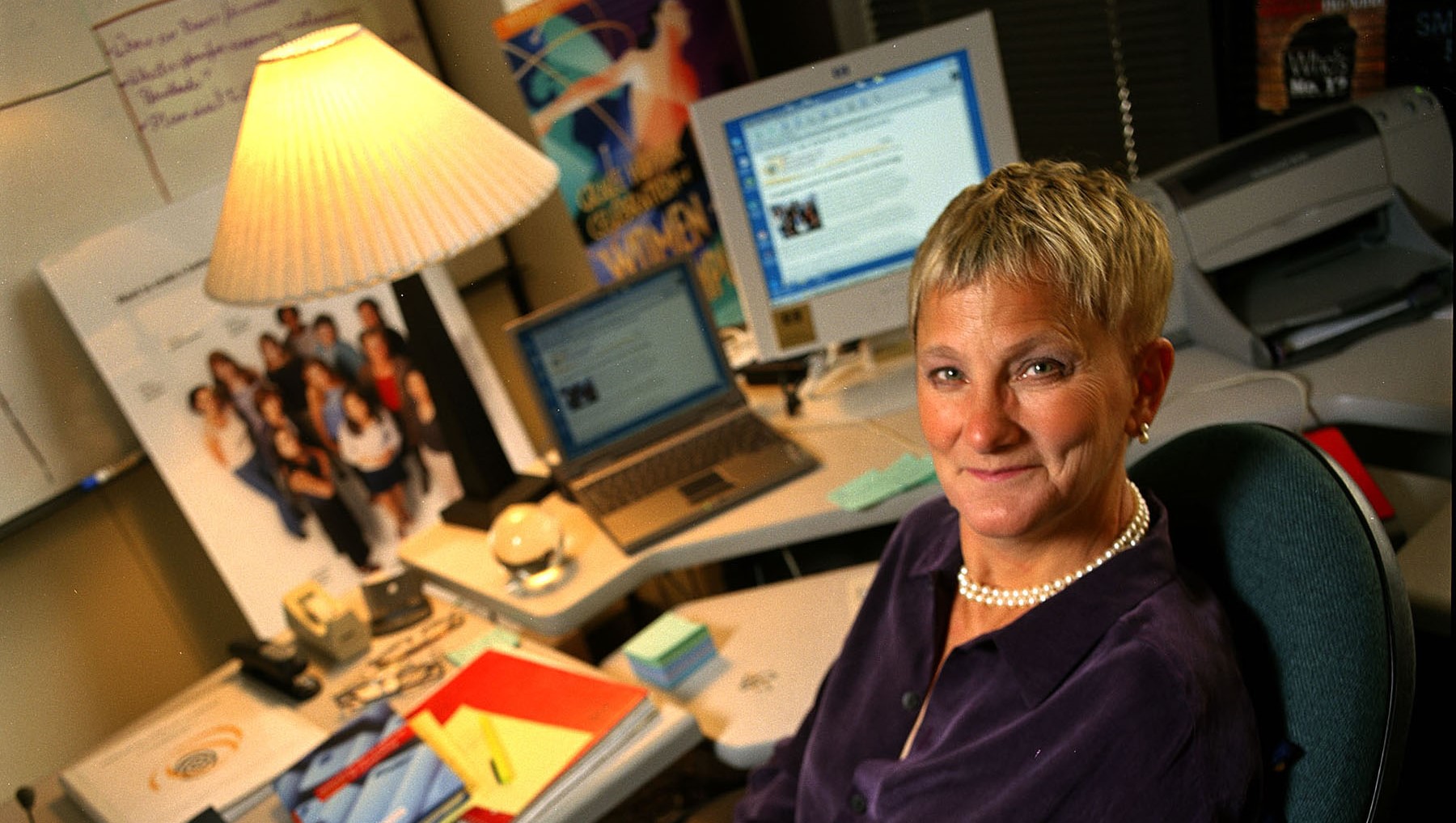
Anita Borg

Anita Borg receives the Heinz Award for Technology, the Economy and Employment for her tireless, tenacious, visionary and inspirational role in attracting women to the computer industry, and for creating and sustaining innovative programs for women in computer science.

Anita Borg's example of mixing technical excellence and fearless vision has interested, inspired, motivated and moved women of all ages, from teenagers to septuagenarians, to embrace technology instead of fearing or ignoring it. She has touched and changed the lives of countless women in the computing fields and beyond. She is responsible for including women in the technological revolution - not as bystanders, but as active participants and leaders.

Anita Borg didn't find her way to a computer keyboard until she was in her mid-20s - and even then it was the result of boredom with a dead-end job and pure happenstance. Still, she turned out to be a natural. After receiving a Ph.D. in computer science from New York University in 1981, she embarked on what was to become a brilliant research career for some of the new industry's commercial giants.

During the 1970s and early '80s, the situation for women in technology was grim. There were only a handful of female professors and graduate students, and few undergraduates were entering the ranks. And, as bad as the academic situation was, industry was much worse.

Dr. Borg's brilliant success in breaking through the "silicon ceiling" was an exception that proved the rule. One day, attending a major industry seminar, she looked around and realized that there were only a handful of women in the room. She pulled that small group together and started Systers, an e-mail list and information-sharing network that now provides mentors, support, encouragement, contacts and ideas via the Internet to more than 2,500 women in 38 states and foreign countries.

In 1994, Dr. Borg co-convened the first Grace Hopper Celebration of Women in Computing. Named in honor of a World War II computer pioneer, that first conference was attended by almost every notable woman in the field from all over the world - admittedly a small group.The fourth Grace Hopper Celebration will be held in October in Vancouver, with several hundred women attending.

Dr. Borg feels that, by presenting the major purpose of computer technology as solving straightforward technical challenges, we have lost the interest of many brilliant technical minds - often female - because their interest lies more in solving real problems than in creating technology for technology's sake.

In 1997, Dr. Borg left the industry to found and lead the Institute for Women and Technology (IWT). In addition to assuming responsibility for a number of existing programs - including Systers and the Grace Hopper Celebrations - IWT is an experimental research and development organization focused on increasing the impact of women on technology, as well as enhancing the positive impact of technology on women around the world.

Today, women are still in the minority in the technology community, but the tide is beginning to turn. Women are contributing key technologies, starting companies, becoming full university professors, and training and hiring the next generation of graduate students. By promoting excellence and equality in every aspect of computer technology, Anita Borg has played a pivotal role not only in the dramatic turnaround of the numbers, but in the nature and focus of technology creation itself.

Note: This profile is excerpted from the commemorative brochure published at the time of the awards' presentation.


REMEMBERING

Anita Borg passed away on April 6, 2003.


HONORS SINCE HER DEATH

August 2006 - The Anita Borg Institute for Women and Technology (ABI) announce the 6th Grace Hopper Celebration of Women in Computing Conference to be held in October 2006 in San Diego. A total of 38 corporate sponsors (including Intel, Cisco, Google and HP) and 17 academic sponsors (including CalTech, Harvard, Michigan State and UT Austin) provide financial backing for the world's largest technical conference for women in the field of computer science. Over 1200 attendees are expected. - Business Wire

September 2003 - The Institute for Women and Technology holds a fundraiser gala to honor the life and work of Borg. At the event, the institute is officially renamed the Anita Borg Institute for Women and Technology and several awards and scholarships that were created in her memory are awarded. - Electronic Engineering Times


UPDATES SINCE RECEIVING THE HEINZ AWARD

October 2002 - The Institute for Women and Technology holds its 4th annual Grace Hopper Celebration, which was founded by Borg. The conference "celebrates those who are creating, improving, researching, and studying computer-related technologies and sciences," and the theme at this years gathering was "the ubiquity of the impact of computing on our daily lives and the ubiquity of the impact women are making on this technical force." - Canada NewsWire

Speech

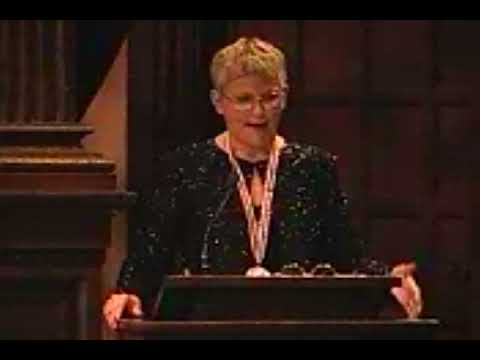
3/12/2002 - Acceptance Speech

I would like to thank the Heinz Foundation for recognizing with this award that the development of the technology for the future must have positive social and human impacts. In the near future, technology will affect everything: our economic, political, social and personal lives. Will technology be used to help solve problems of energy, food, water and clean air? Control disease? Nurture our children? Care for our elderly and disability? Will technology be used to increase literacy, particularly among women? Will it enable a fair global economy? Will we live in peace? Will it be used to solve the problems or create the futures that women want? Thank you to Teresa and the Foundation for helping those who ask those questions.

Around the world, women are not full partners in driving the creation of the new technology that will define their lives. This is not good for women and not good for the world. The involvement of women can bring important perspectives and directions to the technology of the future. Women must have dramatically higher representation in technical fields. But bringing women into the existing system as technologists is not sufficient. All sorts of women - technical and non-technical, rich and poor, from the developed, developing, and underdeveloped worlds, must define the technology of the future. The system that creates the technology of the future must change to include all of these women, as women, not just as faceless technologists.

And now a few thanks. Thank you Teresa. When you called me, I was completely flabbergasted. I am sure you remember that I cried and laughed at the same time. Thanks to the Heinz Family Foundation and thanks to the judges and nominators.

I have a few personal thanks. First, I'd like to thank my family of rebels. Dad showed us that we could choose our own paths and try wild things. I am sorry that he could not see this - he would have been very proud of his revolutionary daughter. Thanks to my Mother and my sister, Beverly and Lee Naffz who are here and share their own fantastic lives with me. Then to two dear friends who are here - Gerald Belpaire, my rebellious thesis advisor, and Caroline Kearney who with me was part of a wonderful group in the 80's learning about politics and feminism. Telle Whitney has been my co-conspirator creating the Grace Hopper Celebration for Women in Computing and making sure that it has a disco! Finally, there is my husband, Winfried Wilcke, a great scientist and friend, who, at the age of 50, completely swept me off my feet.

I want to take a few words to honor all of the women who are now working in computer science and technology as programmers or researchers or systems developers, building the future in the way that they think it should be built. It is often difficult to continue in spite of the fact that their environments may not be supportive. To any women who has stuck with her ideas, believing that there are different ways to do it, thank you for sticking with it!

Finally, thank you to the people, women and men, who share and support the passion and vision at the Institute for Women and Technology. We can change the world!
Anita Borg
Anita Borg