
Senator John Heinz

RELATED NEWS

  • Paul Farmer talks to CBS about new state-of-the-art hospital in Haiti go >>
  • Marian Wright Edelman is interviewed on public television's One On One. go >>
  • Environmental reporter Jane Kay interviews Paul Anastas on his move from EPA back to academia go >>
  • Ashok Gadgil is awarded the Zayed Future Energy Prize’s Lifetime Achievement Award go >>
  • Ian Cheney's new film, "The City Dark," reviewed on the Huffington Post go >>
  • Marian Wright Edelman reflects on Martin Luther King, Jr.’s words in Huffington Post column go >>
  • Mildred Dresselhaus is awarded the Enrico Fermi Award by President Obama go >>
  • Daniel Sperling interviewed about CAFE, the new federal fuel-efficiency standards go >>
  • Paul Anastas to depart postion heading EPA's research to return to Yale University in February go >>
  • Curt Ellis and FoodCorps profiled in Associated Press video go >>
  • Dean Kamen writes about 20 years of FIRST at the Huffington Post go >>
  • Elizabeth Kolbert is interviewed on Treehugger Radio go >>
  • The Boston Globe writes about the genesis of John Harbison's new Sixth Symphony, commissioned by the Boston Symphony Orchestra go >>
  • Mercury News profiles Ashok Gadgil's Darfur Stoves Project go >>
  • Rita Dove interviewed on NPR about her work on the Norton Anthology of 20th Century Poetry go >>
  • Leroy Hood is interviewed by the Seattle Business Magazine on his background, education, work and his vision for medicine go >>
  • Documentary on James Balog and the Extreme Ice Survey has world premiere at Sundance Film Festival go >>
  • Watch Vartan Gregorian, president of the Carnegie Corporation, serve as host for the 17th Heinz Awards go >>
  • University of Massachusetts Boston adds another major sculpture by Mark di Suvero to its Arts on the Point go >>
  • Lynn Goldman interviewed on NPR regarding mercury emissions from power plants go >>
  • Robert Langer's 34 year career at MIT is profiled in The Tech newspaper go >>
  • Elizabeth Kolbert posts "Top Ten Signs We Are Living in a Warming World" for 2011 in The New Yorker go >>
  • Bill Thomas pens an Op-Ed piece on the elderly for BBC News Health go >>
  • On Paul Farmer's struggle to reassemble a health strategy for Haiti go >>
  • Andrew Grove and Ralph Gomory contribute to 'roundtable' on returning manufacturing to the U.S. for The American Prospect go >>
  • Richard Alley is presented with the inaugural Stephen H. Schneider Award go >>
  • Cary Fowler writes in the Huffington Post about the impact of "Feeding an Ever-growing Population" go >>
  • Marian Wright Edelman emphasized the role of young people in advocating for change in Stanford University lecture go >>
  • Ralph Gomory and Andrew Grove contribute to 'roundtable' on returning manufacturing to the U.S. for The American Prospect go >>
  • "songbirdsongs," composed by John Luther Adams, reviewed in The New York Times go >>
  • Richard Alley interviewed on EarthSky about his work on abrupt climate change go >>
  • Joseph DeRisi part of panel discussing how bacteria research can help explore disease and drug discovery go >>
  • Huffington Post explores the Green House Project developed by Dr. William Thomas go >>
  • Robert Langer's work on recreating vocal cords profiled in Bloomberg News go >>
  • Amory Lovins' new book, Reinventing Fire, is released go >>
  • Bruce Katz co-authors piece for Time magazine on the Pragmatic Caucus and creating jobs go >>
  • The Atlantic excerpts Sandra Steingraber's thoughts on gardening and climate change from her latest book, Raising Elijah go >>
  • SmartPlanet interviews Louis Guillette on impact of toxic chemicals on the reproductive systems of wildlife go >>
  • Joel Salatin is profiled in Time magazine go >>
  • Indiana University creates AIDS-HIV research grants in honor of Surgeon General C. Everett Koop go >>
  • Joan Kleypas is interviewed about her research on ocean acidification on EarthSky go >>
  • Cary Fowler's Svalbard Seed Vault in Norway featured in Dornith Doherty's photographs in Wired go >>
  • Jacques d'Amboise's National Dance Institute establishes itself in a permanent home in Harlem go >>
  • Joel Salatin is interviewed for NPR's On Point about his new book go >>
  • The Wisconsin State Journal writes about John Harbison's commission for Pro Arte Quartet's 100th anniversary go >>
  • Gretchen Daily wins 2011 Biodiversity Award from the Prince Albert II of Monaco Foundation go >>
  • Marian Wright Edelman writes in the Huffington Post about adults needing to "shape up and close the hypocrisy gap" go >>
  • "Clouds of Forgetting, Clouds of Unknowing" by John Luther Adams is performed by San Francisco Contemporary Music Players go >>
  • The Los Angeles Times profiles Donald Berwick and his work on Medicare and Medicaid go >>
  • Aaron Beck is co-author on new study showing cognitive behavioral therapy can work to treat severe schizophrenia go >>
  • Fast Company and EarthSky partner to produce, "Biomimicry, Nature of Innovation," starting with Janine Benyus interview go >>
  • Andrew Grove's push to accelerate medical research profiled in San Jose Mercury News go >>
  • Leroy Hood offers "A Personal View of Systems Biology and the Coming of Big Science" in Genetic Engineering News go >>
  • Curt Ellis talks about FoodCorps on the Nourish blog go >>
  • Dr. Mildred Dresselhaus is named as the 2012 Acta Materialia Materials and Society recipient go >>
  • The Medical University of South Carolina interviews Louis Guillette about his work and the 17th Heinz Award go >>
  • Geoffrey Canada debates questions about the nation's education system on NBC's Education Summit go >>
  • Geoffrey Canada participates in New York Times debate on the length of the school day go >>
  • Nancy Knowlton is interviewed on NPR's Living On Earth go >>
  • Marian Wright Edelman is interviewed by theGrio on education and poverty go >>
  • Elizabeth Kolbert to receive the David R. Brower Award from the Sierra Club, which recognizes outstanding environmental reporting go >>
  • Students from Dave Eggers' 826 writing centers collaborate on new book, "Be Honest" go >>
  • Robert Langer is to receive the 2011 Economist Innovation Award for Bioscience go >>
  • The Memphis Flyer profiles Cary Fowler and his brainchild, the Svalbard Global Seed Vault go >>
  • Brenda Eheart receives the Harmony with Hope award from the Elfenworks Foundation go >>
  • John Luther Adams interviewed by Fairbanks News-Miner on recieving the Heinz Award go >>
  • The 17th Heinz Awards and the ten recipients are highlighted in The Huffington Post go >>
  • Ian Cheney and Curt Ellis are interviewed on MSNBC about receiving the Heinz Award go >>
  • Rita Dove offers a fresh take on American poetry as editor of The Penguin Anthology of 20th Century American Poetry go >>
  • Robert Langer is named co-recipient of this year's $250,000 Warren Alpert Foundation Prize go >>
  • Bruce Katz pens "big picture" essay for the newly launched The Atlantic: Cities web site go >>
  • Kirk Smith is profiled in Bridges, the magazine from the Center for Occupational and Environmental Health go >>
  • Richard Alley, and 17th Heinz Awards, are profiled in the Pittsburgh Post-Gazette go >>
  • Nancy Rabalais profiled as 17th Heinz Award recipient in The Times-Picayune go >>
  • Nancy Rabalais' work on oceans, and as Heinz Award recipient, highlighted at Mother Jones go >>
  • Marian Wright Edelman on 'Supporting Grandparents Caring for Grandchildren' in Huffington Post go >>
  • Leroy Hood is chosen to receive the Julio Palmaz Award for 2011 go >>
  • Hugh Herr and his PowerFoot is profiled in a Time magazine "Game Changers" video go >>
  • PEN Center USA recognizes Dave Eggers for writings and literacy centers go >>
  • Joseph DeRisi co-authors study linking malaria parasite's survival to a single, crucial chemical go >>
  • Paul Farmer is named as the 2011 Pro Bono Humanum Honoree from Prix Galien USA go >>
  • University of Michigan Art Museum to host solo exhibit of Mark di Suvero's "tabletop" works go >>
  • Mark di Suvero profiled in The Wall Street Journal go >>
  • Lynn Goldman interviewed by Yale 360 about the environmental health challenges the U.S. faces go >>
  • Hugh Herr is interviewed on NPR's Fresh Air go >>
  • Gretchen Daily and the Natural Capital Project are profiled in The New York Times go >>
  • Aaron Beck, at 90, is profiled in The Philadelphia Inquirer go >>
  • Jane Lubchenco is awarded the 2011 Blue Planet Prize from the Asahi Glass Foundation go >>
  • Bruce Katz blogs about smart cities and the global competitive edge in Fast Company go >>
  • Joel Salatin and Polyface Farm profiled in The Atlantic go >>

The Heinz Awards

1998

Amory Lovins

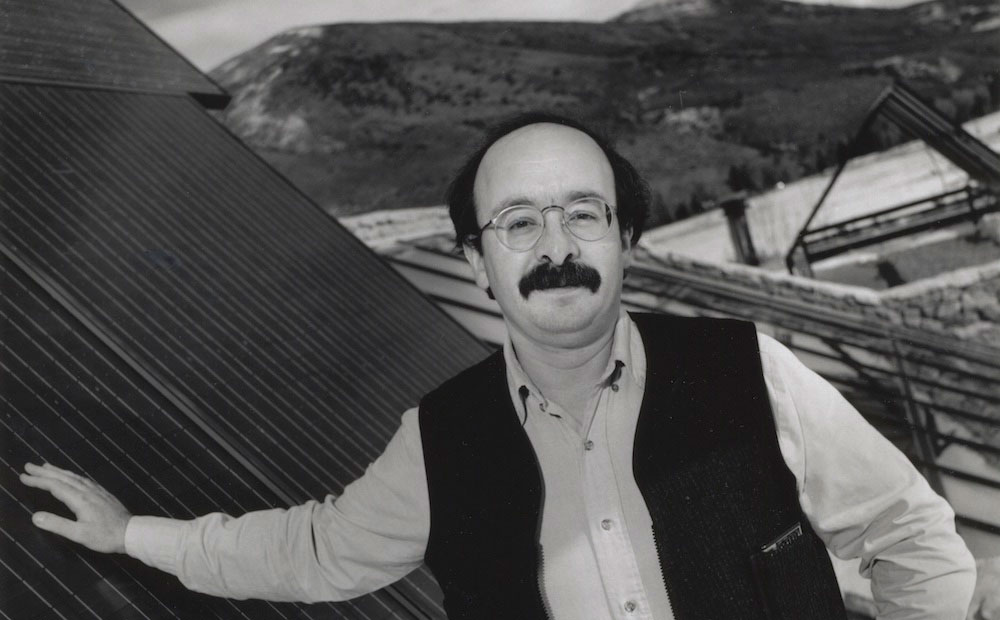
Amory Lovins receives the Heinz Award in the Environment for his extraordinary accomplishments in alerting the world to the enormous potential of energy efficiency and renewable energy resources.

Chosen several years ago by the editors of The Wall Street Journal as one of the people most likely to change the face of world industry, Mr. Lovins is an environmental visionary. He is already credited with having done more than any other single individual to redefine the thinking around energy policy and to link it with environment, development and security issues. He, his wife Hunter, and the team of researchers at the resource policy center they co-founded in Snowmass, Colorado delight in challenging conventional wisdom by demonstrating advanced resource productivity that avoids depletion and pollution, and still shows a profit.

He has done original work of high intellectual merit and has popularized his work far better than anyone else in the field, aggressively moving his ideas into widespread practice, chiefly via the private sector.

It was evident early on that Amory Lovins had the makings of a genius. At age 21, after studying at Harvard and Oxford University, he became Oxford's youngest junior faculty member in 400 years. While there, he intended to pursue an interest in the details of energy policy, two years before the oil embargo put those issues on the world's agenda. When the university protested, he left.

Almost immediately, he set about redefining the energy debate, which, at the time, focused entirely on how more energy could be produced to meet an ever-growing demand. Mr. Lovins turned that challenge on its head by suggesting a radically different focus, not on getting more energy of any kind from any source at any price, but on providing just the amount, type, scale and source of energy that would provide each desired service in the cheapest way. That suggestion was challenged by many energy experts and greeted with derision by industry. But Mr. Lovins, frequently using his opponents' statistics against them, calmly continued to argue his case and to meet with, debate and inform utility executives, other industry leaders and policy makers. Many of them turned from critics into clients. As a result of his work, new methods were developed to allow utilities to profit from energy efficiency, methods that have been implemented in many areas around the United States. Even more significantly, the powerful new idea - that properly structured, sustainable, least-cost energy and resource options can be beneficial both to the environment and to industry - was introduced.

In 1982, Mr. Lovins expanded his work by establishing with his wife the Rocky Mountain Institute, a research and educational foundation. Today, the pair, along with a staff of more than 40, blaze new trails investigating efficiency issues and proposing solutions that, while they may spring from Mr. Lovins' boundless creativity, are firmly rooted in reality. One such solution currently engaging Mr. Lovins is the design of a "hypercar," an ultra-lightweight, hybrid-electric vehicle, now moving rapidly toward the marketplace. Not only would these vehicles save fuel and prevent pollution, but Mr. Lovins argues that by accelerating the introduction of fuel cell-powered versions, hypercars used as plug-in mobile generators could quickly and profitably displace today's coal and nuclear power plants.

Mr. Lovins has briefed heads of state, written and co-authored dozens of books and hundreds of papers, and served as an advisor to scores of boards, businesses and institutions. He argues that the U.S. can operate on a fourth of the energy it now uses, while still providing the same or better services. This may seem far-fetched, but Mr. Lovins has been accused of taking off on flights of fancy before. Together, both he and time both have a remarkable way of proving his assertions correct.

Note: This profile is excerpted from the commemorative brochure published at the time of the awards' presentation.


UPDATES SINCE RECEIVING THE HEINZ AWARD

October 2011 - Amory Lovins, the chairman of the Rocky Mountain Institute and the author of influential books like Winning the Oil Endgame and Natural Capitalism, releases his latest book, Reinventing Fire, proposing methods to run an economy that's 158 percent larger by 2050 without any coal, oil, nuclear energy, or new inventions (and one-third less natural gas). - GreenBiz.com

April 2009 - Amory Lovins is named a recipient of the 10th National Design Awards (Smithsonian’s Cooper-Hewitt National Design Museum) in recognition for his work at the nexus of energy, resources, environment, development and security in more than 50 countries for 40 years, including 14 years based in England. - 10th National Design Awards

November 2007 - For his "outstanding achievements in the field of energy efficiency," Lovins receives the Volvo Environment Prize at a ceremony in Stockholm. The prize ($235,390 USD) is awarded by an independent foundation, and the selection committee is comprised of internationally recognized scientists and researchers in the fields of economics and environmental studies. - Volvo Environment Prize

November 2007 - Ford Motor Company Executive Chairman Bill Ford appoints Lovins to a newly-formed Transformation Advisory Council designed to help advance Ford's sustainability initiatives. - U.S. Newswire

July 2007 - Lovins wins the Blue Planet prize for "for his contributions to leading global energy strategy for protection of the global environment by efficient utilization of energy." Sponsored by Japan's Asahi Glass Foundation, the environmental prize is worth $407,000 (USD). - The Blue Planet Prize

March 2007 - Lovins relinquishes CEO post at the Rocky Mountain Institute in order to focus on thought leadership, strategic influence, and high-impact special initiatives. These initiatives include leading the implementation of RMI's Pentagon-cosponsored roadmap, Winning the Oil Endgame, for getting the U.S. completely off oil by the 2040s, led by business for profit. Lovins now serves as chairman and chief scientist. - Rocky Mountain Institute

August 2005 - Lovins gives a talk in Bar Harbor, Maine based on his latest book, Winning the Oil Endgame. The speech outlines Lovins' energy policy ideas and includes his ideas for "combining innovative technologies and new business models with uncommon public policies" in an effort to thwart a business led oil solution rather than one dictated by the government. - The Press Herald

June 2005 - Lovins releases his latest article, "Security Meltdown." The article severely questions and discredits "Washington's wisdom to promote new nuclear plants through federal subsidies," and insists that nuclear construction is not a practical or viable way to deal with increasing climate change. - Energy Washington Week

Amory Lovins