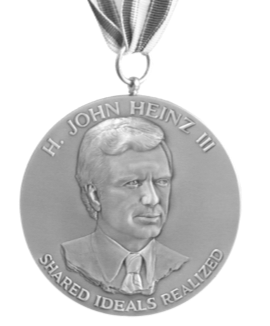

Senator John Heinz

RELATED NEWS

  • Steve Wozniak interviewed in Ireland’s Silicon Republic about innovation, the technology economy and Apple go >>
  • Leroy Hood guest blogs at The Wall Street Journal on what “Nonprofits Can Learn from Startups” go >>
  • Mary Good to head a new center focused on data visualization at the University of Arkansas at Little Rock go >>
  • Janine Benyus to share the 2013 Gothenburg Award for Sustainable Development go >>
  • Mary Good and her career in chemistry is profiled in a short film by the Chemical Heritage Foundation go >>
  • Jay Keasling to receive 2013 George Washington Carver Award for innovation in industrial biotechnology go >>
  • Jay Keasling and his current work on artemisinin profiled in San Francisco Business Times go >>
  • Joint BioEnergy Institute, headed by Jay Keasling, to be renewed until 2018 go >>
  • The Nuclear Threat Initiative, with Sam Nunn and Richard Lugar, proposes new strategy to reduce conflict and to encourage security go >>
  • Robert Langer pens a piece for Project Syndicate on Going Against Conventional Wisdom go >>
  • Robert Langer is interviewed on NPR’s Science Friday go >>
  • C. Everett Koop, former surgeon general, has died at age 96 go >>
  • Marian Wright Edelman to receive Harvard Graduate School of Education's Medal for Education Impact go >>
  • Susan Seacrest is profiled by the Lincoln Star Journal go >>
  • Jay Keasling's semi-synthetic anti-malarial artemisinin now being produced in bulk and ready for introduction go >>
  • Hugh Herr speaks on cutting edge bionics at the Digital-Life-Design Conference go >>
  • Jay Keasling is profiled on CNN's The Next List go >>
  • Sidney Drell receives the National Medal of Science go >>
  • Philosopher Anthony Grayling interviews Robert Langer on the BBC's "Exchanges on the Frontier" go >>
  • Robert Langer to receive Israel's 2013 Wolf Prize for innovations that "have had a profound impact on medicine" go >>
  • Mildred Dresselhaus interviewed on The Age of Reason on the BBC World Service go >>
  • Leroy Hood to receive the National Medal of Science go >>
  • Robert Langer to receive the National Medal of Technology and Innovation go >>
  • Leroy Hood and his vision of P4 medicine is profiled by The National go >>
  • The New York Times reviews Ann Hamilton’s installation, “the event of a thread,” at the Park Avenue Armory go >>
  • Robert Langer's MIT lab's success in technology transfer is profiled in the New York Times go >>
  • James Balog is profiled on NPR's Weekend Edition go >>
  • Bernard Amadei appointed as Science Envoy for the U.S. State Department go >>
  • The Harvard Crimson writes about Robert Langer and a 'cyborg tissue' breakthrough at MIT and Harvard go >>
  • PandoDaily writes about "The Return of Dean Kamen" and the buzz surrounding his Stirling Engine go >>
  • Dean Kamen and his work is profiled by A Total Disruption, a project by Ondi Timoner go >>
  • James Balog interviewed in Fast Company on tracing the global decay of glaciers go >>
  • Janine Benyus is interviewed for TrimTab online magazine go >>
  • Robert Berkebile is interviewed by the Omega Institute for their Design by Nature Conference go >>
  • The Washington Post cites the work of Richard Feely and Joan Kleypas on the impact of ocean acidification on fisheries go >>
  • Dudley Cocke makes the case for rural theater in Howlround go >>
  • Dean Kamen interviewed on Charlie Rose on working with Coca-Cola on water issues go >>
  • Paul Farmer co-authors article "Cholera and the Road to Modernity" in America's Quarterly go >>
  • Tom "Smitty" Smith pens OpEd requesting Texas PUC to embrace energy alternatives go >>
  • Richard Jackson is interviewed on Living On Earth go >>
  • Russell Train, renowned conservationist and recipient of the 7th Heinz Award Chairman's Medal, dies at 92 go >>
  • Lou Bellamy to direct August Wilson's play, "Fences," at the Denver Center Theatre Company go >>
  • Hugh Herr believes that bionics can put people with disabiities back to work go >>
  • Elizabeth Kolbert reports from the Andes in Yale's Environment 360 go >>
  • di Suvero sculpture settles into new home at Stanford University go >>
  • NPR reports on Joseph DeRisi's work on a link between deadly Ebola virus and disease that's been killing boa constrictors go >>
  • New study by James Hansen ties recent heat waves to global warming go >>
  • James Hansen pens an Op-Ed piece on climate change for The Washington Post go >>
  • Mildred Dresselhaus profiled in U.S. News and World Report go >>
  • Prized Science's first episode of 2012 highlights the work of Robert Langer go >>
  • Mildred Dresselhaus is interviewed in The New York Times go >>
  • Hugh Herr is profiled on Jothy Rosenberg's "Who Says I Can't" go >>
  • Dave Egger's latest novel, A Hologram for the King, is reviewed in The New York Times go >>
  • Mildred Dresselhaus is the 2012 recipient of the Kavli Prize for Nanoscience go >>
  • Robert Langer to receive the 2012 Society of Chemical Industry's Perkin Medal go >>
  • Paul Anastas to receive the German Chemical Society’s Wohler Prize go >>
  • Pittsburgh Symphony Orchestra offers videos of Mason Bates discussing his go >>
  • Janine Benyus is named the 2012 Design Mind Award recipient by the Cooper-Hewitt Design Museum go >>
  • Andrew Grove is interviewed with Gordon Moore for NPR's Mornng Edition on their place in Silicon Valley history go >>
  • CNN's "The Next List" profiles Dr. Hugh Herr and his Biomechatronics Group at the MIT Media Lab go >>
  • Robert Langer's entrepreneurial drive is profiled in Chemical and Engineering News go >>
  • Hugh Herr and his bionics are profiled for TechWeekEurope go >>
  • Dean Kamen joins Elon Musk and Craig Venter to discuss energy innovation at ECOnomics Conference go >>
  • Kirk Smith shares the 2012 Tyler Prize for Environmental Achievement from USC go >>
  • Ruth Patrick, "Den Mother of Ecology", is profiled by the Intelligencer Journal go >>
  • Ralph Gomory co-authors op-ed in Bloomberg News on transparency for corporate money in political campaigns go >>
  • Carol Gilligan looks back on her 1982 book, In a Different Voice, in the current issue of Harvard's online journal Classics@ go >>
  • Jane Lubchenco is named Woman of the Year by the Women's Council on Energy and the Environment go >>
  • Bruce Katz is interviewed in Wired magazine on optimizing economic structures for revitalization go >>
  • Cary Fowler interviewed in The Atlantic on the importance of crop diversity and the vital role of the Svalbard Global Seed Vault go >>
  • New paper from Brookings’ Bruce Katz on "Remaking Federalism to Remake the American Economy" go >>
  • Mario Molina co-authors editorial piece on "How to cut climate change in half" go >>
  • Rita Dove is awarded the 2011 National Medal of Arts go >>
  • James Nachtwey honored with 3rd Dresden International Peace Prize go >>
  • Paul Anastas is profiled in Forbes go >>
  • Paul Farmer writes editorial in the New York Times on why the global fund matters go >>
  • Marian Wright Edelman on the need for dedicated support and education opportunities to allow access to the American Dream go >>
  • The Scripps Center for Marine Biodiversity and Conservation, founded by Nancy Knowlton, celebrates its first decade go >>
  • Geoffrey Canada to receive the second Harvard Graduate School of Education Medal for Education Impact go >>
  • Chasing Ice, on James Balog's Extreme Ice Survey, is one of the most-sought tickets at Sundance Film Festival go >>
  • Paul Farmer talks to CBS about new state-of-the-art hospital in Haiti go >>
  • Marian Wright Edelman is interviewed on public television's One On One. go >>
  • Environmental reporter Jane Kay interviews Paul Anastas on his move from EPA back to academia go >>
  • Ashok Gadgil is awarded the Zayed Future Energy Prize’s Lifetime Achievement Award go >>
  • Ian Cheney's new film, "The City Dark," reviewed on the Huffington Post go >>
  • Marian Wright Edelman reflects on Martin Luther King, Jr.’s words in Huffington Post column go >>
  • Mildred Dresselhaus is awarded the Enrico Fermi Award by President Obama go >>
  • Daniel Sperling interviewed about CAFE, the new federal fuel-efficiency standards go >>
  • Paul Anastas to depart postion heading EPA's research to return to Yale University in February go >>
  • Curt Ellis and FoodCorps profiled in Associated Press video go >>

The Heinz Awards

2001

Aaron Beck

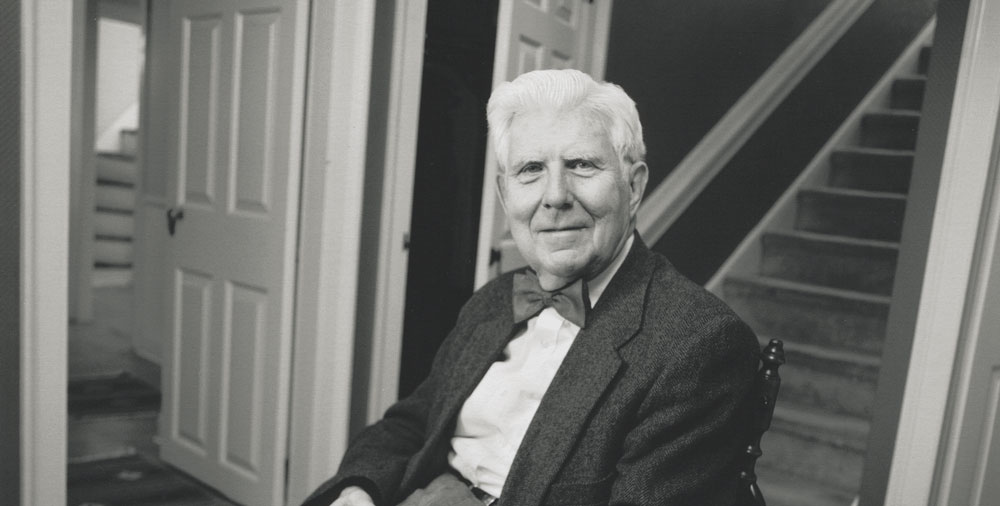
Dr. Aaron Beck receives the Heinz Award in the Human Condition for his pioneering breakthrough in developing cognitive therapy as an effective treatment of psychological disorders in millions of individuals suffering mental and behavioral health challenges. Dr. Beck is the founder of the fastest growing, most extensively studied form of psychotherapy in America, which he calls "simple and effective."

Presently the University Professor Emeritus of Psychiatry in the Department of Psychiatry at the University of Pennsylvania, Dr. Beck is world renowned as the "father of cognitive therapy." He was trained as a psychiatrist in the 1940s and 50s when the prevailing treatments for mental disorders were either medication or psychoanalytic therapy. He felt that neither of these approaches was conducive to helping people learn to help themselves, to develop confidence, hope, and enduring positive change.

Dr. Beck's early research into the psychology of depression prompted him to develop a treatment that would help patients to understand and deal with their psychological problems and led to significant advances in the treatment not only of depression, but also of anxiety, panic and eating disorders, phobias and suicidal problems as well. More recently, this treatment has been applied successfully to substance abuse and schizophrenia.

Cognitive therapists believe that psychological disorders are based in part on distorted outlooks, which can be adjusted if a patient recognizes his errors in thinking. Depressed patients, for example, see the glass as half empty, never half full. Focusing on problem solving provides an appealing and cost-effective alternative to increasingly popular drug treatments. In fact, cognitive therapy is the only psychotherapy to have had over 200 clinical trials or outcome studies indicating its effectiveness. By identifying self-defeating thoughts in emotional, psychological and behavioral disorders, cognitive therapists can offer patients immediate treatment, unlike more traditional therapies that take much longer to have any perceptible impact.

Dr. Beck's cognitive therapy has brought relief to millions of patients and sparked a revolution in psychotherapy. His courageous and brilliant research, practice, teaching and mentorship have resulted in the training of thousands of mental health professionals who are making significant advances toward helping people who suffer the ill effects of stress and emotional disorders. Over the years, bright, young, idealistic mental health professionals have gravitated to Dr. Beck, more recently to the Beck Institute for Cognitive Therapy and Research, directed by his daughter, Dr. Judith Beck, in Philadelphia, seeking a new direction for their life's work. These professionals have established training and research centers in practically every developed nation in the world.

Dr. Beck's contributions to his field have influenced not only psychiatry and psychology, but other mental health disciplines as well, including psychiatric social work, nursing and counseling. It is difficult to overstate the impact of Dr. Beck's innovative approach as an alternative to the more traditional long-term psychotherapy. Dr. Beck's groundbreaking approach that created cognitive therapy has resulted in a gift to the millions of people whose lives are so much better because of it.

Note: This profile is excerpted from the commemorative brochure published at the time of the awards' presentation.


UPDATES SINCE RECEIVING THE HEINZ AWARD

November 2009 - Beck, "the father of cognitive therapy," has been presented with the Anna-Monika Prize, awarded once every two years by the Anna-Monika Foundation, for advancing knowledge of the biological structure and functional disturbances of depression. - University of Pennsylvania

September 2006
- Beck will receive the 2006 Albert Lasker Clinical Medical Research Award for his pioneering work in developing cognitive therapy as a treatment for depression and other mental health conditions. This award, valued at $100,000, is considered to be the nation's most prestigious medical prize. - The New York Times

January 2006
- Beck receives the Adolf Meyer Award, and gives the Adolf Meyer Award lecture at a conference held by the American Psychiatric Association. - Beck Institute

October 2005
- Beck receives the second-ever Morselli Medal for Lifetime of Research in the Field of Suicide. The Morselli Medal, given by the International Academy for Suicide Research, is granted to those who demonstrate exhaustive efforts in the study of suicide and its methods of prevention. - International Academy of Suicide Research

December 2003
- Beck wins the $200,000 Grawemeyer Award for Psychology from the University of Louisville, notably because he is considered "the founder of cognitive therapy" and has contributed greatly to new and improved systems of psychotherapy. - Philadelphia Daily News

October 2003
- Beck receives the 2003 Sarnat International Award in Mental Health from the Institute of Medicine. The award, which includes a medal and a $20,000 cash prize, is being given to Beck "in recognition of the international scope and significance of his contributions to psychiatry and mental health." - Institute of Medicine

December 2002
- Beck receives the inaugural Exemplary Achievement Award, presented to him by the Treatment and Research Advancements National Associations for Personality Disorders, for his work and research in the field of bi-polar disorder. - Beck Institute

January 2001
- Beck is honored with a Lifetime Achievement Award from the Philadelphia Psychiatric Society for his work in the field of cognitive therapy. - Beck Institute

Speech

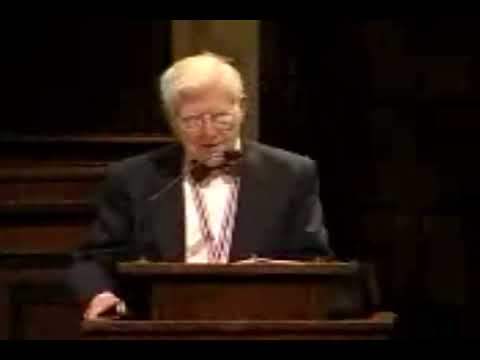
3/5/2001 - Acceptance Speech

Well, thank you, thank you, thank you. I'm deeply honored to be selected for the Award for the Human Condition, and to be included with those who have made such important contributions to society. I'm especially grateful to the Foundation, and specifically to Teresa Heinz, for their policy of encouraging non-traditional, innovative approaches to the solution of human problems, as well as the enrichment of our cultural heritage. By recognizing the efforts of innovators and highlighting the importance of these achievements, I believe the Awards move us forward to the betterment of mankind.

The Award ceremony gives me a chance to reflect on what experiences led to my being here today. When I was growing up, I was largely interested in nature. I participated in bird watches. I identified plants and trees and examined microbes under a microscope. For many years I served as a camp naturalist. Later, I became interested in what makes people tick; particularly what makes them happy or sad, and confident or insecure.

When I eventually ended up in the field of psychiatry, I became involved in observing the more extreme aspects of the spectrum of human behavior. I was struck in particular, about how people's biases against themselves and against other people, were the cause of much suffering; their excessive anxiety, anger, and depression. It seemed that a good part of these complex problems could be attributed to our evolutionary history. It's better to over-react to potential danger than to under-react. False positives are better than false negatives. One false negative and you're eliminated from the gene pool.

Thus, the price of survival and preservation of our lineage would be a lifetime of angst or anger. These innate dispositions of course, are accentuated by life's circumstances and situations. These two factors conversely, produce a very strong bias in the way afflicted individuals evaluate themselves and other people, and do lead to psychiatric disorders.

However, it's not inevitable that we should be the victims of our evolutionary heritage and the various traumas that we've experienced during our development. Nature has also endowed us with the mental resources to overcome these engrained patterns. By tapping into these rational resources, we can correct our cognitive biases through a procedure that I've called cognitive therapy, and free ourselves to deal with the problems realistically and to attain a reasonable way of life.

Even the floridly delusional patients have the potential for correcting their extreme biases. With help, they can learn to activate the rational part of their minds and direct it to correct their irrational tendencies. These same principles can be applied on a broad scale. The same kind of biases that lead to irrational anger in marital conflicts, say, present in such complex societal problems as prejudice, ethnic conflict, and, yes, even wars.

We can draw on our rich resources of rationality to recognize and modify the irrationality that causes so much suffering. The voice of reason is silent, but we can use appropriate methods to amplify it and of course, to listen to it.

In closing, I'd like to express my appreciation to the members of my family who have, in their own way, supported my work. To my wife, Phyllis, who's been the balance wheel between my self doubts and my runaway fantasies. And my three children who are here today, who have worked with me in various capacities as consultants, and also as my directors.

Thank you again.
Aaron Beck